
Additive manufacturing is only as good as the powder.
The feedstock decides the part: engineered metal and alloy powders, matched grades for bearings, bonds and finishes, and a supply you control rather than a foreign mill's fixed catalogue.
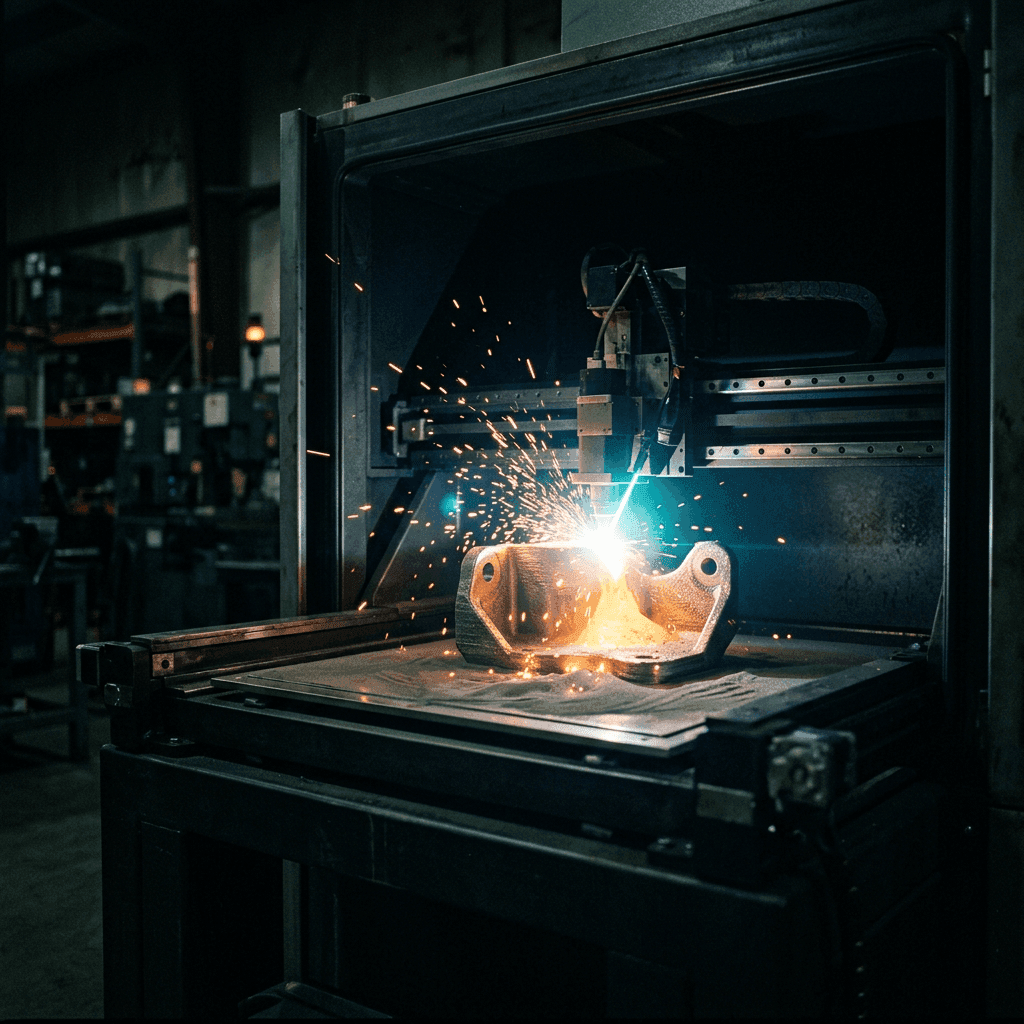
Everything downstream inherits the feedstock
In additive manufacturing and sintered-part production, the powder is not a commodity input you can treat as interchangeable. It is the thing that decides whether the finished part meets spec. Particle size, shape and purity propagate through every stage that follows: flowability in the machine, packing density in the bed, sintering behaviour, final mechanical performance. Get the feedstock wrong and no amount of process tuning recovers it.
So the sensible question for a manufacturer is not just where the powder comes from, but whether it was engineered for the job or merely sold from whatever a mill happened to have. Engineered metal and alloy powders cover ferrous and non-ferrous families (copper, bronze, brass, tin, nickel, tool and stainless steel, and diamond-tool matrix grades) produced through controlled atomisation as the feedstock behind additive manufacturing, surface coatings and sintered components.
Controlled atomisation is the phrase that matters. It is the process that lets particle size, shape and distribution be engineered to a target rather than accepted as whatever the mill run produced. For an additive process, that control is the difference between a powder that flows and spreads cleanly and one that bridges, clumps or packs unevenly, problems that show up not as an obvious defect but as a slow drift in part quality that is maddening to diagnose after the fact.
Match the alloy to the duty
Different parts need different metallurgy, and a serious supplier ranges across the families rather than pushing one. Stainless steel powders cover the corrosion-critical end of powder metallurgy: austenitic 304L and 316L and martensitic 410L low-carbon grades, with tight interstitial control, for sintered structural parts, porous filter media, diamond segments and hardfacing.
Where the duty is motion, in bearings and wear components in motion-intensive systems, copper–tin bronze powders are tuned for low friction, long service life and consistent mechanical performance. The range spans seven compositions from 90/10 to 62/38, including zinc-modified variants, so the powder is matched to the bearing rather than the bearing forced to accept the powder.
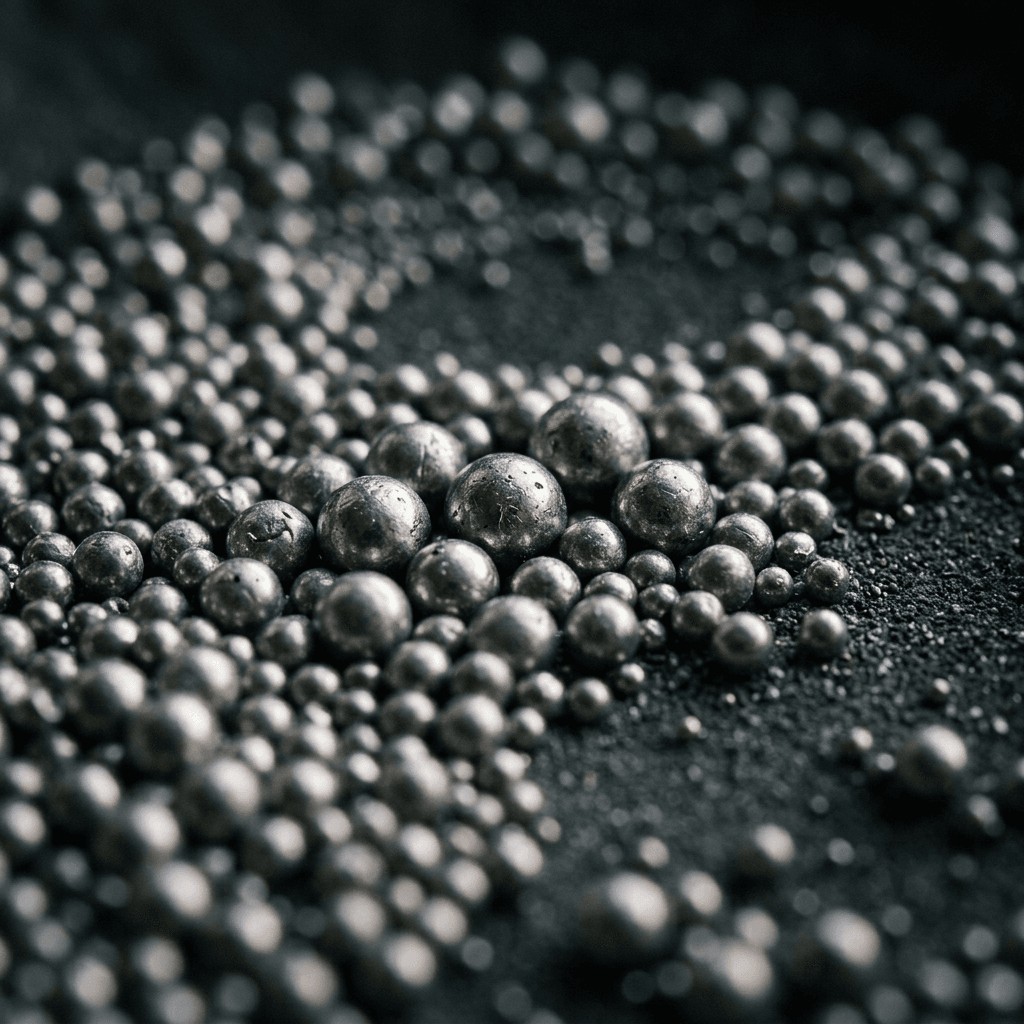
Consistency is the whole game in sintering
Sintering rewards repeatability above almost everything. A powder that behaves the same batch after batch, with consistent apparent density, controlled chemistry and predictable pressing and densification, is what lets a process stay in control across a production run. Variation in the feedstock shows up as scrap, and scrap in a sintering line is expensive.
The speciality grades are built around exactly these levers. Nickel and nickel-alloy powders give three distinct bond behaviours from one line (high-purity nickel, a self-fluxing Ni-Cr-Fe-Si-B alloy and nickel silver) used to set bond hardness and diamond retention in cutting and grinding segments, and to give a bright silver-white finish where the application is decorative rather than structural.
Having those behaviours available from one line, rather than sourced from separate suppliers, is what keeps a process in control. A manufacturer can dial bond hardness up or down by choosing among grades that were made to the same quality system, confident that the change is the one intended and not an artefact of a new supplier's different chemistry. Consistency is not only within a grade; it is across the grades a plant switches between as its product mix changes.
The matrix is where the tool is really made
For diamond tool manufacturers, the diamonds are only half the product; the matrix that holds them is the variable that actually gets engineered. A dedicated matrix powder line treats it that way: composition governs bond hardness, diamond retention and segment wear in cutting and grinding tools, and every constituent comes from the same house: copper, bronze, brass, iron–copper, nickel, tin and stainless grades under one roof.
That single-source coherence is not a convenience so much as a quality guarantee. When the whole matrix recipe comes from one supplier working to one quality system, the tool maker tunes the bond by adjusting a recipe rather than reconciling powders from four different origins that never quite behave the same way together.
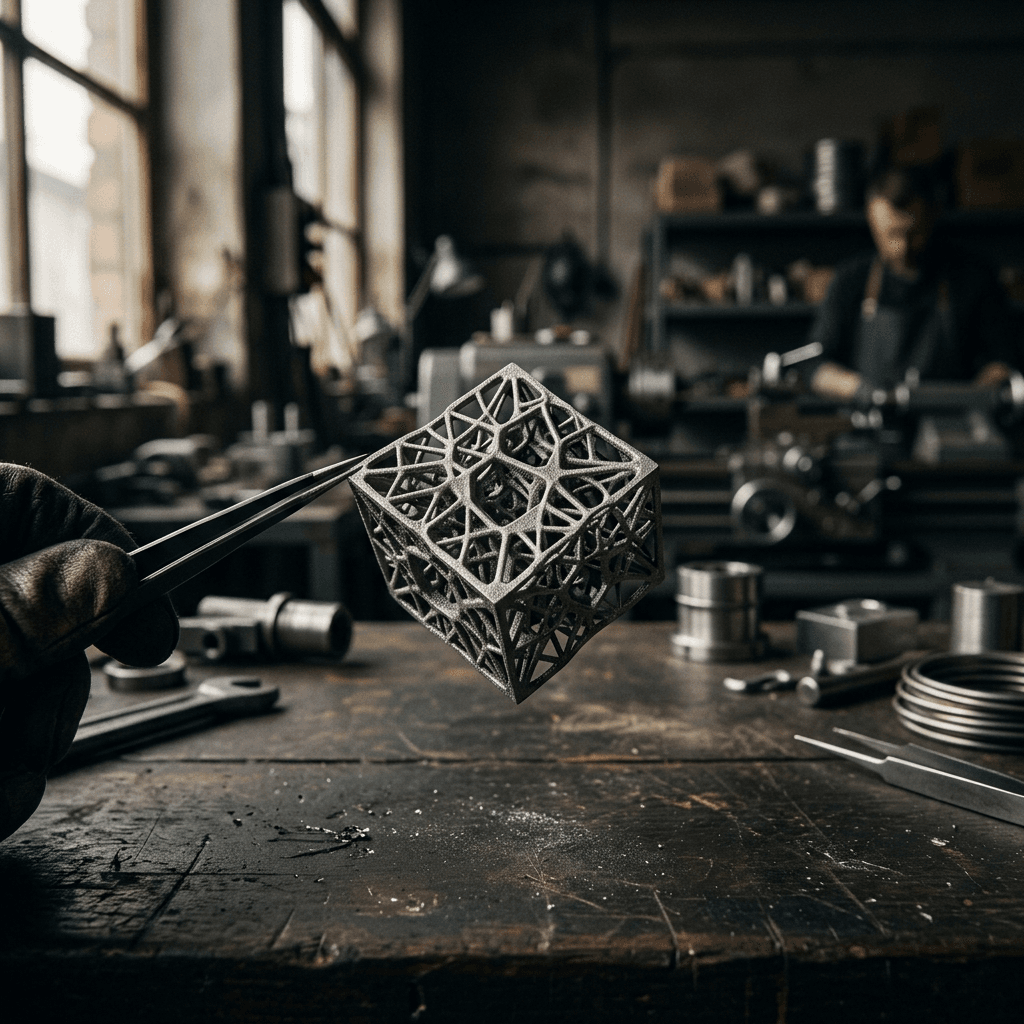
A supply you control, not a catalogue you accept
The strategic point behind all of it is control of supply. An independent, non-aligned source offers custom powder development to programme specification, not a fixed catalogue of what a foreign mill happens to sell, under a standing import-substitution mandate. For a manufacturer whose production depends on consistent feedstock arriving on time, that is the difference between a supply chain you steer and one that steers you.
There is a security dimension to feedstock that manufacturers in sensitive sectors feel keenly. A part is only as sovereign as its inputs, and a production line that depends on powder shipped from a distant mill sits behind whatever export gate that mill's government chooses to operate. An independent, non-aligned source removes that gate: the feedstock arrives without a foreign veto attached, and custom development means the recipe answers to the programme rather than to what a supplier is permitted to sell.
It comes through one accountable channel: the powders, the custom development and the metallurgical support behind them from a single supplier who answers for the result. Additive manufacturing really is only as good as the powder. The rational move is to own that variable rather than inherit it from someone else's catalogue.


