
Space doesn't forgive component shortcuts.
For suppliers moving into space work, the hard part is proving every subsystem survives the orbital environment: qualified electronics, tungsten shielding and inspection that stands up to audit.
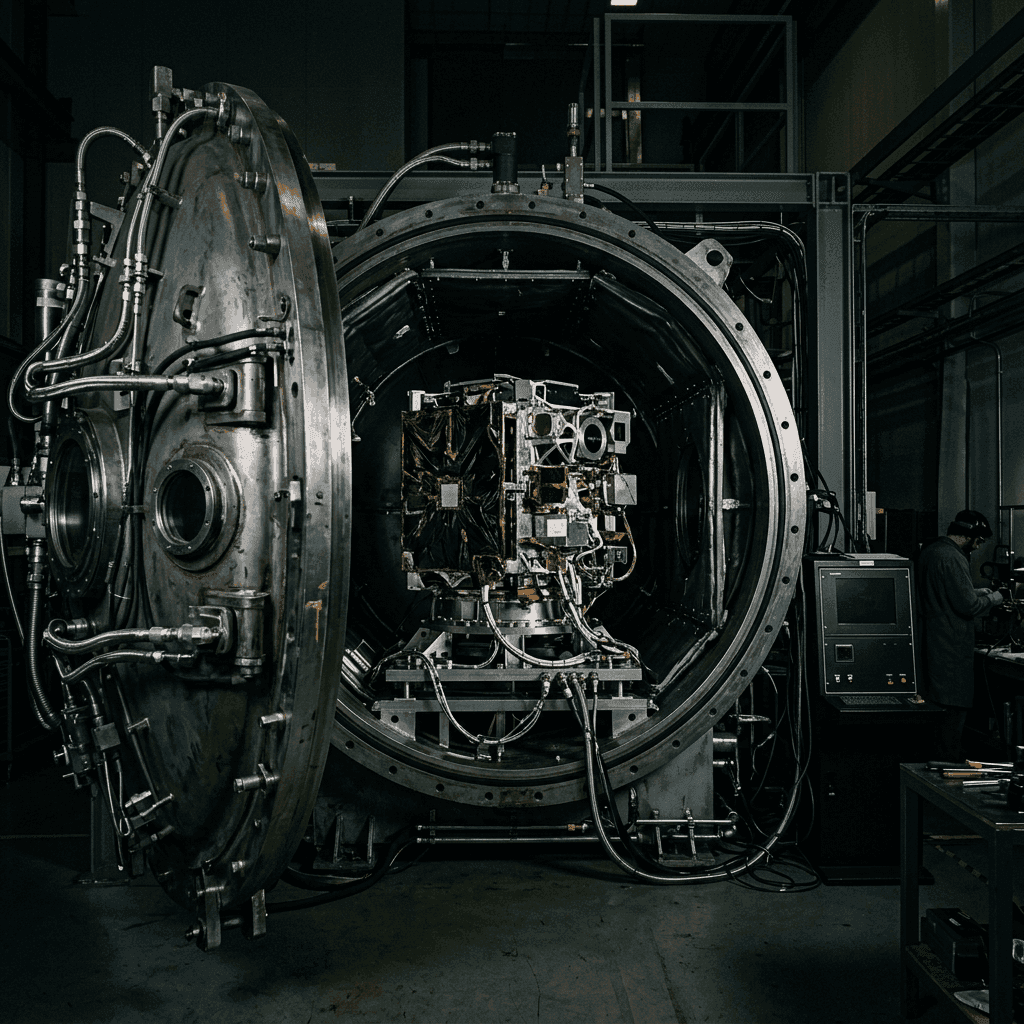
The order looks like any other. It isn't.
A supplier that has spent decades building rugged electronics for aircraft, vehicles or industrial systems looks, on paper, ready for a space contract. The reality is harsher. Orbit does not tolerate the margins that terrestrial work quietly absorbs. A part that runs for years on the ground can fail in weeks once radiation, thermal cycling and vacuum start working on it, and there is no field service call five hundred kilometres up. The mission either survives on the reliability designed in before launch, or it does not survive at all.
That is why space work is gated on qualification rather than price. A prime contractor or space agency will not accept a subsystem because it looks robust; it accepts it because the supplier can show the part was engineered for the orbital environment and can prove, with records, that every unit shipped meets the same standard. For a supplier crossing over from aerospace or defence electronics, the challenge is rarely ambition. It is assembling a chain of proof that holds together from the silicon to the shipped hardware.
The temptation is to lean on an overseas laboratory or a foreign prime to supply the qualified parts and sign off the testing. That works until it doesn't. Export gates, release schedules and disclosure obligations all sit with someone else, and the moment a programme becomes politically inconvenient the supply of qualified components is exactly what gets throttled. Owning the qualification chain, the qualified subsystems and the inspection behind them, is what turns a one-off contract into a durable business.
Reliability measured in years, not months
The foundation is the electronics themselves. Radiation-tolerant subsystems are qualified for the orbital environment and engineered for missions measured in years rather than months, which is the difference between a spacecraft that completes its design life and one that degrades before it has returned its investment. For a supplier, sourcing these from an independent origin matters as much as the reliability figures: it means the parts arrive without the export strings that gate major-power components, so a delivery schedule answers to the programme rather than to a foreign licensing office.
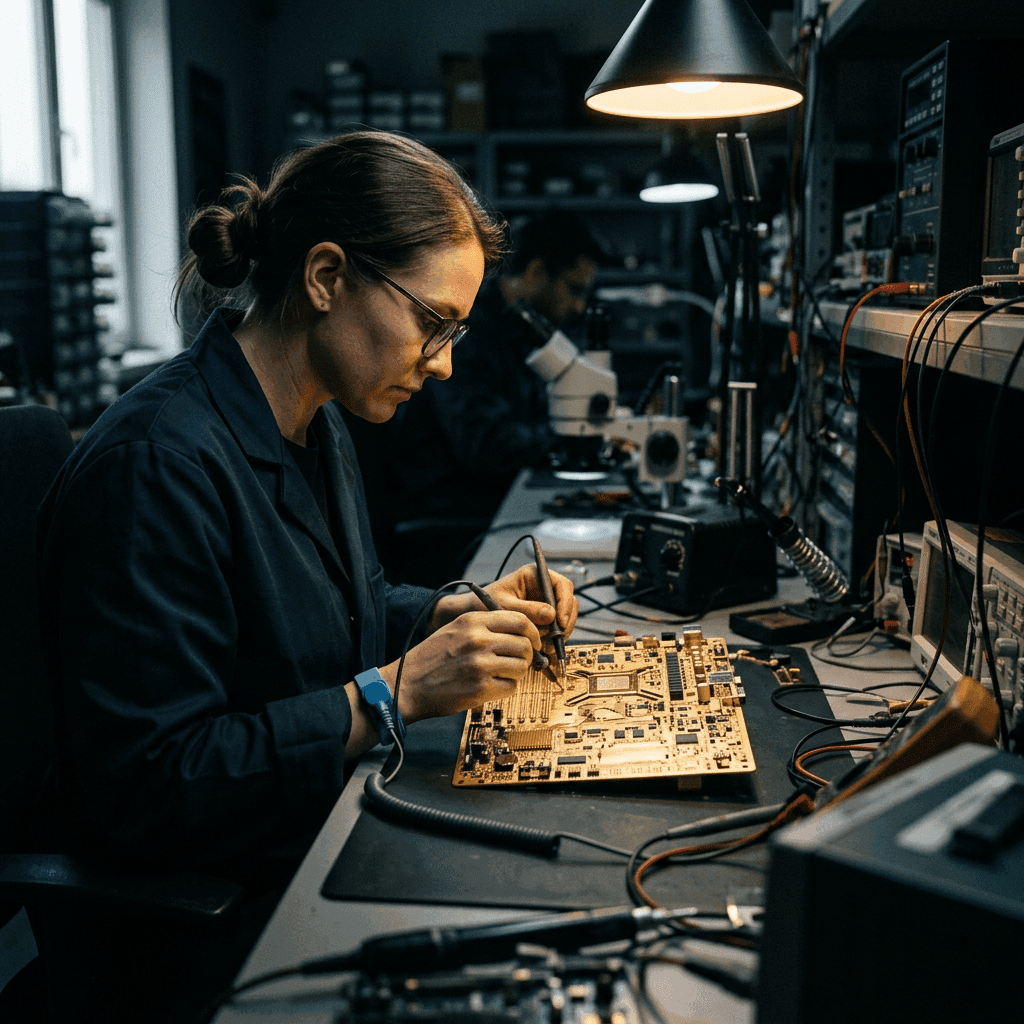
Reliability is not only a property of the design. It is a property of every assembly that leaves the line, and that is where inspection becomes the quiet backbone of the whole effort. A flight-critical avionics card or a mission-computer board can look perfect and still carry solder voids, cracks or plated-through-hole faults buried inside dense multilayer construction, invisible to any optical check. In orbit those defects become failures at the worst possible moment.
This is where an independent inspection channel earns its place: it keeps the qualification standard under the supplier's own roof rather than dependent on a foreign laboratory's release schedule: capability without a foreign veto attached.
Seeing inside the assembly, without cutting it open
The practical answer to hidden defects is X-ray. Board-level X-ray inspection finds the faults that visual and optical methods cannot reach: solder voids, cracks, bridging, missing BGAs and plated-through-hole fill faults inside dense, multilayer boards. It runs the full flow from automatic board identification through defect classification to an annotated report, with micron-level resolution and magnification beyond 7,000×. For a supplier certifying the electronics inside a mission computer or a radar module, it turns board-level quality assurance from an operator's subjective judgement into a documented, repeatable measurement, and it does so without cutting a single assembly open.
That inspection cell is indigenously developed, with its acquisition and review software developed in-house. For a supplier building a long-term space business, that ownership is the point. The imaging standard, the defect record and the tooling stay with the manufacturer rather than licensed from an overseas vendor, so the quality record a prime contractor audits is one the supplier controls end to end. It also keeps the capability available: the safety envelope is certified and the system is built to sit on a production floor, not in a specialist overseas lab reachable only by shipping parts abroad.
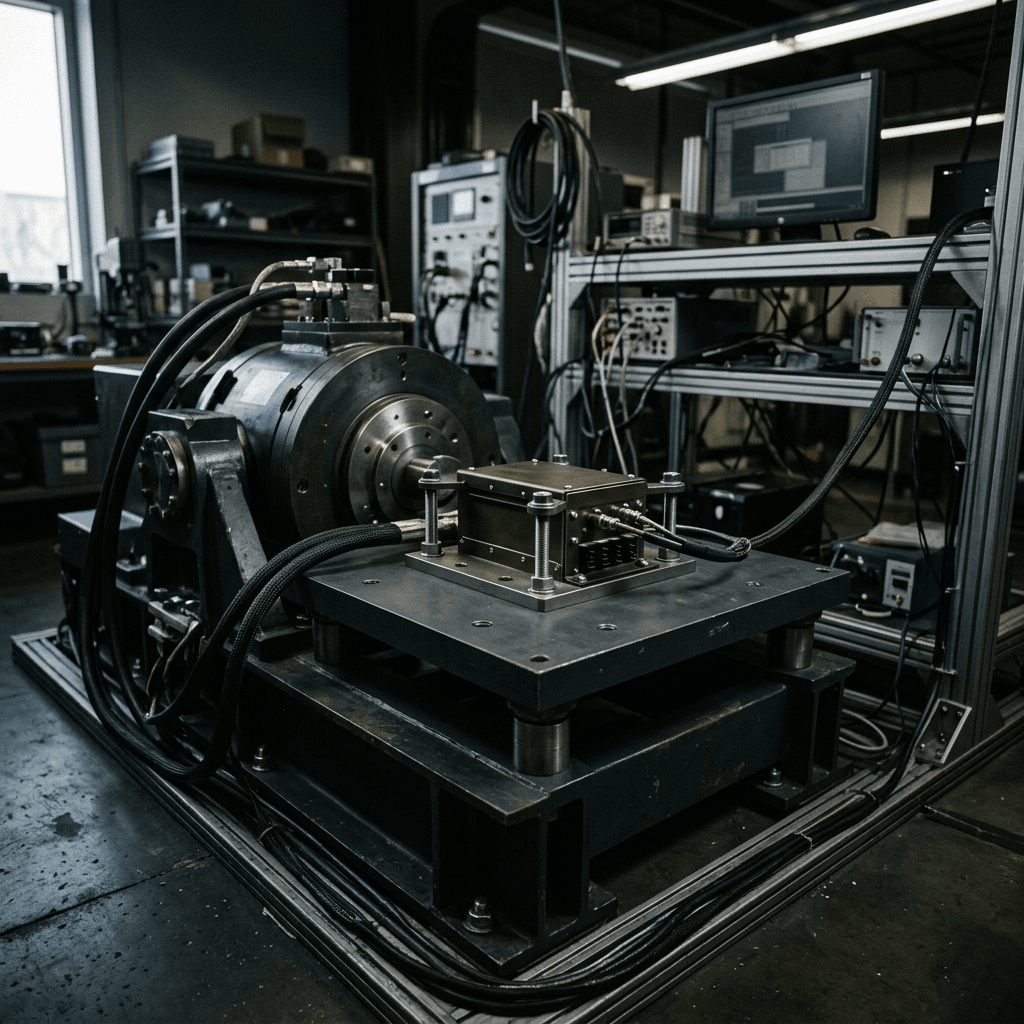
Qualification does not stop when a programme moves to production, and it does not stop when the original test vendor moves on. Automated test equipment and obsolescence engineering keep the depots testing long after a supplier line was first stood up, reverse-engineering and rebuilding the dying legacy benches a mature programme still depends on. For a space supplier expecting to sustain hardware across a mission measured in years, that means availability is protected without dependence on a foreign support line that can lapse exactly when a spare is needed.
Shielding the parts that keep the mission alive
Radiation is the environment that defines orbit, and shielding sensitive electronics and instruments against it is a materials problem as much as a design one. Tungsten heavy-alloy shielding outperforms lead: at around 18 g/cc against lead's 12, the same protection comes in a shield that is thinner, stronger, less toxic and far more tolerant of heat. On a spacecraft, where every gram and every cubic centimetre is contested, a thinner and tougher shield is not a nicety but a design margin that can decide whether an instrument fits its allocation at all.
The same material discipline reaches into the wider platform. Tungsten heavy alloy is used for aerospace balance weights and precision components as well as shielding, machined to exact geometries on decades of powder-metallurgy experience. For a supplier assembling a subsystem, the value of drawing shielding and precision metalwork from an independent source is continuity: critical-material supply that does not sit behind a foreign export gate, and that answers to the programme's schedule.
Put together, the qualified electronics, the in-house inspection, the sustained test capability and the shielding form the chain of proof a space contract actually turns on. None of it is glamorous. All of it is what stands between a supplier and a mission that fails silently in orbit.
One accountable channel from board to orbit
The pattern across all of this is ownership. A supplier that depends on borrowed qualification, a foreign inspection lab and export-gated parts has built a business that can be switched off by decisions made somewhere else. A supplier that holds its own board-level inspection, its own sustained test capability and an independent line of qualified components and shielding has built something durable, and something a prime contractor can rely on through the life of a programme.
Unstrat represents these capabilities as an independent, non-aligned channel, one accountable route from first briefing through delivery, with no obligation to disclose to any major power. For an aerospace supplier stepping up to space-grade work, that means the qualification chain, the inspection records and the material supply come together as one accountable relationship rather than a patchwork of vendors each with its own release schedule. Space does not forgive shortcuts. It rewards suppliers who can prove, unit by unit and record by record, that they took none.


