
Strategic depth is made in your own factories.
Sovereign defence production means the machines, the materials, the armament and the inspection to make it: capital equipment and critical-material supply held on your own soil.
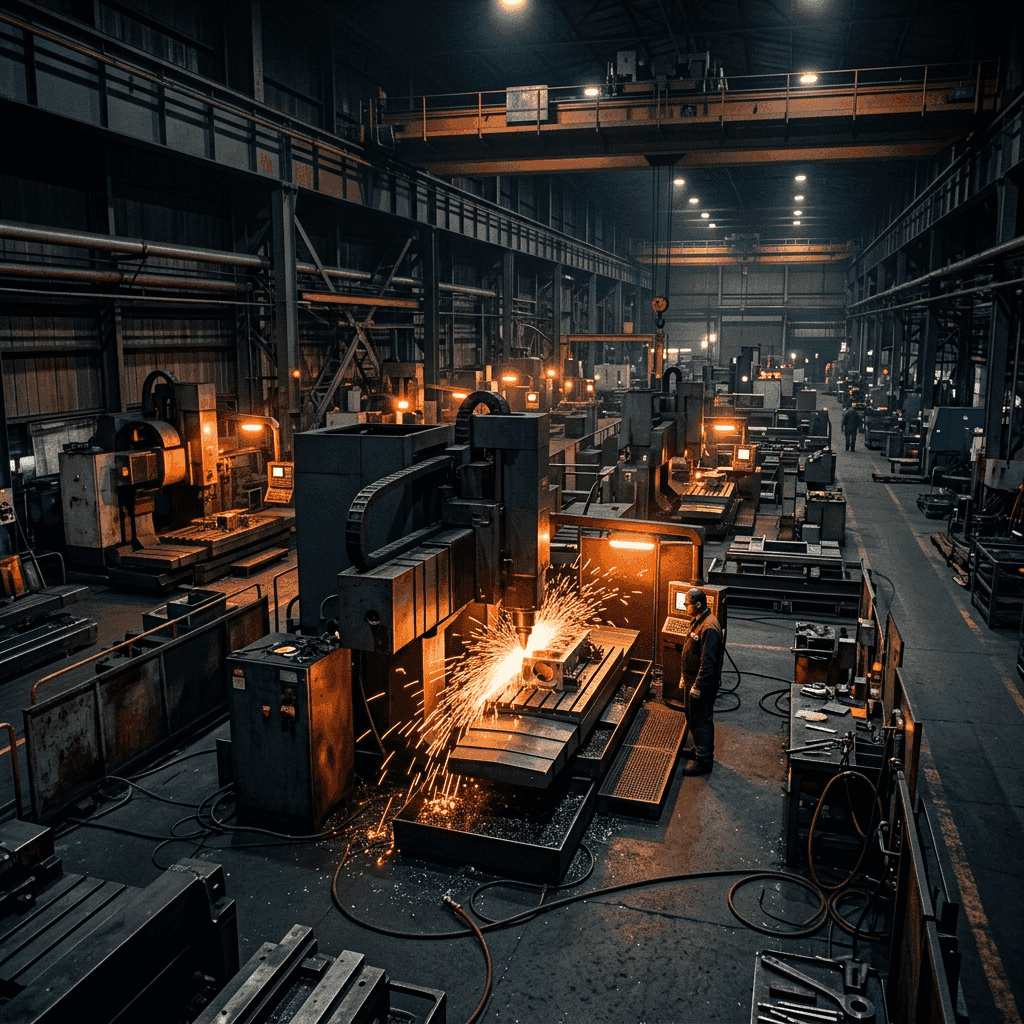
You cannot import your way to strategic depth
A nation that buys its defence equipment finished from abroad holds a stockpile, not an industry. Stockpiles run down, resupply arrives on someone else's terms, and the political conditions that come with imported capability tend to bite hardest exactly when the capability is needed most. Strategic depth is the ability to keep making what you need when the supply lines you counted on close.
Building that depth is not a single purchase. It is a chain: the machines that cut and form the parts, the materials that feed them, the armament and components those materials become, and the inspection that certifies the result. Break any link and the chain fails as a whole. A factory with no feedstock, or finished parts nobody can certify, is not sovereign production.
Unstrat assembles that chain as one accountable, non-aligned channel, delivering localisation as capital equipment and critical-material supply rather than promises. The capabilities below are the links, from the machine tool to the certified part.
The machines that make the weapons
The foundation of any production line is the equipment itself. Defence production machinery supplies it: CNC turning and machining centres for defence-grade components, special-purpose machines and transfer lines engineered to the part, and gantry and robotic automation for high-rate production. This is the capital-equipment foundation of an in-country programme: localisation delivered as machines on a floor, not a memorandum of intent.
The credibility of that equipment comes from its source. It is supplied by a listed machine-tool builder that also manufactures small arms, which means the machines are proven on the builder's own production lines rather than sold on specification alone. A nation is buying equipment that already makes real defence hardware, not a catalogue promise.
Once the machines are on national soil, the decisive dependency shifts. Production capacity is no longer something a foreign supplier can throttle; it is a national asset, and the only remaining question is what those machines are fed.
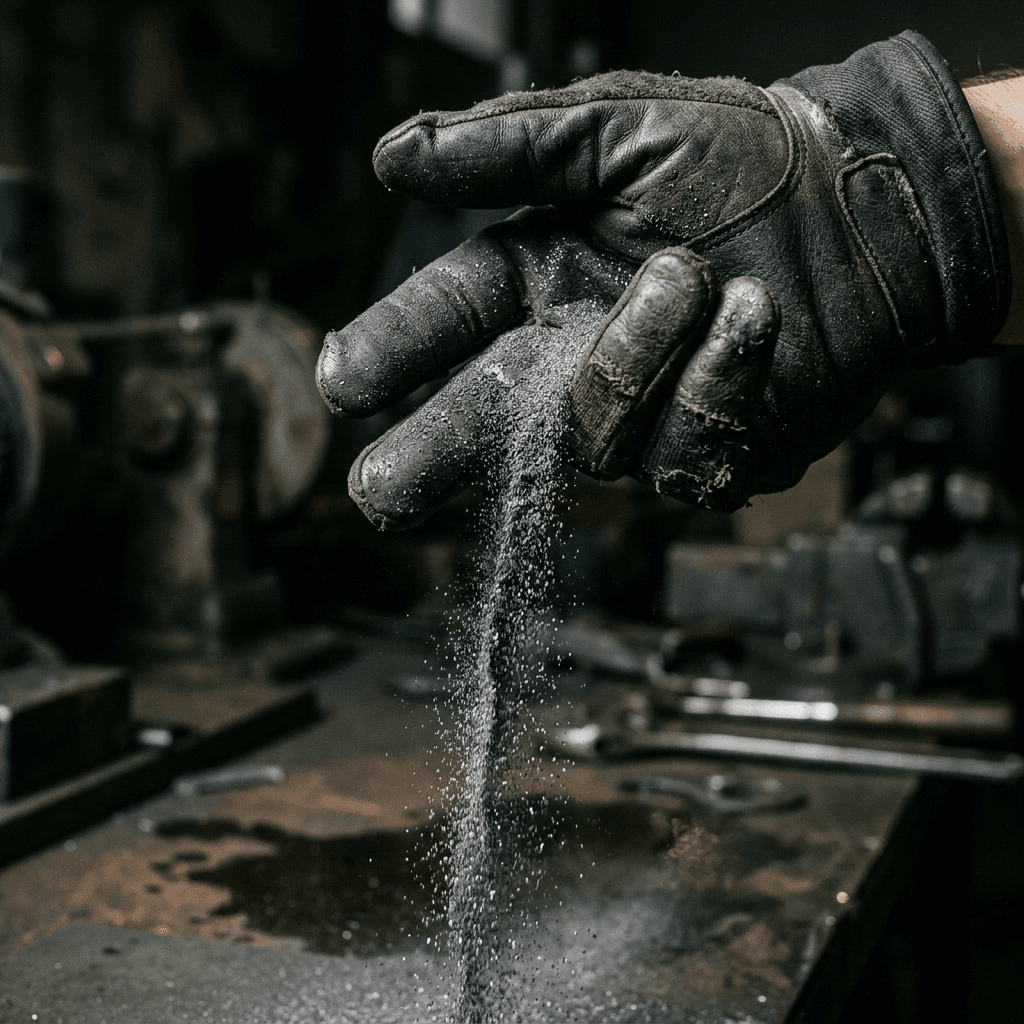
The materials the line runs on
Machines are only as sovereign as their feedstock. Metal and alloy powders provide the material foundation for additive manufacturing, surface coatings and sintered components: copper, bronze, brass, tin and nickel powders through controlled atomisation, alongside tool-steel, stainless and diamond-tool matrix grades. Crucially, the supply includes custom powder development to programme specification, so a nation is not limited to the fixed catalogue a foreign mill happens to sell.
For the most demanding defence applications, tungsten components supply high-density tungsten heavy alloy at around 18 g/cc, roughly 2.5 times the density of steel, the material behind warhead pre-fragments and penetrators, where it has very few alternatives, as well as radiation shielding that outperforms lead and airworthiness-approved aerospace balance weights. It comes from one of the very few manufacturers producing high-density tungsten, backed by more than 25 years of powder metallurgy.
The strategic point of holding both the powders and the tungsten supply through an independent source is that the critical materials a programme depends on no longer sit behind a major-power export gate. Feedstock is where import dependency most often hides, and this is where it is removed.
The armament, and the proof it is sound
A production base needs foundational armament it can make and sustain. Small arms supply a service-proven indigenous 9×19 mm machine carbine from an independent maker, a private manufacturer that indigenously produces and supplies small arms to elite forces, built on four decades of precision machine building and governed by classification and end-user-certificate controls. It is a foundational capability that arrives without the political conditions that usually attach to small-arms supply.
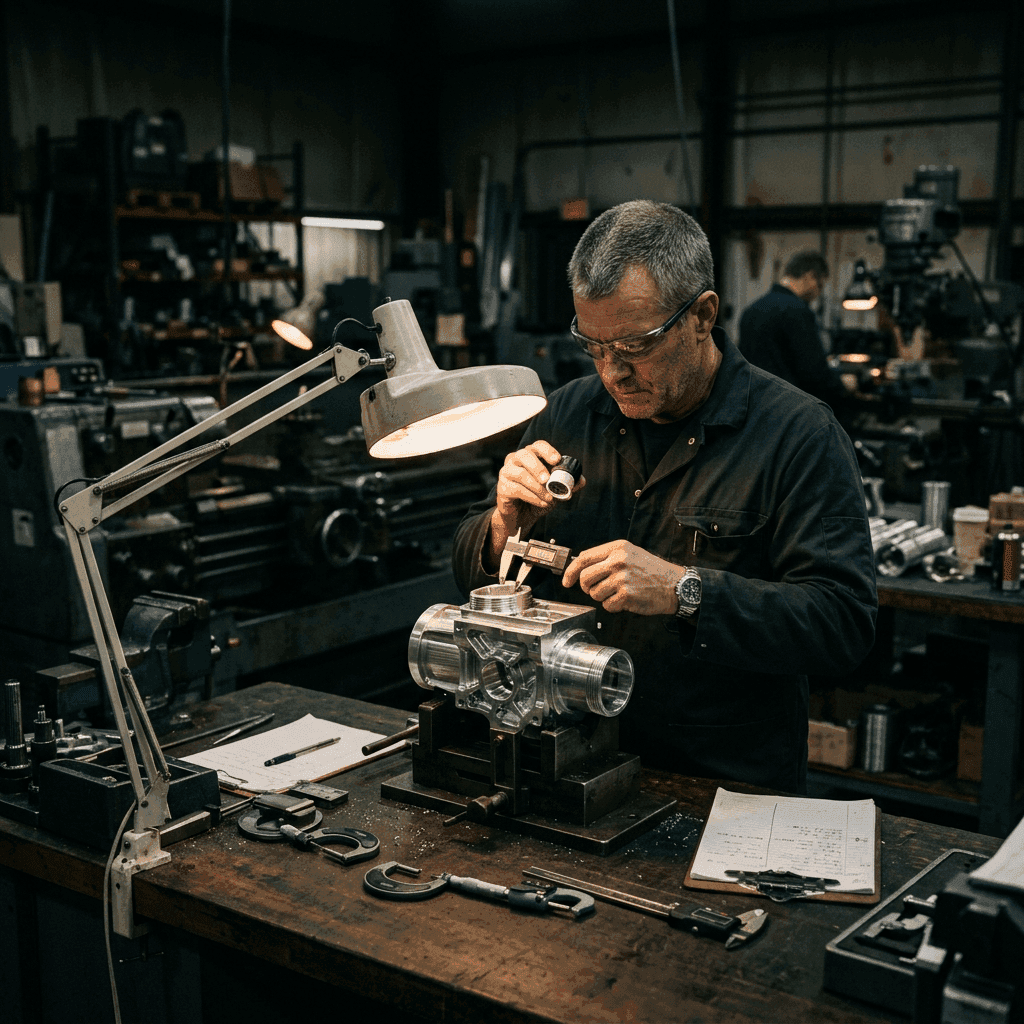
Making a part is not the same as certifying it, and defence production stands or falls on the ability to prove a component is sound. Non-destructive testing closes the chain with digital radiography, high-energy X-ray and computed-tomography inspection that verifies structural integrity without disassembly, keeping components and in-service assets certified. Applied across the line, it turns quality assurance from an operator's judgement into a documented, defensible record.
Inspection held in-country matters as much as production held in-country. A nation that can make a part but must ship it abroad to certify it has not achieved sovereign production; it has relocated only half the dependency. Owning the inspection keeps the quality standard, and the data behind it, under national control.
The whole chain, one accountable channel
The reason to build the machines, the materials, the armament and the inspection through a single independent channel is that they are one industrial base, not four unrelated purchases. A machine with no feedstock, feedstock with no armament to become, or armament nobody can certify are each a broken chain. Held together under one accountable team, with no major-power dependency baked in, they form an industry a nation actually controls.
For a government, this is what strategic depth looks like in practice: not a warehouse of imported equipment, but the standing ability to make, feed, arm and certify its own defence production. That depth is not bought. It is made, in your own factories.


