
19 May 2026
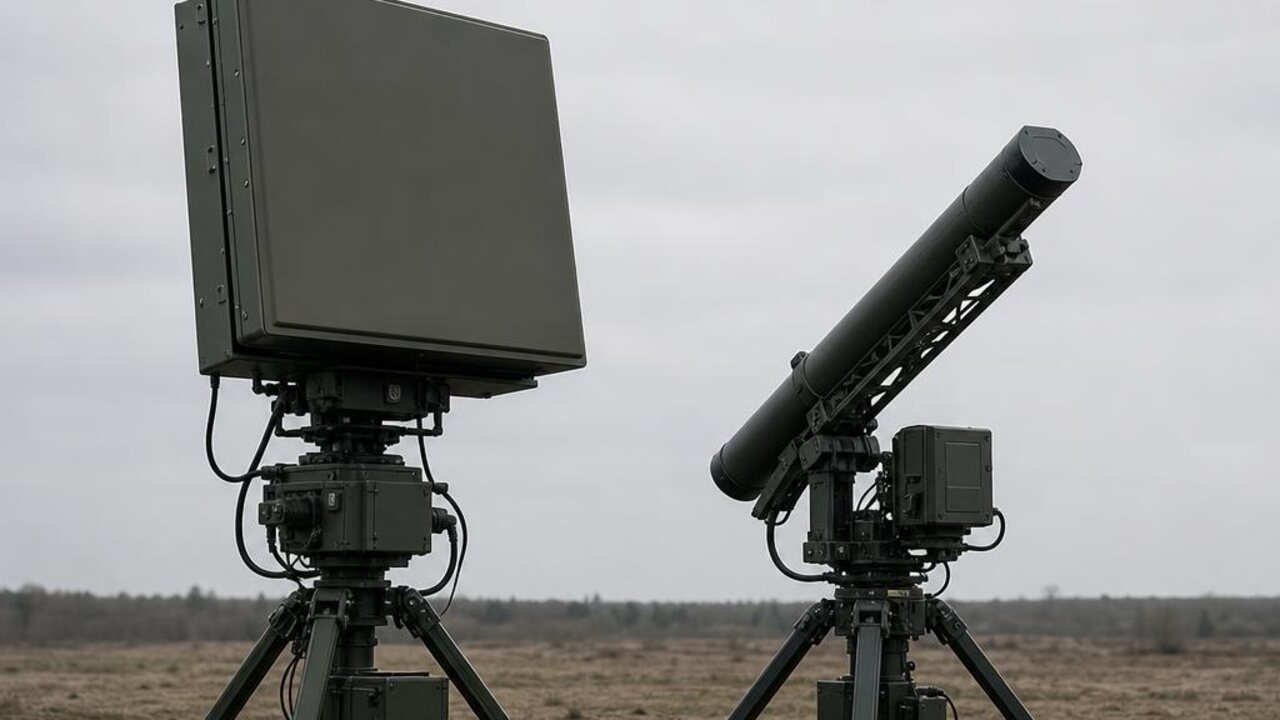
Two philosophies of defeat
Non-kinetic defeat attacks the drone's dependencies: jamming severs the command or navigation links, spoofing feeds them lies, and the aircraft drifts, lands or returns home. Kinetic defeat ignores the dependencies and stops the airframe itself: nets, interceptor drones, guns, missiles. One is quiet, cheap per engagement and reversible; the other is definitive.
Where non-kinetic shines and fails
Against the remotely piloted majority of drone incidents, jamming is elegant: low collateral risk, negligible per-engagement cost, no debris. Its limits are structural. Autonomous aircraft navigating without links present nothing to jam. Jamming radiates, revealing the defence and disturbing the site's own spectrum, a real constraint at airports and communications-dense facilities. And legal authority to jam is restricted in most jurisdictions.
Where kinetic shines and fails
Kinetic methods work regardless of the drone's autonomy. Physics does not care whether anyone is piloting. Net capture suits permissive environments where the aircraft must come down intact and gently. Interceptor drones extend reach and keep cost per engagement rational. Guns and missiles anchor the hard end but bring debris, collateral hazard and, for missiles, an economics problem against cheap threats. Every kinetic choice trades definitiveness against what falls from the sky afterwards.
The comparison, resolved
The mature answer is sequencing rather than selection: attempt the quiet, cheap, reversible defeat first where the threat and law allow, and hold a kinetic layer behind it for autonomous aircraft, jamming-resistant threats and moments when the outcome cannot be probabilistic. Buyers comparing effectors should therefore score architectures (how well a system layers and sequences both families) rather than crowning either philosophy.
The decision that actually matters
The temptation is to pick a side (jam it or hit it), but the buyers who protect their sites most reliably resist that framing entirely. The advantage lies in an architecture that sequences both families: soft defeat attempted first where the threat and the law allow it, with a kinetic layer held behind it for autonomous aircraft, jamming-resistant threats and the moments when the outcome simply cannot be left probabilistic. A defence built on one philosophy alone leaves a predictable gap for an adversary to exploit. When evaluating offerings, score how well a system layers and hands off between the two, how cleanly its command-and-control assigns each threat to the right effector, and how honestly the supplier maps its options to the deployment environment. The mission is defended by the whole, not by any single effector.
