
When the route is uncertain, send the machine first.
For reconnaissance under fire, resupply on exposed routes and work in contaminated ground, the safest first mover is a robot, controlled through the same command layer as the air fleet.
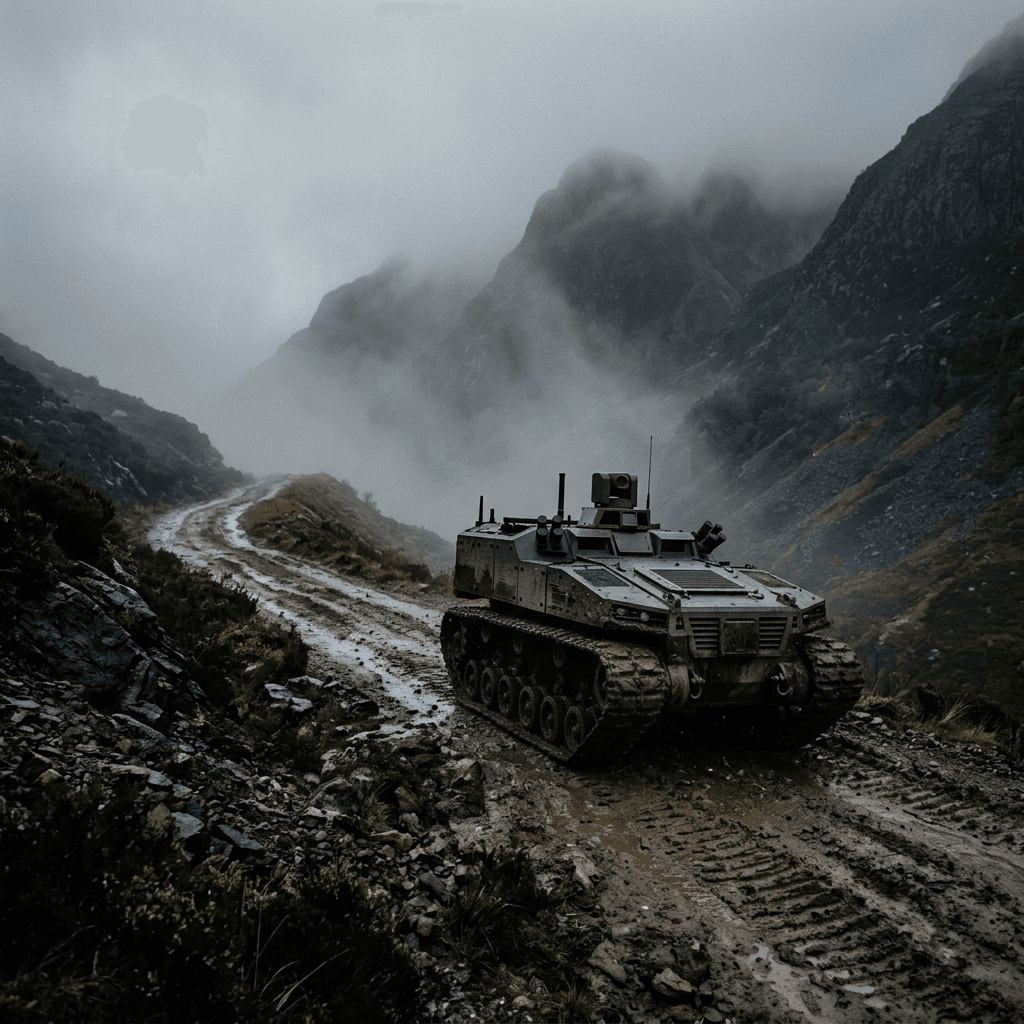
The most dangerous tasks are the most predictable
Some of the deadliest work a force does is also the most routine: the first vehicle down an unproven road, the resupply run across an exposed stretch, the entry into ground that may be contaminated or mined. These are not heroic missions. They are jobs that have to be done, repeatedly, by whoever draws them, and they take a steady toll precisely because they recur.
The common factor is uncertainty about the route ahead. When you cannot be sure what is around the corner, the safest first mover is not a person. It is a machine you can afford to lose and can control from a distance, sent ahead to turn an unknown into a known before anyone follows.
Sending the machine first is not about removing people from the fight. It is about not spending them on the tasks a robot can do: reconnaissance under fire, logistics on an exposed route, work in ground no one should walk into blind.
A robot for the tasks no one should draw
Our unmanned ground vehicles are built for exactly this. They are modular robotic platforms for reconnaissance, logistics and hazardous tasks where the path ahead is uncertain, with rugged tracked and wheeled configurations for rough terrain. Autonomous navigation handles the movement while operator override is available at all times, so the machine does the driving and the human keeps the judgement.
The design point is that they take soldiers out of the most dangerous tasks (recce under fire, resupply on exposed routes and work in contaminated ground) rather than adding a gadget to the ones they already do. That is a straightforward trade a commander can reason about: the machine goes first, and the people go only where the machine has already made the situation clear.
Because they come from an independent, non-aligned maker and are sustained in-region, the capability answers to the force that fields it, with one team accountable for keeping it running.
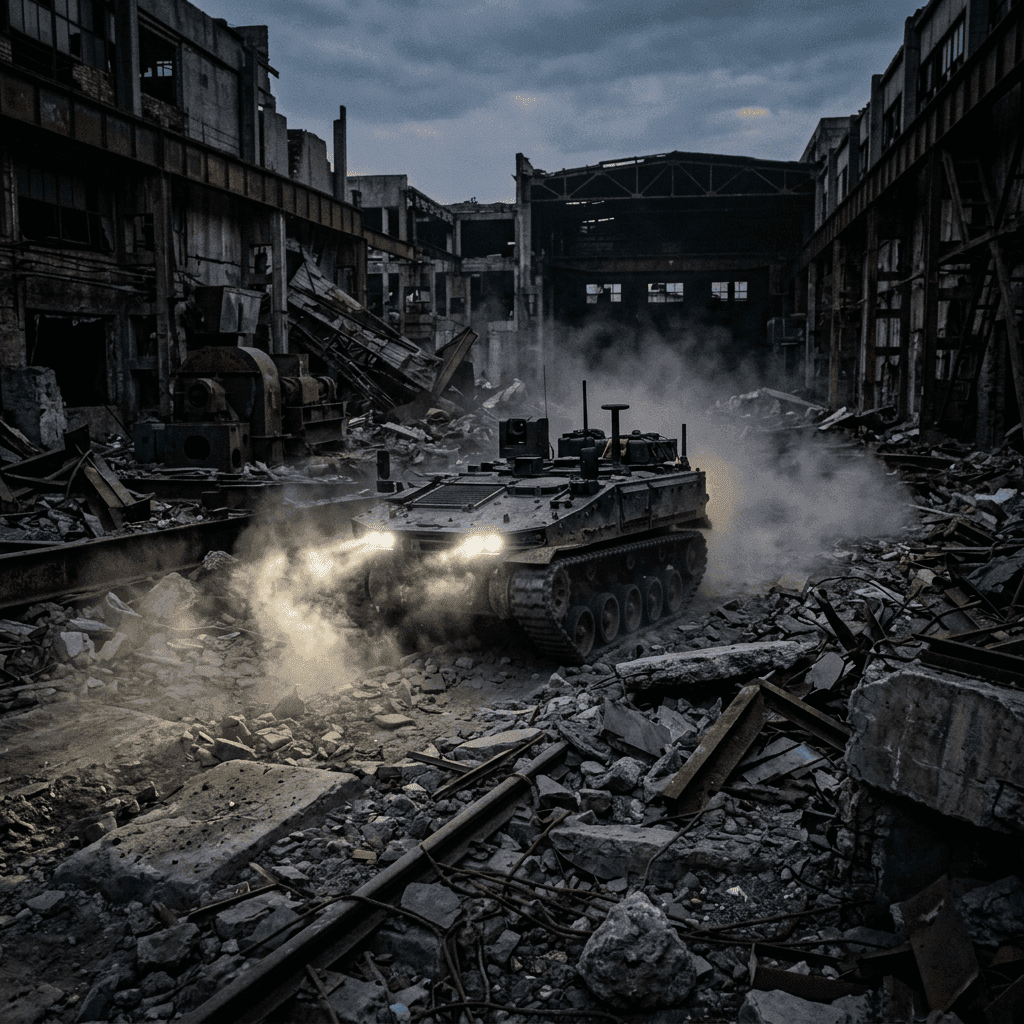
One platform, many missions
The tasks vary, and a fleet of single-purpose robots is expensive to buy and harder to sustain. Our modular unmanned ground platform answers that by taking mission modules that are swapped in the field, so one platform serves the reconnaissance run, the logistics leg and the hazardous task in turn rather than demanding a different vehicle for each.
Autonomous navigation is always paired with operator override, and the platform is built for the routes and environments where the path ahead is uncertain, the same design intent as the wider ground line, delivered as one adaptable system. Secure communications with military-grade encryption, anti-jamming and resilient mesh networking keep it under control in contested spectrum.
Keeping that control in contested spectrum depends on the link layer beneath it. The same anti-jam mesh data links that hold the wider force together carry the ground platform too: encrypted, anti-jam and self-healing, so losing a node on a long route never means losing the machine. A robot you cannot reliably reach is a robot you cannot send first.
Modularity is what keeps the fleet affordable and current. A payload can be changed in the field as the mission changes, which means the platform adapts to what the operation needs rather than to what a foreign catalogue happens to offer this year.
The machine that shares the force's picture
A robot that operates in its own bubble is a novelty. A robot wired into the force's awareness is a capability. What the ground platform sees on that uncertain route should flow straight into the same picture everyone else is working from, and that is where fusion and a shared command layer matter.
Our sensor-fusion suite merges radar, RF, optical and unmanned-platform feeds into a single operating picture on command-post displays, so the machine's sensors become part of one coherent picture rather than a separate screen someone has to reconcile. The correlation runs at machine speed with the operator kept in the loop.
And crucially, the ground systems are controlled through the same layer as the air fleet. The autonomous command-and-control layer is built to run coordinated multi-agent execution over encrypted, anti-jam mesh networking: one command architecture across ground and air, not another stovepiped controller to learn, staff and defend. Sending the machine first works best when the machine is already part of the force, not bolted on beside it.
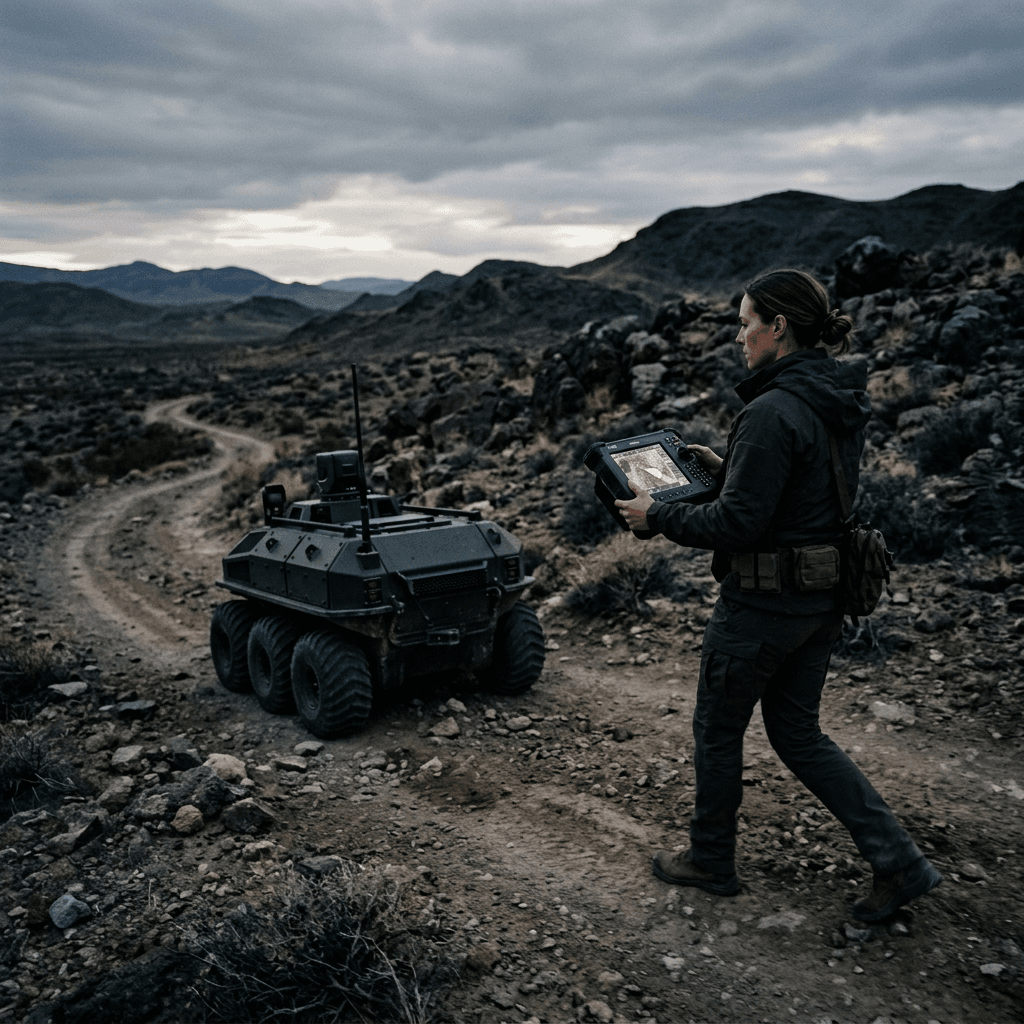
A trade a commander can reason about
The case for unmanned ground systems is not futurism. It is arithmetic: the most dangerous tasks are also the most predictable, and a machine that can be lost is the right thing to spend on them. Modular platforms keep the fleet affordable, fusion keeps the machine part of the force's picture, and one command layer keeps ground and air working as a single system.
Delivered through a single, non-aligned channel and sustained in-region, the whole capability answers to the force that owns it. When the route is uncertain, send the machine first, and keep your people for the decisions only they can make.


