
Disasters don't wait for the network to come back.
A national emergency communications capability that keeps talking when towers and satellites fail: infrastructure-independent HF, reconfigurable radios, self-healing mesh and early hazard warning.

The network fails exactly when you need it
Communications are the one capability a state cannot do without in a crisis, and they are usually the first thing a crisis takes away. A cyclone flattens the towers. A flood drowns the exchange. An earthquake severs the cable. The very event that makes coordination urgent is the event that removes the means to coordinate.
The dependency is deeper than most planning admits. Mobile networks need towers and power. Satellite services need a functioning ground segment and, often, a foreign operator's goodwill. Both need infrastructure that a disaster is perfectly capable of destroying, and both can be lost precisely when a government most needs to reach its own people and its own responders.
National resilience is decided before the crisis, not during it. The question is not whether the primary network will fail (in a serious enough event, it will), but whether anything keeps working when it does. A fallback that depends on the same fragile infrastructure as the primary is not a fallback at all.
Communications that need no infrastructure
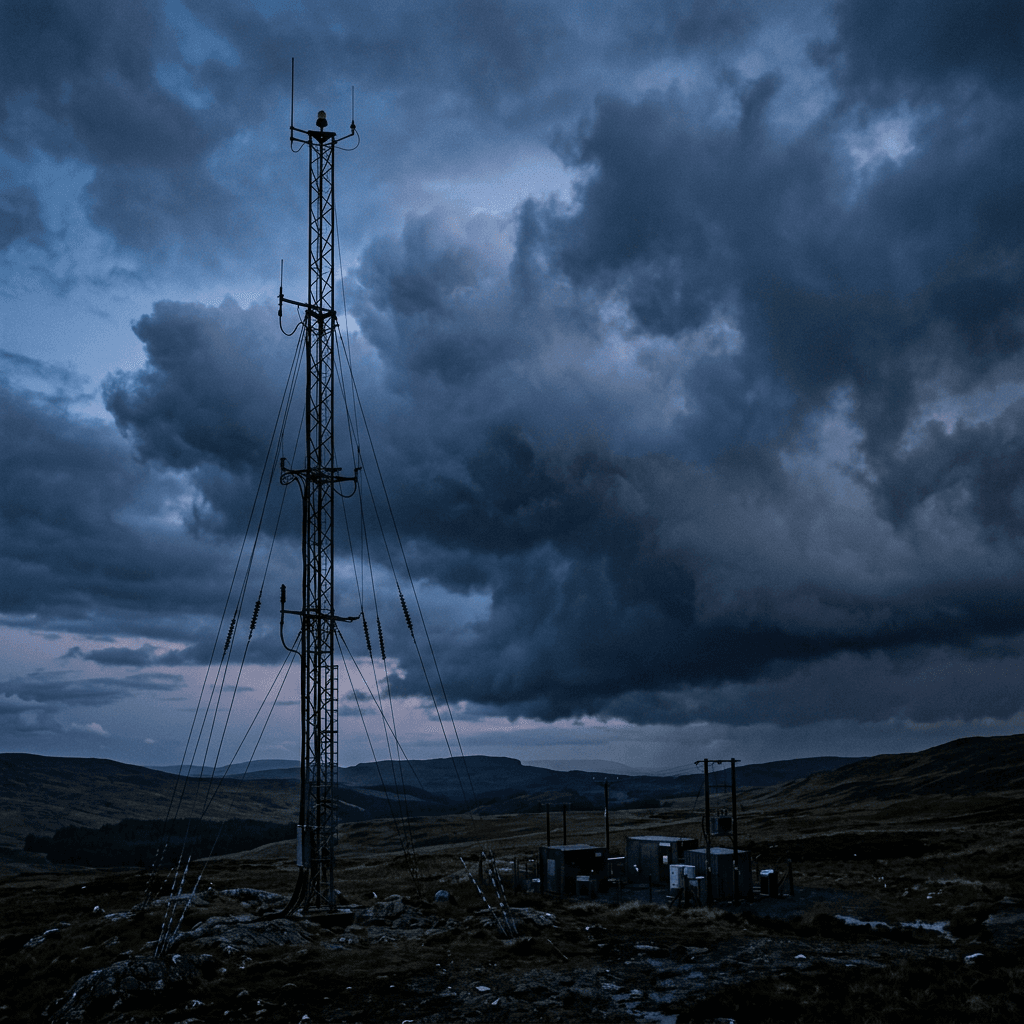
The most resilient network is the one that depends on nothing between the two radios. HF emergency communications provide resilient high-frequency networks that work with no towers, no satellites and no subscriptions: nothing an adversary or a disaster can take down. The transceivers are compact, field-repairable and built on an open architecture, deployable as a standing national emergency network for civil defence and remote operations.
That independence is the whole point. When the commercial network is gone and the foreign-owned satellite service is unavailable or throttled, an HF network that owes nothing to either simply keeps working. It is the communications capability that survives the loss of everything else, resilience no adversary or disaster can switch off, because there is nothing in the middle to switch off.
Deployed as a standing capability rather than improvised after the fact, such a network gives a nation a communications floor it can always fall back to. The primary systems can fail as badly as a disaster can make them fail, and the government still has a way to talk to itself.
Radios that adapt in the field
A rigid radio is a liability in a crisis, because a crisis rarely respects the mode and band a system was procured for. When conditions shift and spectrum is crowded or contested, the responder needs a radio that changes to suit rather than one that waits for the next procurement cycle to be upgraded.
Software-defined radios are built on a hybrid architecture that adapts mode and band in the field, with voice and digital modes on the radio itself and no external computer required. Being open-source in both hardware and software, they are fully auditable and field-repairable. A responder can fix and reconfigure the radio where it is used, rather than shipping it to a distant depot while a crisis runs on.
That combination of adaptability and repairability is exactly what a national emergency capability needs. Field-repairable hardware means the network survives hard use; field-reconfigurable software means it survives changing conditions. Neither depends on a foreign vendor being reachable when the situation is at its worst.
A network that heals itself
A single chain of relays is only as strong as its weakest node, and a disaster is a machine for destroying nodes. If losing one relay collapses the network, the network was never built for a real crisis in the first place.
Anti-jam mesh data links answer that with an encrypted, self-healing mesh topology across units, vehicles and systems, built so there is no single point of failure. Losing a node never means losing the network: traffic reroutes around the gap, and coordination survives even as parts of the infrastructure are knocked out. In contested spectrum, the anti-jam waveforms keep the network up against deliberate interference as well as accidental loss.
For a national emergency capability, that self-healing property is what turns a fragile chain into a durable web. Responders, vehicles and coordination centres stay connected as the situation degrades around them, and the loss of any one link becomes an inconvenience rather than a collapse.
A resilient network still has to be a trustworthy one. When a crisis cuts a coordination centre off from the wider internet, its systems have to stay protected without the connectivity most security tools assume. Off-grid cybersecurity provides assurance for isolated, air-gapped and remote systems, so the fallback network a nation falls back to is defended even while it is disconnected from everything else.
See the crisis coming, and one channel to build it
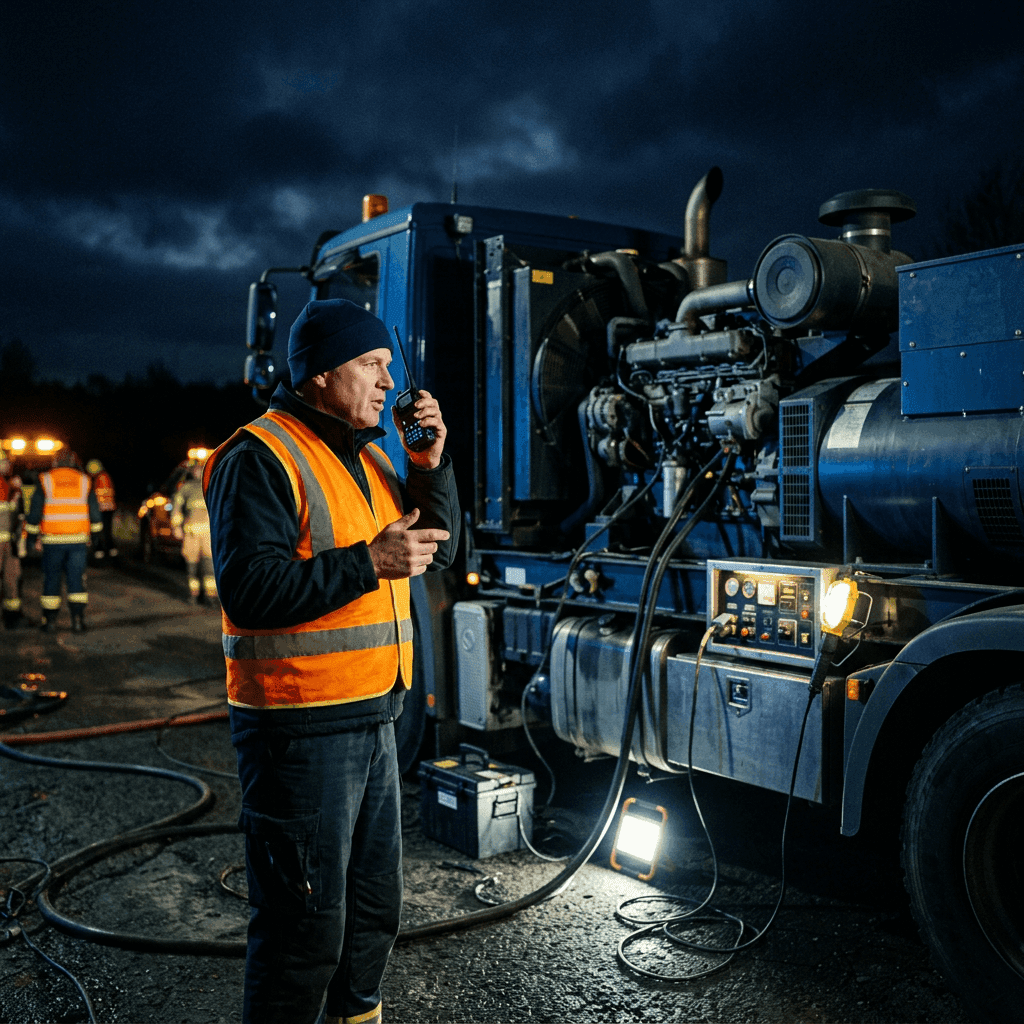
The best emergency communications are the ones a nation never has to use in extremis, because it saw the event coming and acted early. Disaster risk monitoring builds a live operating picture of cyclones, flooding and coastal hazards from earth-observation and ground data, buying civil-defence agencies decision time before an event and a sovereign hazard picture drawn from their own data rather than a foreign agency's alerting. The warning layer and the communications layer are two halves of the same resilience: one tells you the crisis is coming, the other keeps you talking through it.
Assembled separately, these capabilities tend to leave gaps: an early-warning system that cannot reach the responders, or a fallback network with nothing to warn it. Unstrat brings the infrastructure-independent HF, the reconfigurable radios, the self-healing mesh and the hazard monitoring together through one accountable, non-aligned channel, made to work as a single resilience capability rather than four disconnected procurements.
Disasters do not wait for the network to recover, and they do not check whether a foreign operator is willing to keep serving you that day. A nation that has built a communications floor it owns outright, one that needs no towers, no satellites and no subscriptions, is a nation that can keep coordinating when everything else has gone dark. That floor has to be built before the crisis. Afterwards is too late.


