
Germany backed Israel for decades. Then it paused Gaza-usable arms.
On 8 August 2025, Chancellor Friedrich Merz said Germany would suspend exports of military equipment that could be used in Gaza until further notice.
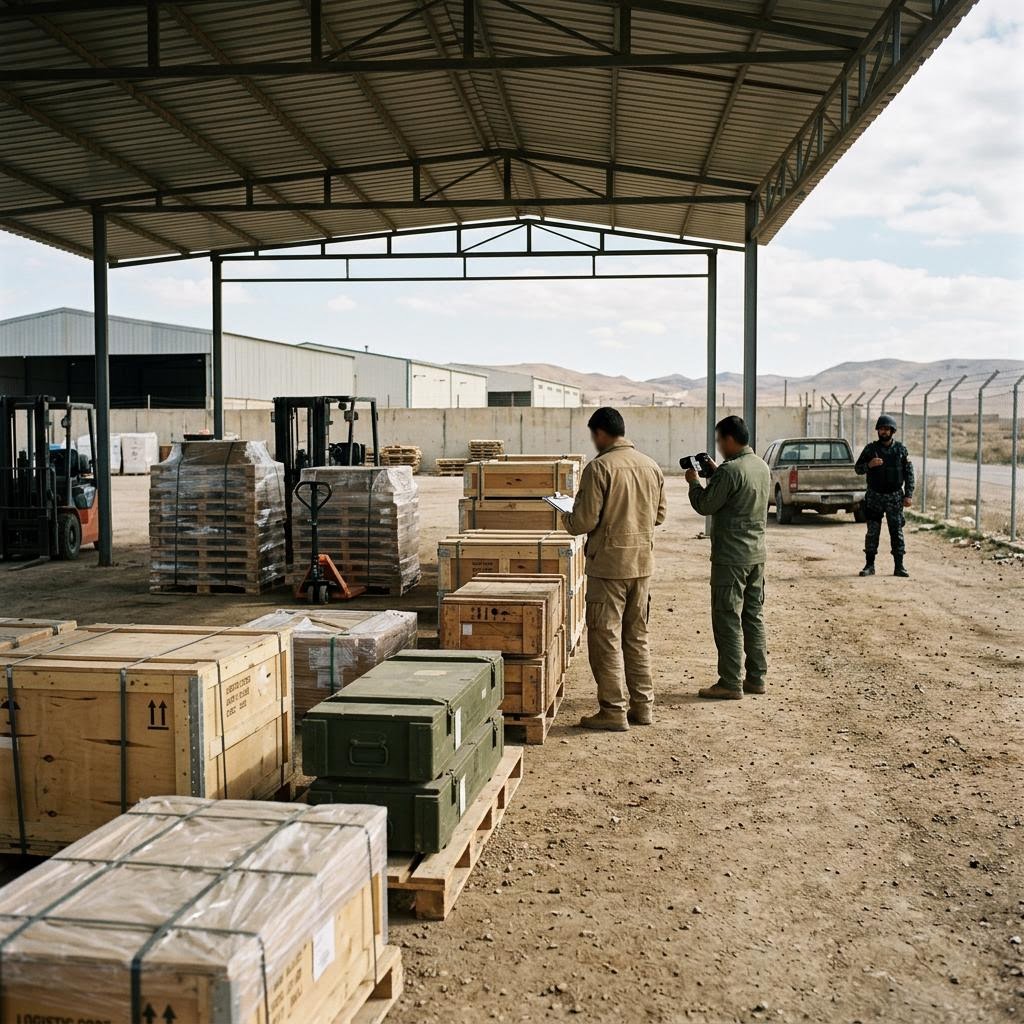
Germany did not need to cancel every defence relationship to interrupt one category of supply. It only had to make possible use in Gaza a condition of export.
On 8 August 2025, Reuters reported that Germany would suspend exports of weaponry that could be used in the Gaza Strip. Chancellor Friedrich Merz said the decision followed Israel’s plan to expand operations in Gaza. His statement recognised Israel’s right to disarm Hamas and seek the release of hostages, but said the Israeli decision made it increasingly difficult to see how those goals could be achieved.
The language was broad in subject and narrow in legal effect. Germany said it would not approve exports of military equipment that could be used in Gaza until further notice. The record does not identify every item, licence or contract covered. It does not say that Germany stopped every defence export to Israel, and it does not show that equipment already delivered was withdrawn.
That distinction is the practical point. Export permission is part of delivery even after a supplier and customer have agreed in principle. A policy can turn intended use into a condition of transfer. If the approving government decides that a class of equipment may be used in a conflict it considers legally or politically sensitive, the customer can retain its existing systems while facing uncertainty over new consignments, replacements or replenishment.
Germany’s position was particularly important because it was a major supplier. Reuters cited Stockholm International Peace Research Institute data showing that Germany provided 30% of Israel’s major arms imports in 2019-23, primarily naval equipment including Sa’ar 6-class frigates. Reuters also reported that those frigates had been used in the Gaza war. The figure describes major-arms imports over a five-year period. It is not a percentage of all German exports in 2025, and it does not show that every German item was usable in Gaza.
The announcement therefore carried political weight beyond any one shipment. Germany had long been one of Israel’s strongest supporters, with its policy often described through the term “Staatsraison” and linked to the country’s historical responsibility for the Holocaust. A government that maintained that relationship while suspending a category of exports was attaching a limit to a policy usually presented as unusually firm.
The domestic pressure was visible too. Reuters cited a June poll in which 73% of Germans wanted tighter controls on arms exports, including 30% who favoured a total ban. Polling is not evidence that a particular licence was legally denied, but it helps explain the political setting in which the August decision was announced.
The record does not settle the operational question. It gives no list of weapons, no quantity, no value and no delivery schedule. It does not establish that an Israeli unit lacked a required part, that an operation was delayed or that a German item was irreplaceable. A broad policy statement cannot support those narrower claims without export records and delivery evidence.
AI-generated representative image.