
Saudi Arabia wanted more Eurofighters. Germany owned one signature.
In July 2023, Chancellor Olaf Scholz said Germany would not approve further Eurofighter deliveries to Saudi Arabia in the near future. Germany supplied about a third of the aircraft’s components, and Berlin’s position changed in January 2024 after the war-in-Yemen condition was reported.
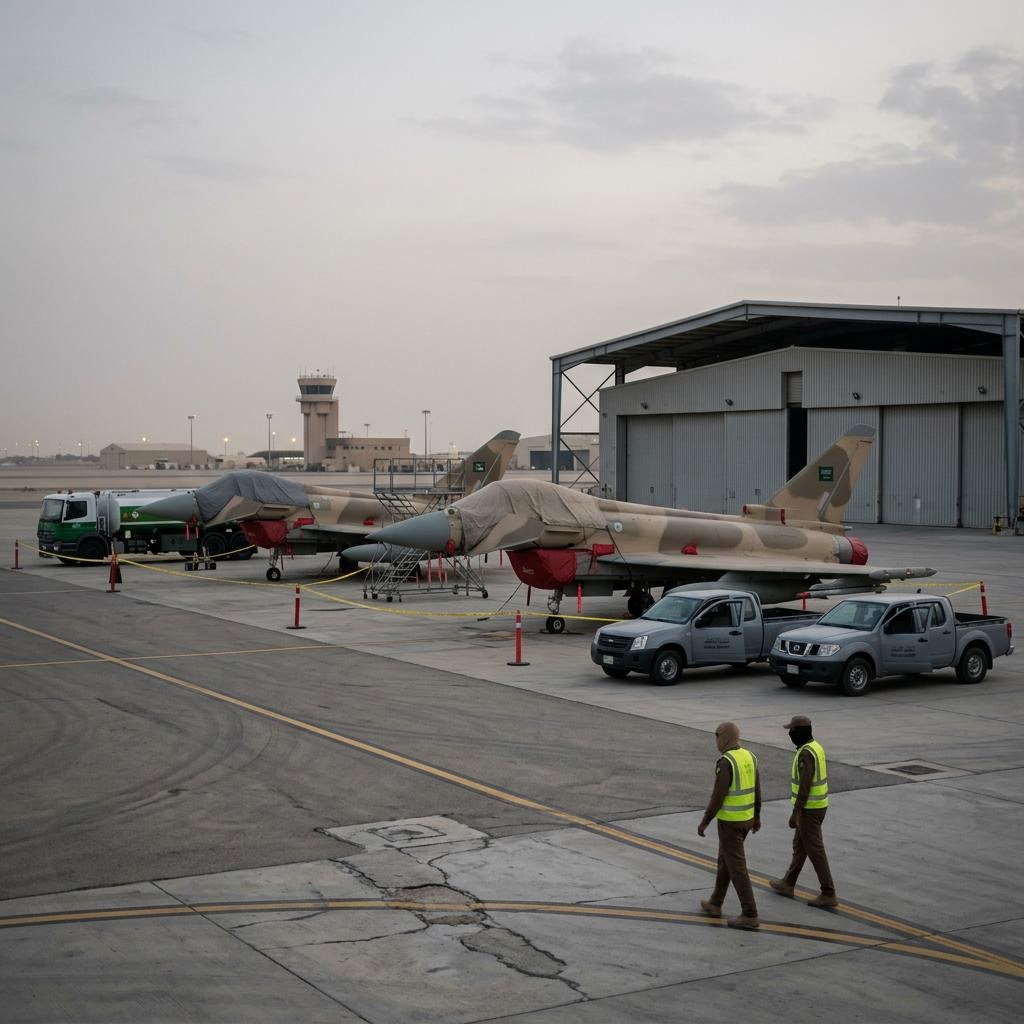
Berlin blocked approval for additional Saudi Typhoons in 2023, citing Yemen and German arms policy. It softened that position in 2024, but no completed follow-on contract was established at the time. The aircraft’s multinational design created a multinational veto: Britain could champion the sale, Saudi Arabia could fund it, and Germany could still delay it.
Consortium programmes share industrial work. They also share political risk.
The platform gets the ceremony. Export licences, re-export consent, end-use rules, geographic restrictions and approvals that survive long after delivery get the final say. That matters because a completed sale appears to transfer full authority to the buyer. That is the control point hiding behind the headline fact: Saudi Arabia wanted more Eurofighters.
The supplier may never issue a written refusal. It can explain, review, consult and postpone. The result may still be to narrow where, how or against whom the equipment can be used without taking the equipment back. Your forces experience the result long before your lawyers agree on the label. For Saudi Arabia, the warning is captured by what followed: Germany owned one signature.
Export controls are not evidence that the supplier is dishonest. Governments are entitled to control their technology. Buyers are equally entitled to understand how those controls limit the capability they are paying for. That distinction matters here: Germany owned one signature.
For Saudi Arabia, ownership does not automatically include freedom of use.
A serious review begins where the demonstration ends. Can approval be suspended by an official rather than a court? What operational plan fails if permission arrives late? Who must approve a future transfer to an ally? That exposure sits behind the claim that 'Saudi Arabia wanted more Eurofighters'.
This is where scenario planning has to become specific. Do not write 'seek alternate supplier' in the risk register and move on. Name the supplier. Confirm the legal route. Price the integration. Hold the stock. Train the people. Until those steps are complete, the alternative is a comforting noun rather than an operational capability. The exercise has a concrete starting point in this case: Saudi Arabia wanted more Eurofighters.
This is where the procurement team earns its keep. It can build political approval time into operational planning, write every expected mission and transfer scenario into the approval package and avoid assuming that ownership includes unrestricted use. A penalty clause may recover money later. These measures protect capability now.
Price that exposure honestly. A cheaper bid with one unmanageable control point may be more expensive than a higher bid that preserves options. Acquisition teams are good at comparing purchase prices. They are less consistent at pricing the cost of a grounded fleet, an empty magazine or a capability that arrives after the political need has passed. The headline fact, 'Saudi Arabia wanted more Eurofighters', should carry that exposure in its score.
The force commander needs a different set of answers. Can the supplier restrict use by geography, mission or target? Which upgrades and munitions require fresh licences? What reporting, inspection or end-use monitoring continues after delivery? Procurement success is not contract signature. It is usable strength on the required date. That is what 'Saudi Arabia wanted more Eurofighters' should force a buyer to test.
The final test for Saudi Arabia is simple: can the force use, move, upgrade and resupply the equipment for the missions it was bought to perform? If the honest answer begins with 'provided that somebody else agrees', that condition belongs on the first page of the procurement decision, not in an annex nobody reads. That exposure sits behind the claim that 'Saudi Arabia wanted more Eurofighters'.
A weapon that requires another capital's permission at the moment of use is not fully under the buyer's command, whatever the title document says. The export licence may be the most important component you never physically receive. The first half of this headline, 'Saudi Arabia wanted more Eurofighters', is where that test begins.
AI-generated representative image.
What Unstrat can offer as a non-aligned vendor
Explore the relevant market and capabilities available through Unstrat.