
Poland had Leopard 2 tanks. Germany held the export key.
Poland sought German approval to send its Leopard 2 tanks to Ukraine in January 2023, while Berlin’s position was shifting under allied pressure. Germany later agreed to send its own tanks and allow the wider transfer, but that later decision does not erase the earlier permission point.
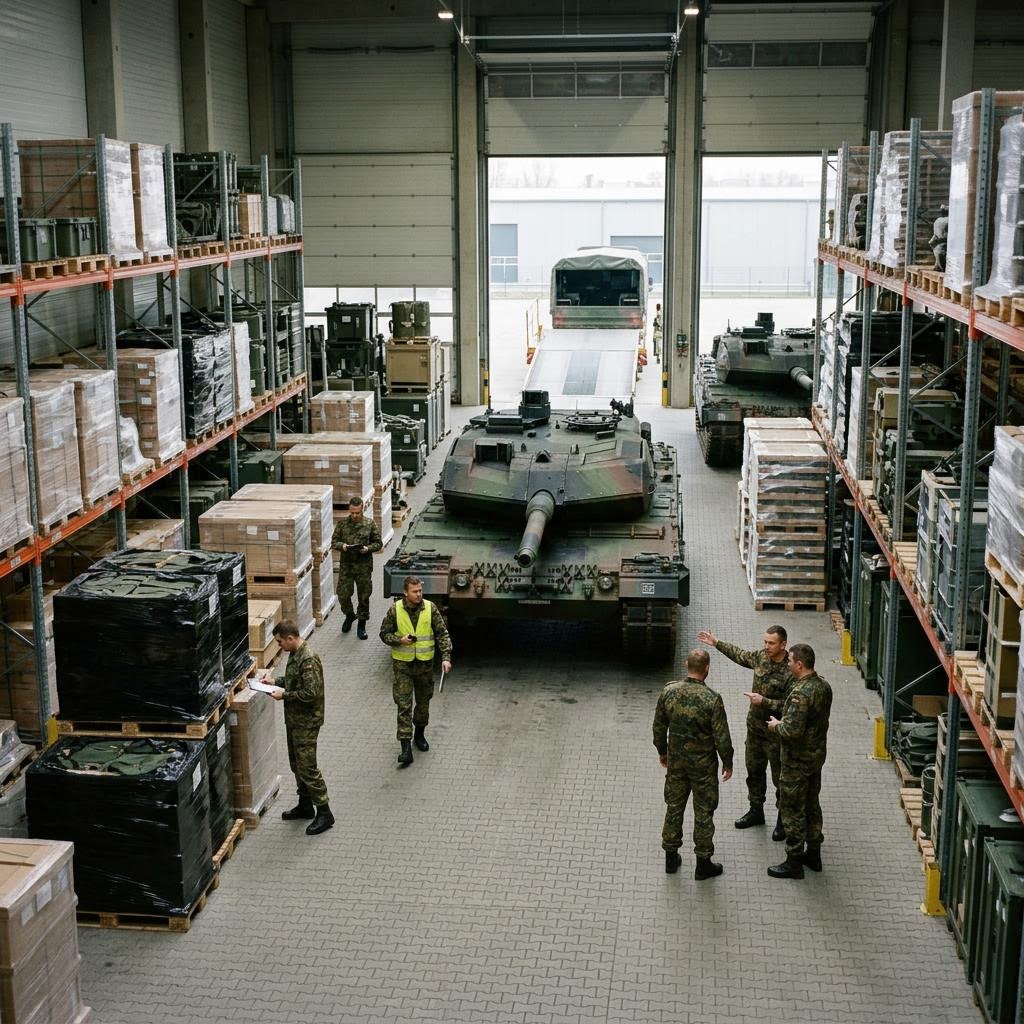
Poland could own the tanks and still need Berlin’s signature. In January 2023, that was the awkward arithmetic behind Europe’s proposed Leopard 2 transfer to Ukraine.
The Leopard 2 was a German-built system operated by several NATO countries. Reuters’ explainer, published on 23 January, said German-built weapons of war came with an end-use certificate requiring Berlin’s approval before a new owner could pass them to another country. The next day, Reuters reported that Poland would ask Germany for permission to re-export its Leopard 2 tanks to Ukraine.
The issue was not whether Poland had tanks. It was whether the original export conditions continued to govern them after they changed hands. Germany’s approval requirement put a national decision between a willing operator and a recipient at war. That is the control point this case records.
The political timetable made the point visible. Poland’s prime minister said Warsaw would seek permission, but also suggested Poland could act as part of a coalition even without it. Germany’s foreign minister, Annalena Baerbock, said on 22 January that Berlin would not block Poland if it sent the tanks. That statement sounded like a shift, not a settled transfer authorisation. The Reuters account dated the request and the public positions; it did not turn them into a delivery date.
Germany’s own government was under pressure. Allies wanted Leopard 2s because several European armies already operated them and a common platform was seen as suitable for Ukrainian training and maintenance. German Chancellor Olaf Scholz had held back from sending the tanks or allowing other NATO countries to do so. The debate therefore combined military utility, coalition politics and export law.
The end-use certificate was not a technical footnote. It was the reason possession did not equal permission. A German-built weapon could sit in a Polish inventory while Berlin retained a say in its onward destination. The certificate did not give Germany command of Poland’s army. It gave Germany a legal and political gate over re-export.
Reuters’ explainer described this as the normal consequence of German export controls on weapons of war, not a special rule invented for the Leopard dispute. A later owner could operate the equipment, but a transfer to another country still raised the original supplier’s approval question. The rule followed the weapon after sale, which is why the coalition could agree on the military need before it agreed on the paperwork.
That gate had a limited scope. The reporting did not establish that Berlin controlled every armoured vehicle in Europe, or that no other tanks could reach Ukraine. It concerned Leopard 2 transfers subject to German-origin export conditions. Nor did the January reports establish how many Polish tanks were immediately available, which variants were involved or how many other operators were ready to join.
AI-generated representative image.