
6 May 2026
Two ways to capture the same physics
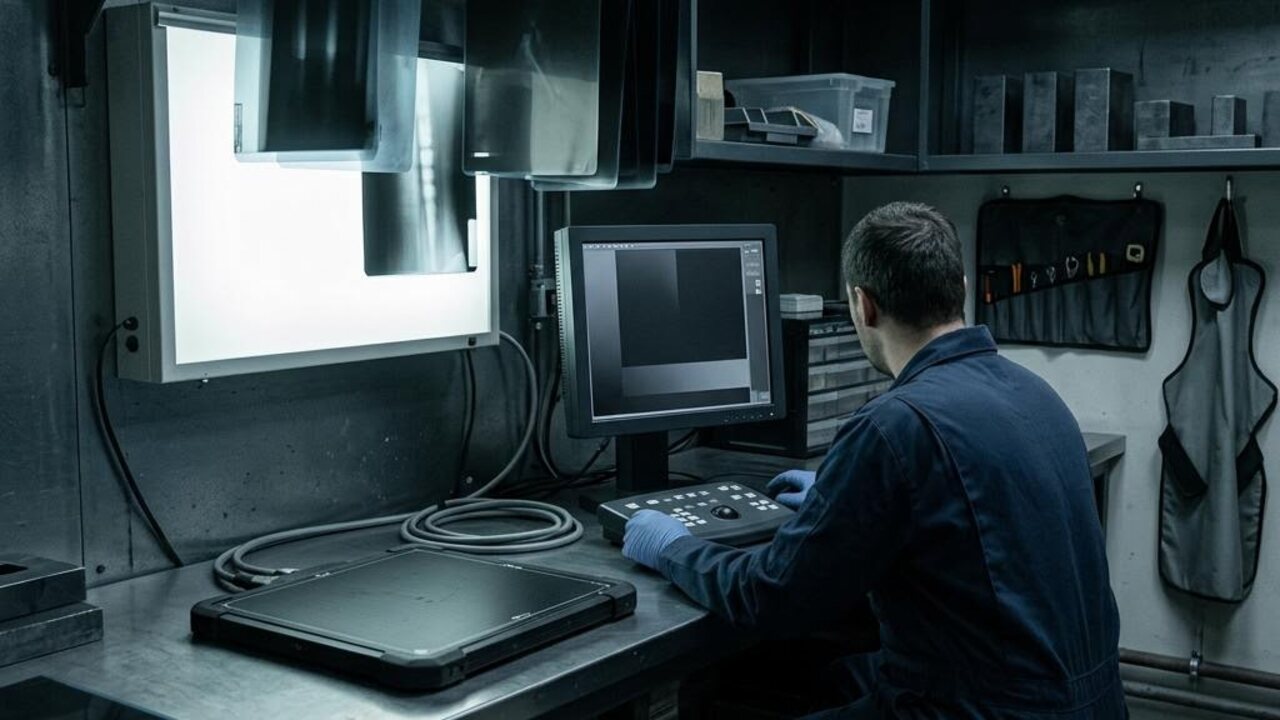
Film radiography records an X-ray image chemically; digital radiography records it electronically, on reusable imaging plates or flat-panel detectors. The physics of the exposure is unchanged. What changes is everything after it: no darkroom, no chemistry, immediate image review, software-assisted evaluation and archives that are searched rather than shelved.
The cost structure shifts
Film's costs are recurring: film stock, chemistry, disposal, storage space and the labour of processing. Digital inverts the pattern: higher initial equipment cost, then low per-exposure cost and faster throughput. For labs with meaningful volume, the operational economics generally favour digital over the equipment's life; low-volume or highly mobile work can still argue for film's simplicity.
Compliance and image integrity
Standards bodies have long since accepted digital radiography, with defined requirements for image quality, system qualification and, critically, image integrity: original digital images must be preserved unaltered, with controlled enhancement and full traceability. Labs converting from film should plan procedure re-qualification and auditor engagement as part of the project, not an afterthought.
Converting well
A sound conversion treats digital radiography as a new capability, not a film replacement: detector selection matched to the part spectrum, workstation and software standardisation, archive and backup discipline, operator retraining on digital image evaluation, and a transition period in which critical work is qualified on the new system before film is retired.
The practical conclusion for labs
For inspection labs serving defence and critical-infrastructure work, the advantage of digital radiography is real but conditional: it accrues to those who treat conversion as standing up a new capability rather than swapping hardware. Plan detector selection against your part spectrum, standardise workstations and software, and build the archive and image-integrity discipline the standards demand: original images preserved unaltered, enhancement controlled, traceability intact. Retrain operators for digital evaluation and qualify critical work on the new system before film is retired, so nothing that protects the mission slips through the transition. Engage auditors early rather than late. And prefer a single accountable channel for equipment, procedures and sustained service, with localisation arrangements scoped per programme, subject to export controls and end-use approvals, so the capability holds up under audit for years, not just at commissioning.
