
26 May 2026
What saturation revealed
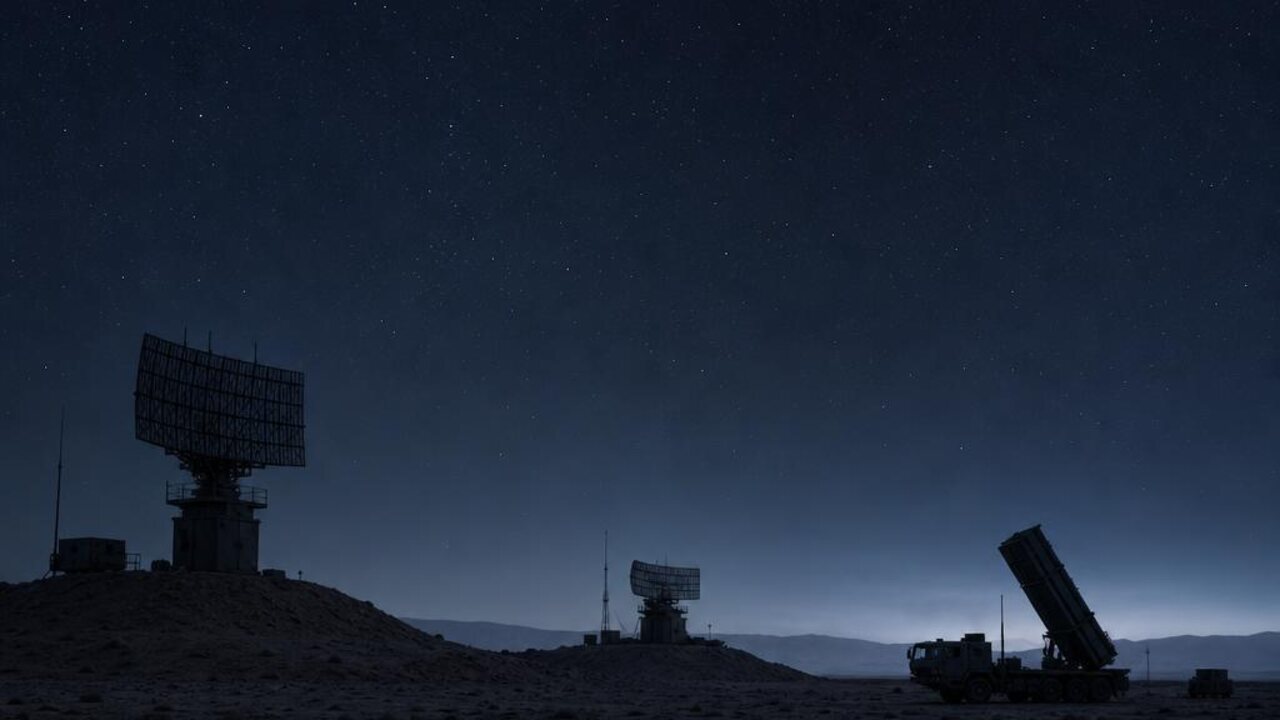
The February–March 2026 war subjected sophisticated, integrated air defences to sustained waves of drones, cruise missiles and ballistic missiles arriving together. The defences worked hard and often well, and still the arithmetic told: interceptors costing multiples of their targets, held in inventories measured in weeks, against attacks priced to be repeatable indefinitely. Saturation does not defeat quality; it outlasts scarcity.
The lesson, stated precisely
The correct conclusion is architectural, not dismissive: high-end interceptors remain irreplaceable against the threats they were built for: ballistic and advanced cruise missiles. The failure mode is using them as the only answer, so that inexpensive drones drain the magazine before the weapons that genuinely require it arrive. A defence priced above its threats loses by winning every engagement.
Rebalancing the layers
Post-war rebuilding therefore concentrates on the lower tiers: counter-UAS systems and affordable interceptor drones that engage cheap threats at proportionate cost, gun-based and directed defences for point protection, electronic warfare that defeats whole raid segments without expending a round, and sensor networks (including passive layers) that keep the picture alive under attack. Every cheap kill at the bottom preserves a precious round at the top.
The procurement consequence
For buyers, the shift is from platform-shopping to magazine economics: cost per engagement, replenishment speed, and the freedom to expand inventory without foreign approval now weigh as heavily as single-shot performance. That last criterion is why the post-2026 rebalancing and supplier diversification are the same story: the lower tiers must be affordable, replenishable and politically unencumbered, which points buyers toward independent, non-aligned sources.
The lesson to carry into procurement
The enduring advantage is not owning the most sophisticated interceptor. It is fielding an architecture whose economics match the threats it faces, so that cheap attacks are defeated by cheap layers and premium rounds are preserved for the missiles that genuinely require them. High-end interceptors remain irreplaceable for what they were built for; the failure mode is letting them stand alone until inexpensive drones drain the magazine. That reframes procurement around cost per engagement, replenishment speed and the freedom to expand inventory, which means localisation arrangements scoped per programme, subject to export controls and end-use approvals, so the lower tiers can be replenished at the tempo the threat demands. Buyers who build affordable, politically unencumbered layers beneath their premium systems protect the whole architecture and the mission it serves.
