
One drone is a nuisance. Forty is a strategy.
Defeating coordinated drone swarms takes a layered architecture (fused sensing, pod-deployed interceptors and one command layer), not a scarce missile spent per target.

The maths has already turned against you
A single hostile drone is a problem an alert crew can solve. Forty drones arriving together, on different bearings, at different heights, some real and some decoys, are a different kind of problem. They are not forty targets. They are one attack, designed to saturate whatever you put in their way and to make you spend more defeating them than the attacker spent launching them.
That cost inversion is the whole point of the swarm. If each incoming airframe forces you to fire an interceptor worth many times its price, the defender loses even when every shot connects. Recent conflicts have made this the defining air-defence problem of the decade, and it is no longer confined to front lines. Bases, borders, ports and national events are all now inside the envelope.
Answering the swarm therefore cannot mean buying a bigger missile. It means building a layer that sees the whole attack as one picture, decides at machine speed which threats matter, and defeats them with effectors cheap enough to use in numbers. The architecture is the weapon, not any single interceptor within it.
See the swarm as one picture
The first failure in a swarm engagement is fragmentation: a radar feed here, an RF detection there, an optical track somewhere else, and a crew trying to reconcile them under time pressure. Our layered counter-drone architecture is built to prevent exactly that. It fuses radar, RF and optical detection into a single track picture and applies friend-foe discrimination across mixed traffic, so your own aircraft are not counted among the targets.
Discrimination is not a detail. In a contested sky full of friendly drones, sensors and civilian aircraft, a defence that cannot tell friend from foe is a defence that blinds its own force. The architecture cues net-capture, kinetic and electronic effectors from one command layer, and it scales from protecting a single site to covering a nation without being re-architected each time.
The same fused-picture discipline runs through the packaged multi-modal counter-UAS system, which brings multiple sensing and defeat modes together in one system rather than a shelf of separate boxes. It is built to deploy faster than the threat it defends against: the packaged expression of a counter-drone line designed around the swarm from the start.
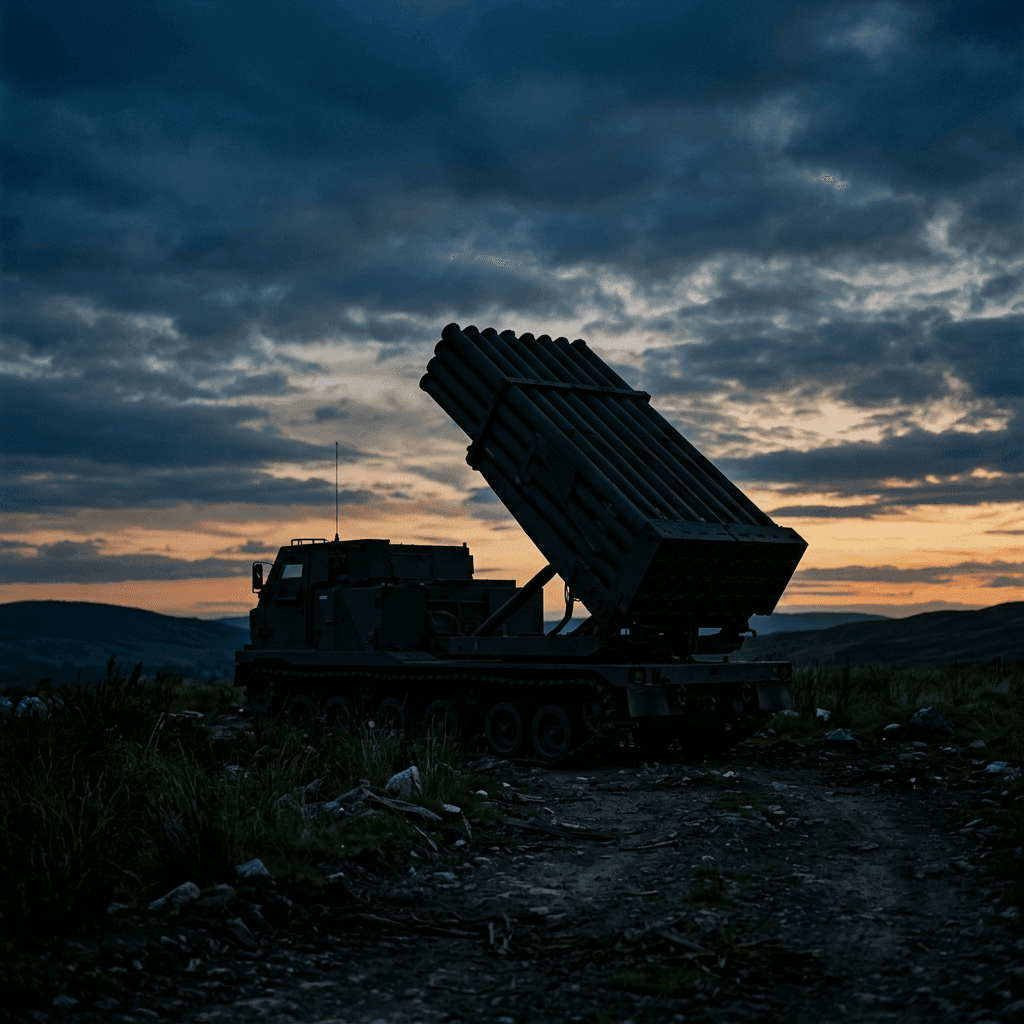
Defeat it with numbers, not scarcity
Once the picture is clear, the swarm has to be met with a defeat layer that can also work in numbers. That is where the interceptor family matters. The AI-assisted interceptor closes on a hostile drone at speed, using AI-enabled detection and tracking for a rapid lock while the operator keeps mission control and the precision engagement decision. It is day-and-night capable and holds up in RF- and GPS-denied conditions, which is precisely where a serious adversary will try to fight.
For the short-range fight in confined spaces, the hand-deployable kinetic interceptor gives a team a fast, guided response they carry and throw into action, integrating with existing command-and-control and ground sensors rather than demanding its own stovepipe. The interceptor is operator-assisted and built for rapid response where a fixed installation would never reach in time.
None of these effectors is a single-power product with a foreign veto attached. Every one is drawn from an independent, non-aligned line and delivered through one accountable channel, so the capability answers to your flag, and the sustainment does too.
Bring the whole system to where the threat is
A national defence cannot pre-position a fixed installation at every point a swarm might strike. The pod-deployed counter-swarm system answers that by packaging the whole capability (compact, tactical and extended-range interceptors, integrated EOIR and radar sensing, and an AI-enabled command-and-control layer) into strategic pods that set up where the threat is and then move.
The published configuration gives 24/7, all-weather, 360-degree detection and tracking, AI-assisted threat classification with automated response and real-time data fusion, and effectiveness against small to large swarms. It scales from fixed-site and critical-infrastructure protection to forward operating bases, borders, urban settings and mobile columns, with rapid setup and relocation built in. That mobility is what turns a point defence into a national one.
Underneath every layer sits the decision engine. The autonomous command-and-control layer is built to take control of the digital kill chain, with real-time decision making, adaptive mission planning and coordinated multi-agent execution over encrypted, anti-jam mesh networking. It is the layer that lets many effectors act as one: the difference between a shelf of gadgets and an architecture that answers the swarm.

What a government actually buys
You are not buying a drone-killer. You are buying a layered defence that sees the whole attack as one picture, discriminates friend from foe, decides at machine speed and defeats the swarm with effectors priced for the mass threat rather than a missile economy. Each element is proven within its own line, and they are engineered to work as one system rather than as parts you integrate yourself.
Because the whole chain comes through a single, non-aligned channel, there is one team accountable from first briefing through delivery and in-region sustainment, and no major-power disclosure obligation riding along with it. The swarm is a strategy. So is the defence.


