
Sovereign drones aren't imported. They're assembled, flown and fixed at home.
Squad-level unmanned capability that a nation builds, flies and repairs itself: field-assembled kits, field-upgradable platforms and a training pipeline that stays in-region.
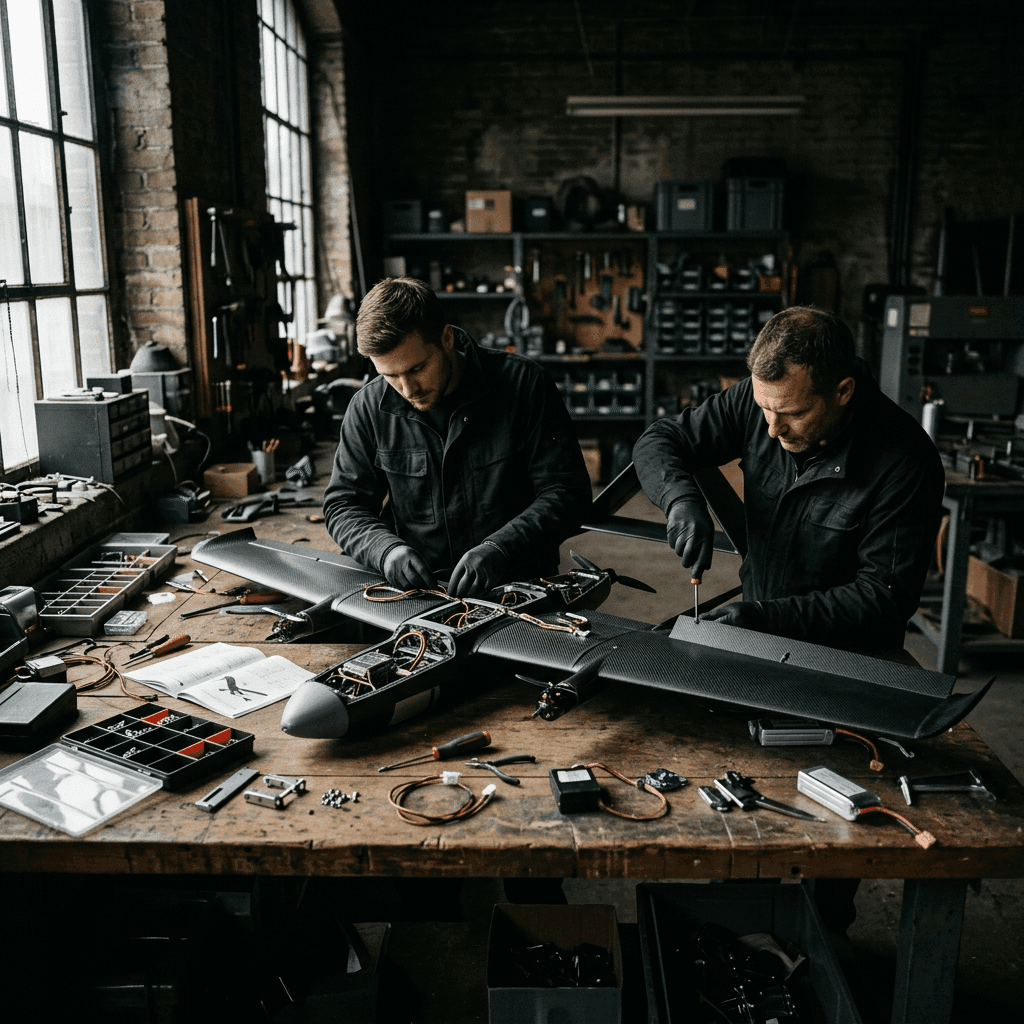
A drone you cannot repair is a drone you do not own
The unmanned aircraft that decide today's fights are not exquisite airframes shipped from a distant factory. They are cheap, numerous and consumed at a rate no import contract can keep pace with. A nation that buys sealed drones from a foreign prime discovers the real dependency the first time a rotor arm cracks or a sensor fails: the platform goes back to a depot on someone else's soil, on someone else's schedule, and the unit that needed it is grounded until it returns.
Sovereign unmanned capability is not measured by how many airframes a country can buy. It is measured by how many it can keep flying without asking anyone's permission. That means the people who operate the aircraft must also be the people who assemble, adapt and repair it, with the parts, the training and the authority to do so held inside the country rather than leased from a supplier who can withdraw them.
This is the problem Unstrat exists to solve as one accountable, non-aligned channel: not to sell a fleet, but to stand up the capability to build, fly and sustain one. The platforms below are chosen precisely because they put that capability in the operator's hands.
Kits the unit builds, not boxes it opens
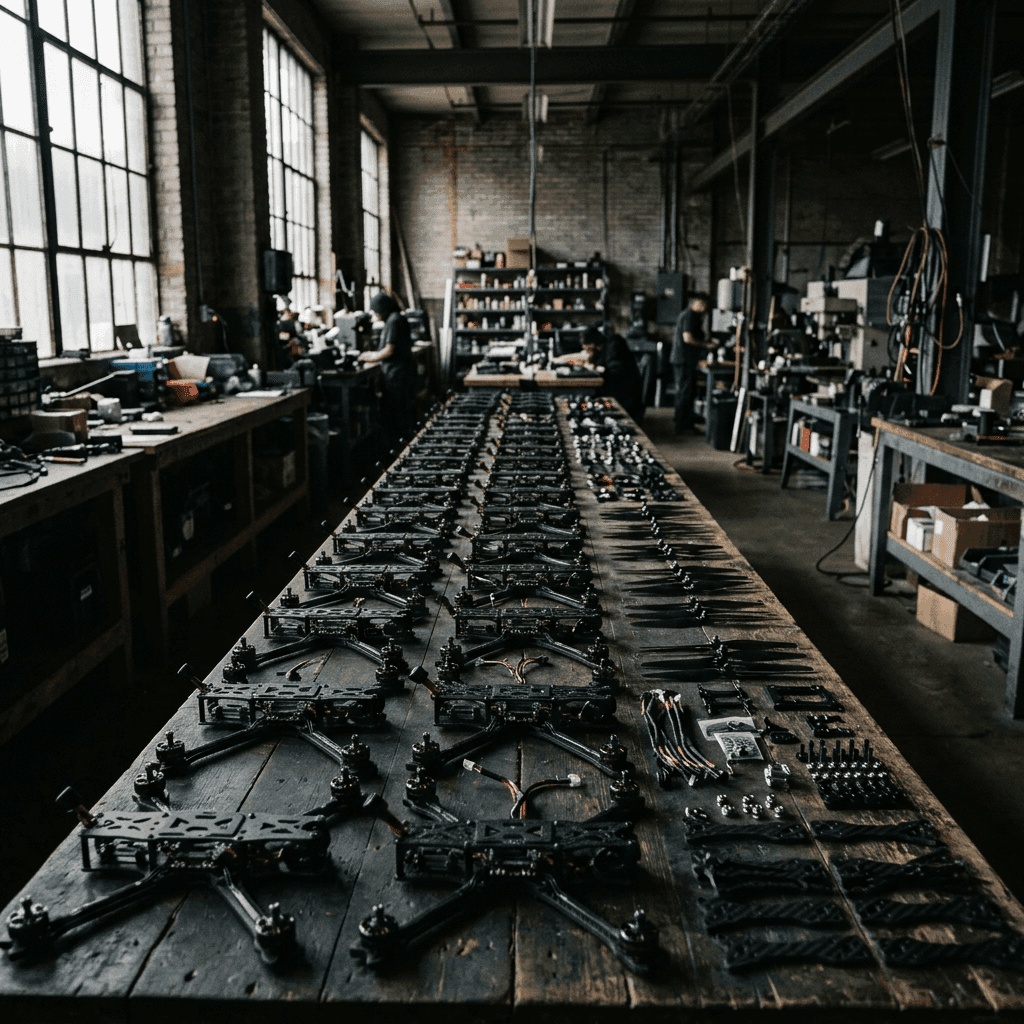
The foundation is the modular aerial platform kit: an ISR airframe delivered as interchangeable components (airframes, motors, sensors and payloads) that field units assemble, repair and adapt themselves rather than a sealed factory unit returned to a foreign depot when it breaks. If it breaks, the operator fixes it. That single design choice changes the economics of availability, because an aircraft that would otherwise be grounded stays in service through field-level maintenance.
The same modularity answers the threat that moves faster than any procurement cycle. When an adversary changes its tactics, a unit can swap sensors and payloads onto a common airframe in days, not months, adapting the platform to the mission rather than waiting for the catalogue to catch up. Capability becomes something a nation shapes continuously, not something frozen at the moment a contract was signed.
Where the kit ends, the field-upgradable UAS continues the same logic into a more capable platform: an unmanned aircraft upgraded where it operates, by the crews who fly it, with no depot round-trip for every new capability. Built on autonomous navigation and secure, anti-jam communications, it evolves with the mission instead of being resealed at a foreign factory each time requirements change.
Capability is the crew, not the airframe
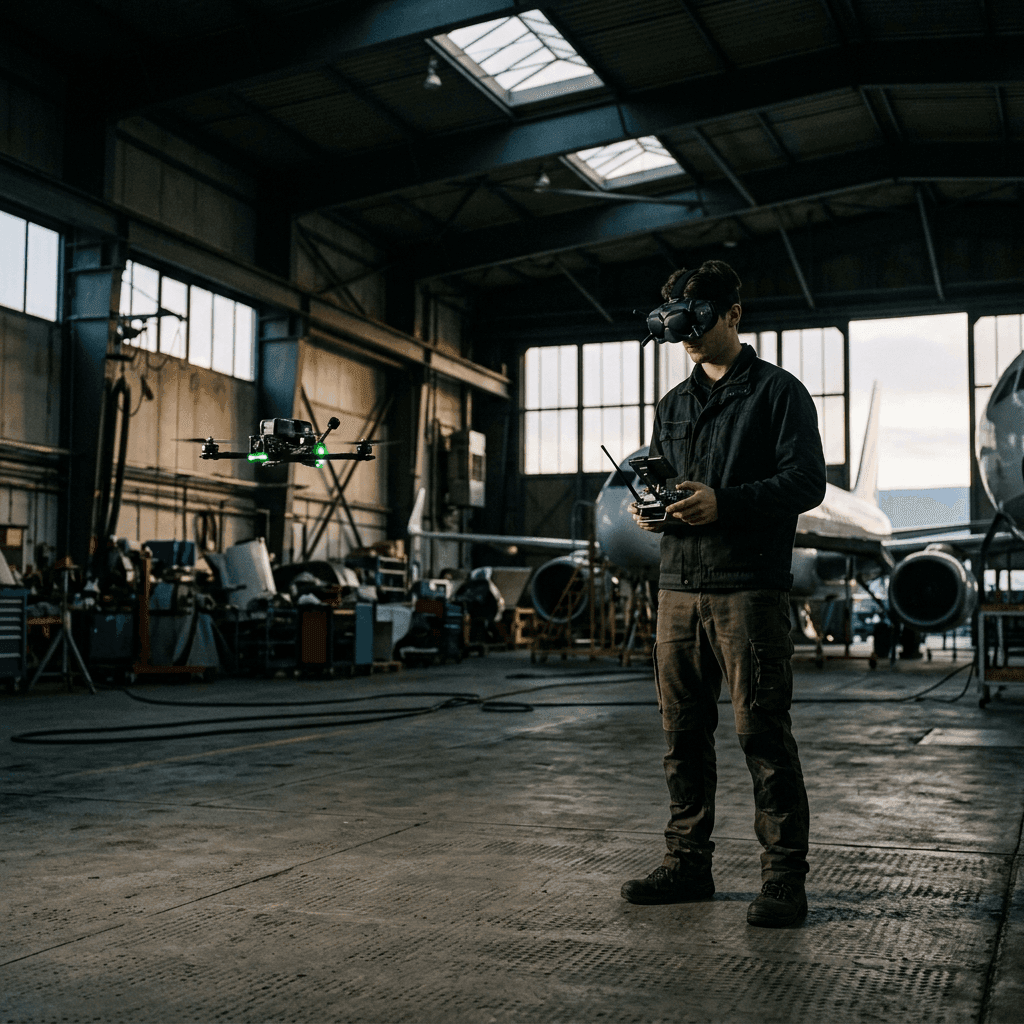
A modular fleet is only as sovereign as the people who can build and fly it. That is why drone pilot training is not an afterthought bolted onto a hardware sale but a core part of the capability. It is a simulator-to-live operator certification pathway delivered on the same ISR, attack and counter-UAS platforms the operators will fly on task, building a sovereign operating cadre in-region rather than sending crews abroad to learn on unfamiliar systems.
The training pipeline is designed to be sustained and repeatable, so a nation keeps producing current operators as platforms and doctrine evolve. The point is not a single course that certifies one intake and ends; it is a standing capability to grow, refresh and certify operators for as long as the fleet flies.
Because the training is delivered on the same modular platforms the country will assemble and repair, the operator who learns to fly the aircraft also understands how it is built. The training pipeline also opens the door to more advanced capability: once a nation has a cadre of certified operators, coordinating many airframes as one through swarming and collective robotics becomes a matter of doctrine rather than dependency. Sovereign capability at the squad level means the unit that flies the airframe can also reconfigure and repair it, and the training pipeline is where that understanding is created and kept.
Where mistakes are cheap: the simulator
Live airframes and live budgets are scarce, and the fastest way to waste both is to let operators make their early mistakes on task. The drone simulator closes that gap: a virtual-reality environment that rehearses realistic targets, multiple mission profiles and payload employment before a single live airframe is risked. Operators make their errors in the simulator, not on a sortie that costs a platform.
The effect on the training pipeline is direct. Simulation compresses the path to competence, so a sovereign operator cadre reaches a usable standard faster and stays current between live-fly periods when flying hours are limited. It builds the decision-making that matters before an operator is trusted on task, feeding the same simulator-to-live pathway that the training programme is built around.
Taken together, the kit, the field-upgradable platform, the training and the simulator form a single answer to one question: can this nation build, fly, fix and keep flying its own unmanned fleet, without a foreign veto over any part of it? Assembled through one accountable channel and sustained in-region, the answer is yes.
One channel, held to your flag
The advantage of drawing these capabilities from a single independent, non-aligned channel is accountability without political exposure. There is one team from first briefing through delivery and in-region sustainment, and no major-power ecosystem with a claim on how the capability is used or a lever to withdraw it.
For a government buyer the calculation is straightforward. A sovereign unmanned capability is not a stockpile of aircraft; it is the standing ability to assemble, operate, adapt and repair them at home, with operators the nation has trained and can keep training. Build it that way, and the fleet answers to your flag long after the first delivery.


