
Argentina bought five Super Étendards. British ejection seats kept them grounded.
Argentina paid $12.5 million for five French aircraft, spare parts and a simulator in 2019. The jets arrived that May, but the Navy still needed new pyrotechnic devices for their British-made ejection seats before it could put them into service.
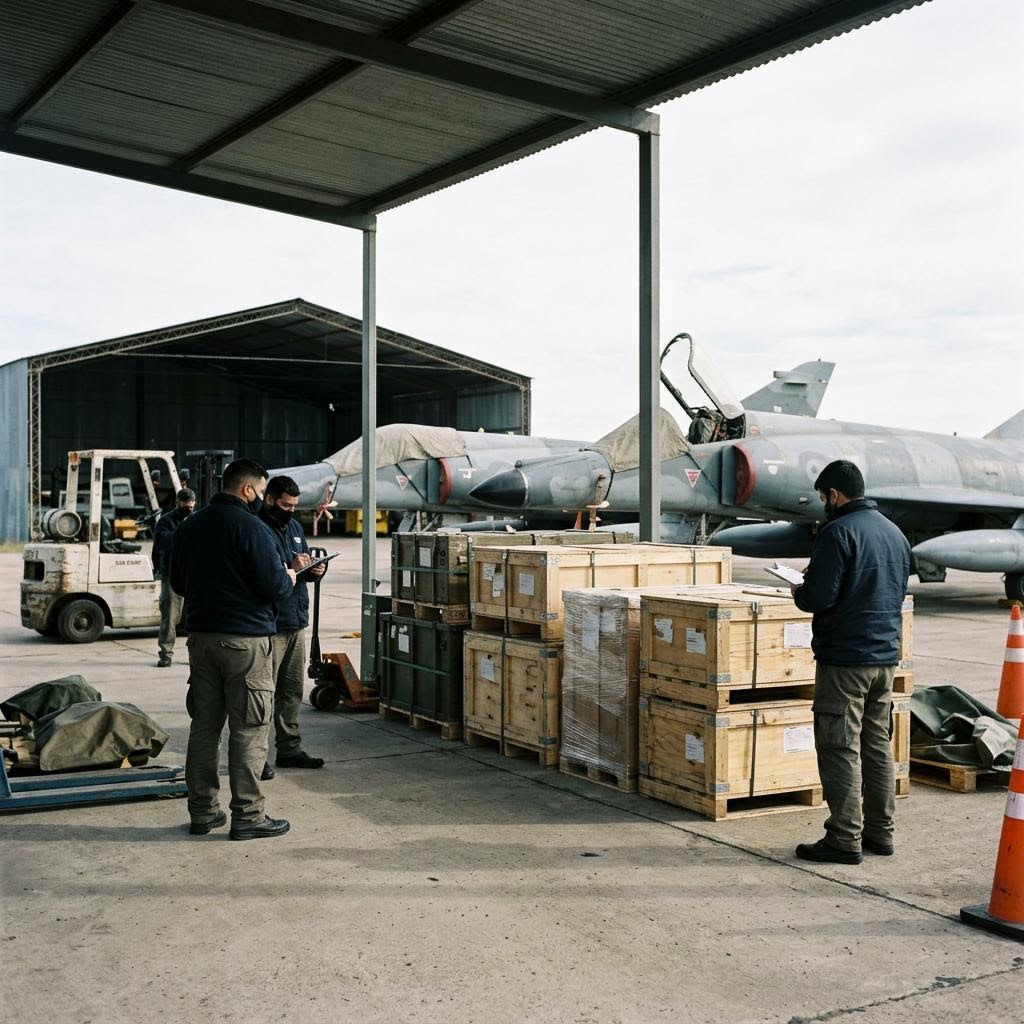
The five jets arrived by ship. The part that made them safe to fly did not.
Argentina purchased five Dassault Super Étendard Modernisé attack aircraft from France in 2019, together with spare parts and a simulator, for $12.5 million. Air Data News reported on 26 May 2022 that the aircraft had arrived in Argentina in May 2019 but that the Argentine Navy had not succeeded in reactivating them.
The obstacle was not the French airframe alone. The Super Étendard used ejection seats supplied by Martin-Baker, a British company. Air Data News said Martin-Baker could not meet Argentina’s need for new pyrotechnic devices because of an embargo. Without the required devices, the Navy could not treat the aircraft as ready for flight. A complete aircraft had been delivered, but a safety-critical component remained outside the buyer’s control.
That is the central fact of the case. Argentina had possession of the aircraft, spare parts and simulator. It did not have the approved equipment needed to make the ejection seats usable. The missing item was small compared with a combat aircraft, but its function was not peripheral. It was part of the system that protects the pilot if the aircraft has to be abandoned.
The source describes a procurement and airworthiness problem, not a battle. The five aircraft had not been operationally available to the Navy by the date of the report. That does not show that Argentina lost an existing squadron, because the jets had been acquired only recently and had not been returned to service. It shows that delivery did not complete the path from acquisition to usable capability.
The timeline is important. The purchase took place in 2019 under the government of Mauricio Macri. The aircraft arrived in May of that year. Air Data News published its account nearly three years later, reporting that the Navy still had not reactivated them. The article did not establish the date on which the embargo was applied, whether every aircraft required identical work or whether the planes later flew.
The reporting also described a possible workaround. According to Zona Militar, negotiations between the Argentine Navy, the Defence Ministry and the French company SECAMIC had reached a deadlock. The outlet said it could not establish whether the problem was the cost of the cartridges or SECAMIC’s ability to manufacture them to the required standards. It reported that the Navy was then exploring alternatives with Safran and the US company Task Aerospace.
Those efforts show that the component was not treated as a casual spare. The question was whether a replacement source could make the devices available and acceptable for the aircraft’s ejection seats. Air Data News said the Argentine Navy was looking for an alternative supplier, but that no solution had yet been found when its article was published. The reporting did not establish that Safran, Task Aerospace or any other supplier eventually delivered a solution.
AI-generated representative image.