
Russia sent peacekeepers to Nagorno-Karabakh. Armenia said security still failed.
Azerbaijan took control of Nagorno-Karabakh in September 2023 and the enclave’s Armenian population began fleeing. Armenia’s prime minister said the Russian partnership and peacekeeping contingent had not provided effective security, while Moscow rejected responsibility.
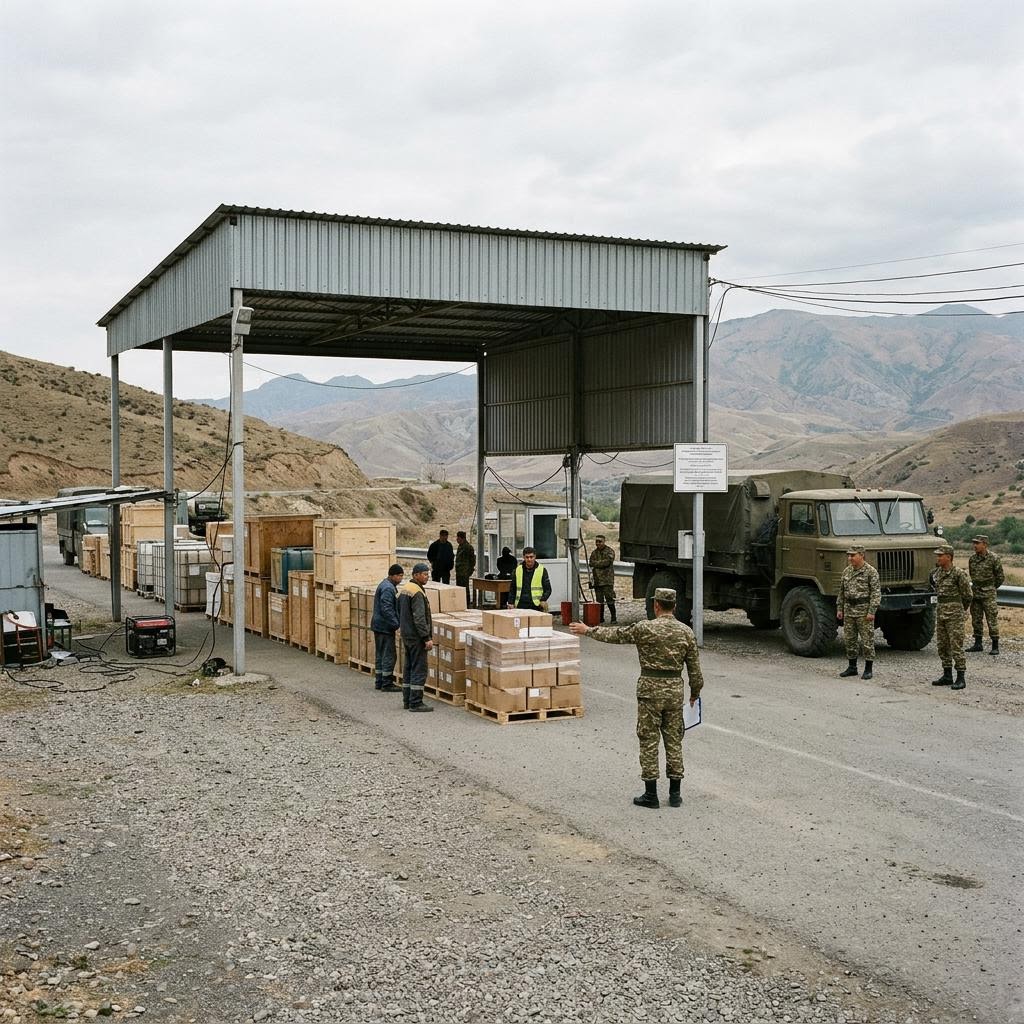
Russia had peacekeepers in Nagorno-Karabakh. Azerbaijan still took the territory, and Armenia’s prime minister said the security relationship had failed.
The immediate event was Azerbaijan’s military operation in September 2023. The fighting ended with the local Armenian forces agreeing to a ceasefire, and Azerbaijan claimed full control of Nagorno-Karabakh. Associated Press reporting on the ceasefire described Russian peacekeepers as present in the region. The Russian contingent was not an abstract guarantee. It was physically there, with a mission created after the 2020 war.
That mission had followed the ceasefire agreement brokered by Moscow in November 2020. A Congressional Research Service report says the agreement introduced about 2,000 Russian troops into the conflict zone as peacekeepers and to guarantee the security of the land corridor between Armenia and Nagorno-Karabakh. The arrangement separated the existence of a Russian force from the question of what that force could or would do when the ceasefire itself came under pressure.
The answer, in 2023, was not enough to prevent Azerbaijan’s takeover. On 24 September, Reuters reported that Prime Minister Nikol Pashinyan blamed Azerbaijan and the Russian peacekeeping contingent for the danger facing Armenians in Nagorno-Karabakh. He said the Armenian-Russian strategic partnership was “not enough to ensure the external security of Armenia”. That is a recorded political judgment, not a neutral finding that Russia had accepted a formal obligation to defeat Azerbaijan.
The warning signs had appeared before the final operation. The International Crisis Group reported in January 2023 that Russian peacekeepers and border guards had not proved an effective deterrent and had been unable to stop Azerbaijani advances in fighting during 2022. It also reported that Moscow did not want to alienate Azerbaijan or its ally Turkey. That account does not prove why the peacekeepers acted as they did, but it shows that the 2023 judgment did not arise from a single day’s disappointment.
Pashinyan’s statement also came at a particular moment. Reuters reported that the likelihood of ethnic Armenians leaving the region was rising, and that an adviser to the Karabakh Armenian leadership expected the population to leave because people felt unsafe under Azerbaijani rule. The later population movement is relevant to the consequence, but it should not be turned into a claim that every departure was caused by one decision or that the peacekeepers had a legally defined duty to fight Azerbaijan.
The mechanism was therefore a failure of expected protection rather than a conventional export cutoff. Armenia relied on a Russian security relationship and the presence of Russian troops in a disputed zone. When Azerbaijani forces established control, the value of that protection was judged by its result. The system could remain present on the ground while failing to deliver the outcome its client expected.
There were limits to the mission’s legal and political setting. Nagorno-Karabakh was internationally recognised as part of Azerbaijan, while the 2020 ceasefire had placed Russian peacekeepers between the parties. The sources do not disclose the contingent’s rules of engagement, its communications with Baku, or whether Moscow considered intervention authorised. They also do not establish whether the force had the capacity to stop the operation. Those are not details that can be safely supplied by inference from the result.
Russia’s position also needs to remain visible. The case is not evidence that Moscow provided no assistance to Armenia, that its forces were ordered to stand aside for a particular reason, or that the Armenian government had no other options. It shows a narrower contradiction. Armenia had a security partner and a Russian contingent was deployed after the 2020 war. The contingent did not prevent Azerbaijan from taking control of Nagorno-Karabakh in 2023.
AI-generated representative image.