
Bulgaria sent six MiG-29 engines to Poland to keep flying.
Bulgaria signed the contract with Poland on 9 August 2023 to overhaul six MiG-29 engines. Its defence ministry said the work was meant to keep the aircraft airworthy until the new F-16 Block 70 fleet became operational.
Bulgaria’s MiG-29s had an awkward job. They had to remain airworthy while the country waited for a different fighter to become useful.
On 9 August 2023, Bulgaria signed a €9.5 million contract with Poland’s Wojskowe Zakłady Lotnicze for the overhaul of six MiG-29 engines, Reuters reported. The article’s URL carries 11 August, but its dateline says 9 August. That distinction matters because the contract date, not the publication slug, is the procurement event.
The Bulgarian defence ministry described the purpose in unusually practical terms. The engines were to be overhauled “in order to ensure the airworthiness of the MiG-29 aircraft until achieving operational capabilities for combat duty with the new F-16 Block 70 combat platform”. The quotation is the ministry’s stated aim, not proof that the work restored a particular number of aircraft or patrol hours.
The arrangement was a workaround for a transition problem. Bulgaria had a legacy Russian-designed fighter fleet and a replacement programme centred on the F-16 Block 70. Buying the replacement did not make it immediately available. The old aircraft therefore remained part of the country’s air-defence plan, at least until the new platform could take on its intended role.
The Polish contract did not solve every part of that dependency. It covered six engines, not an entire fleet and not every component needed to operate a fighter. Reuters reported that the repair period for each engine was not to exceed nine months from handover. That is a contractual limit on the repair period. It is not a promise of nine months of flying, nor a measure of the number of aircraft Bulgaria could keep on alert.
The choice of Poland was significant without being magical. A neighbouring NATO member became the contractor for the overhaul. The report does not establish what other support routes Bulgaria considered or why this contractor was selected. A new workshop did not erase the aircraft’s design origin, its other maintenance needs or the time required to inspect and return engines.
That is why the €9.5 million figure should be kept in proportion. It is the value reported for this contract. It is not the cost of sustaining Bulgaria’s entire MiG-29 transition, the price of its F-16 programme or proof that each engine would deliver an equal operational return. The available report does not give the engines’ condition, the sequence of handovers, the number of aircraft awaiting engines or the number of sorties expected after the work.
The contract also does not show that Bulgaria’s airspace was undefended before the deal. “Airworthiness” and “combat duty” describe the ministry’s intended outcome, but they do not establish a fleet-wide readiness rate. Nor does the source establish when the F-16 Block 70 aircraft would assume the MiG-29’s role. The bridge had a destination, but the reporting does not supply its full timetable.
There is a dry lesson in the arrangement. A successor aircraft can be politically selected long before it is operationally useful. Until then, the old fleet continues to present the bill. Six engines were not a return to Russian sustainment or a declaration of independence from legacy equipment. They were a way to keep a limited option open while Bulgaria waited for the replacement to catch up with the decision.
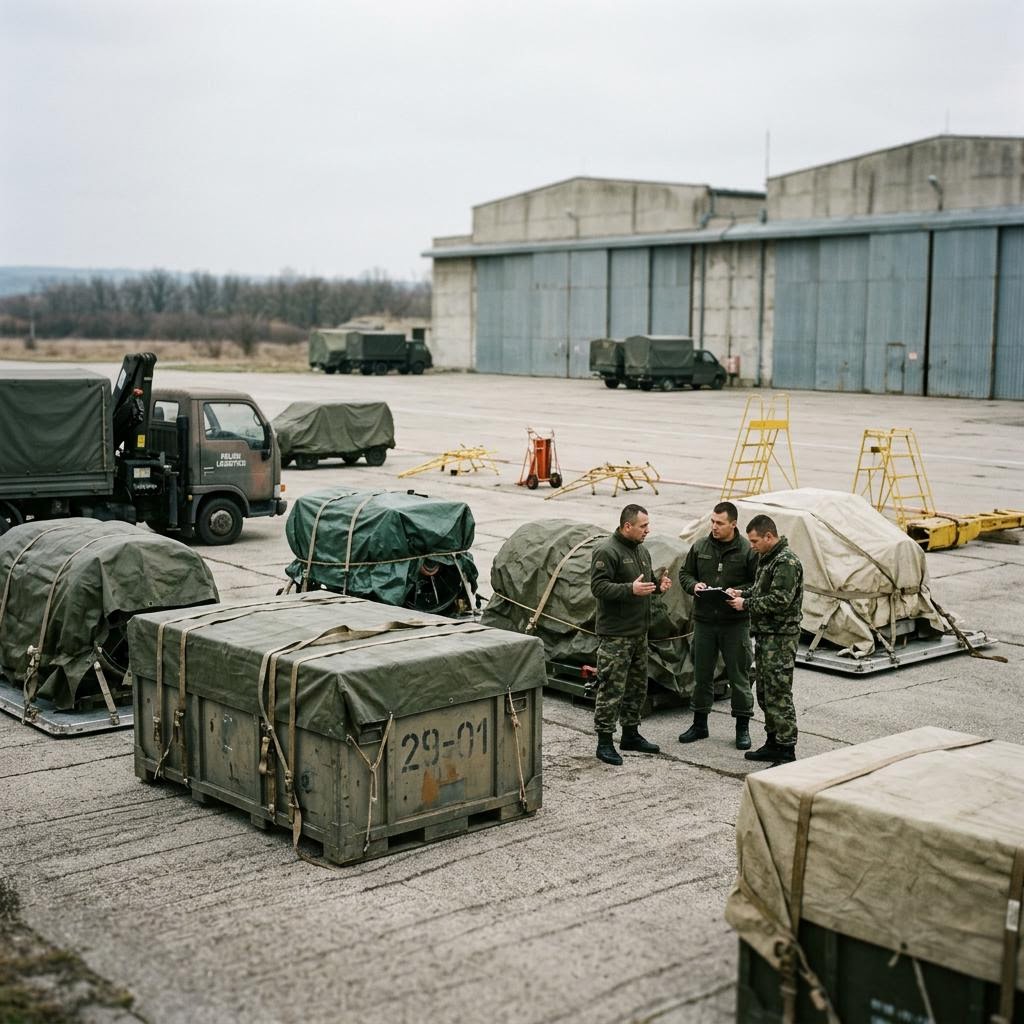
AI-generated representative image.