
Egypt’s F-16s, Apaches and tanks became Washington’s post-coup decision
The United States suspended selected deliveries in October 2013. It released them again in 2015 while recasting future military financing.
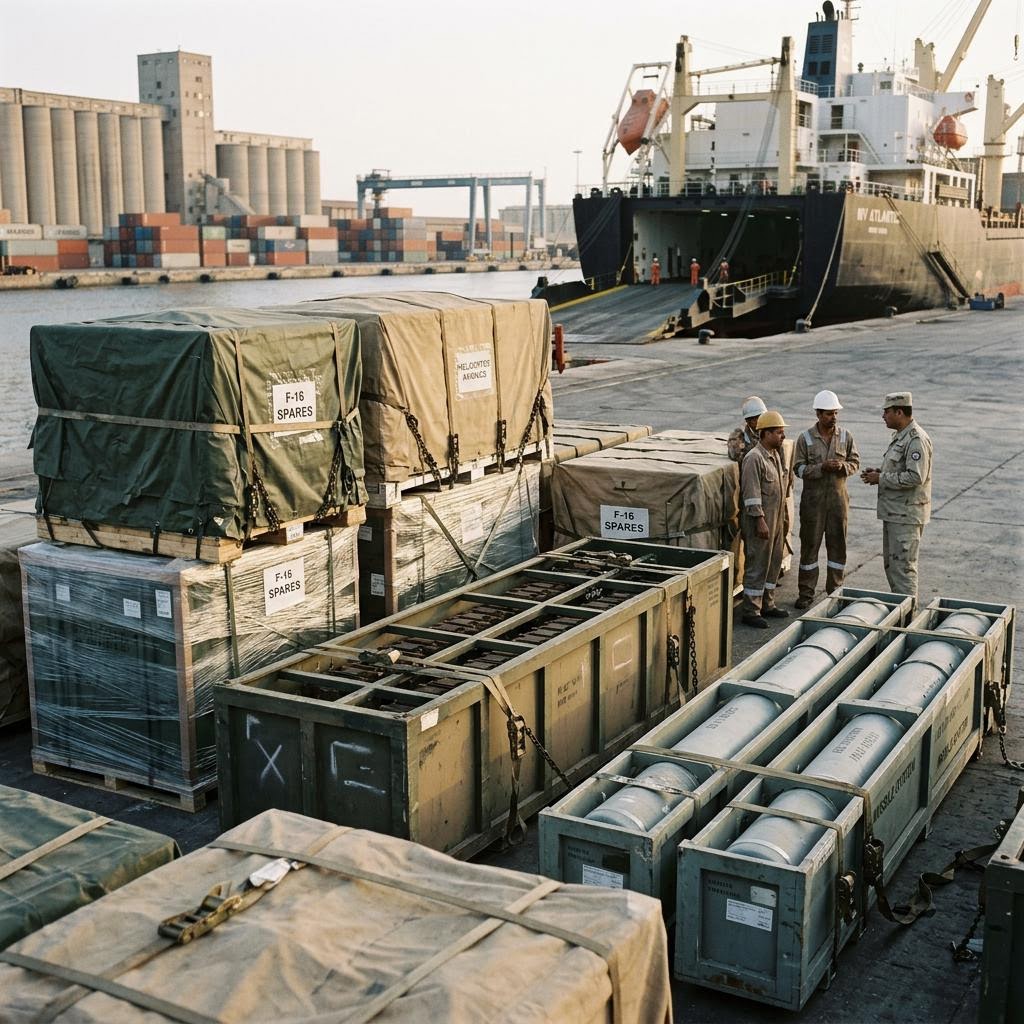
Egypt’s U.S. weapons pipeline did not disappear. Washington put parts of it behind a political condition.
On 9 October 2013, the United States announced that it was recalibrating assistance to Egypt after the removal of President Mohamed Morsi and the security-force crackdown on his supporters. NPR reported that a shipment of F-16 fighter jets had already been suspended and that joint exercises with the Egyptian army had been halted. The same report said the administration would delay delivery of some large military systems and suspend some government cash assistance pending credible progress toward an inclusive civilian government.
The systems named in the reporting were substantial. NPR, quoting a congressional source, listed Abrams tanks, F-16 aircraft, Apache helicopters and Harpoon missiles. The Independent reported that the package included ten Apache helicopters worth about $500 million, F-16 fighter jets, M1A1 tank kits and Harpoon anti-ship missiles. The reports describe systems caught in the decision. They do not provide a single contract number, a complete delivery schedule or a common suspension period for every item.
The political trigger was the governance crisis. Morsi had been removed in July, and the subsequent security operations against his supporters left hundreds dead, according to the contemporaneous reporting. The U.S. administration did not describe the policy as a total end to the relationship. State Department spokesperson Jen Psaki said the United States would continue relations with the Egyptian government while delaying some large systems and suspending some cash assistance until there was credible progress toward an inclusive, democratically elected civilian government.
That qualification is the central fact. NPR reported that the United States would continue support for securing Egypt’s borders, counterterrorism and counterproliferation, and security in the Sinai. White House press secretary Jay Carney said reports that all military aid was being halted were false. The decision was selective and conditional, not a blanket severing of military cooperation.
The procurement consequence was nevertheless direct. Egypt’s military depended on a pipeline in which foreign military financing, congressional oversight, production and delivery were connected. When Washington delayed F-16s, Apache helicopters, tanks and Harpoons, the customer could not treat an approved or expected delivery as politically automatic. The aircraft and vehicles were still products that had to be transferred through a government relationship.
The record shows different stages of the interruption. NPR said the F-16 shipment was quickly suspended. It described the October policy as a delay to some large-scale systems. The Independent reported that important weapons deliveries would be withheld, but also noted that officials had not stated the exact dollar amount. These are not contradictory descriptions if “suspension” is reserved for the named items and “aid” is not treated as one undifferentiated stream.
AI-generated representative image.