
Serbia bought Russian arms for years. Then it turned to Rafale.
Serbia’s president said Western sanctions and logistics isolation had made Russian combat-aircraft acquisitions difficult in April 2024. Four months later Serbia signed for 12 French Rafales, turning a reported direction of travel into a contract.
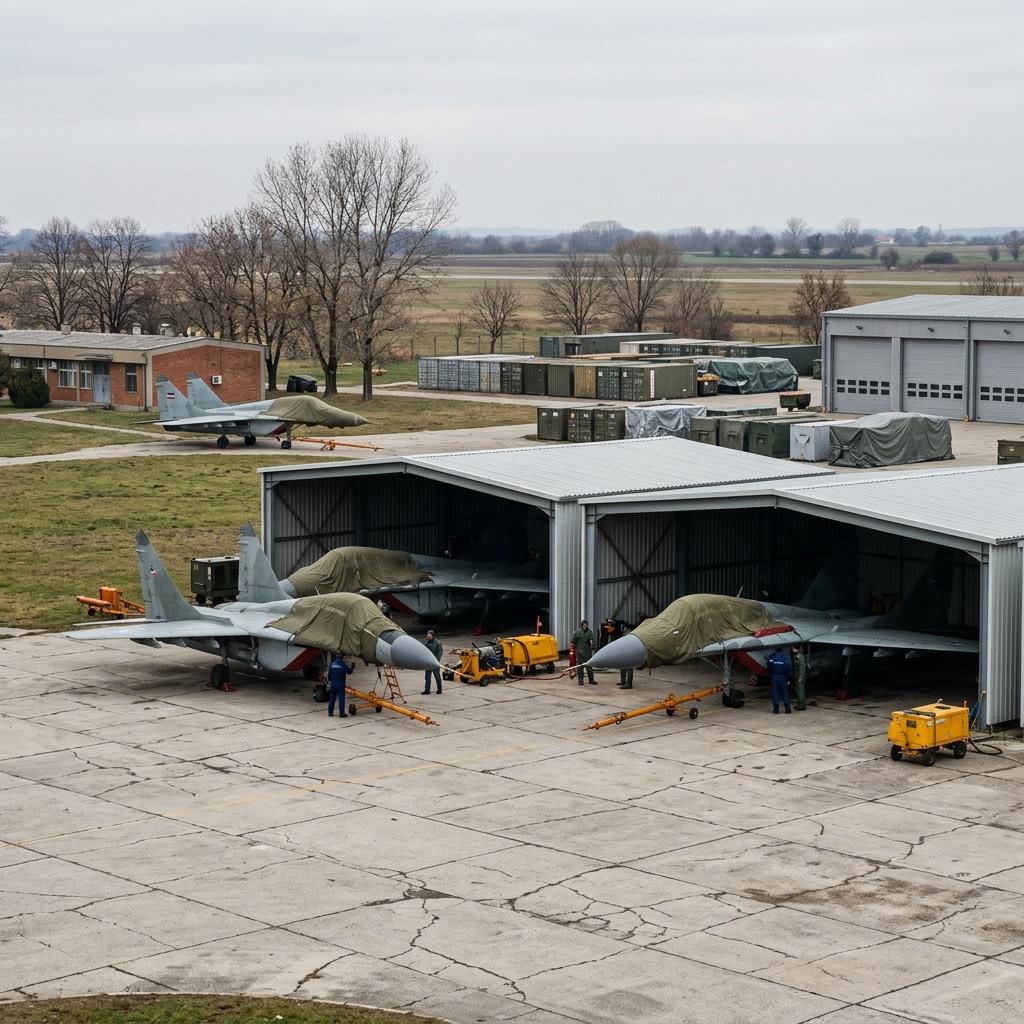
The aircraft choice changed before the contract did.
On 9 April 2024, Reuters reported that Serbia was closer to a deal for French Rafale fighter jets. President Aleksandar Vučić said Western sanctions and logistics difficulties had made the acquisition of Russian systems harder. At that point, Serbia had not been shown to have signed a Rafale contract, and the report described a procurement movement rather than a completed replacement.
The obstacle was therefore not a public refusal addressed to Belgrade. It was the shrinking practicality of a Russian route. Sanctions can affect payment, transport, parts and technical support without producing a single notice saying that a particular aircraft is forbidden. A buyer may retain a preference for a platform and still decide that the route to delivery and sustainment is no longer dependable.
The April reporting did not identify the Russian aircraft Serbia had considered, the number of Rafales under discussion, the proposed price or a delivery timetable. It also did not quantify the cost of switching suppliers. Those omissions matter because a political change of direction is not automatically a procurement order, and a statement about logistics is not a calculation of future availability.
The subsequent record makes the case more concrete. On 29 August 2024, Reuters reported that Serbia and Dassault Aviation signed an agreement for Rafale fighters. RFI’s contemporaneous account identified 12 new aircraft and a value of €2.7 billion, including a logistics package, spare engines and parts. This was a later decision, not evidence that the April article had reported a signed sale.
The contract also changed what can responsibly be said about the outcome. Serbia did not merely keep the Rafale option open. It selected a French aircraft and entered an agreement. Yet the later deal does not prove that sanctions alone caused the switch. Serbia’s fleet requirements, political relationship with France, financing, interoperability and the condition of its existing aircraft may all have mattered. The sources retrieved for this case establish the sanctions and logistics explanation as Vučić’s account, not as a fully quantified causal study.
That distinction is central to the veto mechanism. Foreign control can operate through the support system around a platform. Combat aircraft need engines, spares, software, training, weapons and maintenance. If the supplier’s political access is restricted, the aircraft can remain technically attractive while becoming a riskier choice for a state planning a fleet over decades.
France offered a different route, but a French contract did not make Serbia independent of foreign control. The Rafale still depends on a foreign manufacturer and on French permissions, deliveries and support. The episode is not a story in which one country escaped dependency altogether. It is a shift from one external support ecosystem to another after the first became harder to use.
Nor should the later contract be projected backwards into every detail of the April discussion. The sources do not establish that Serbia cancelled a Russian order, that Russian aircraft were unavailable in every configuration, or that Rafale deliveries had begun. They show an April statement about difficulty, an April movement towards France, and an August agreement for 12 Rafales.
By the end of August, Belgrade had made the decision the April report anticipated. The immediate veto was logistical and political rather than a single denied export licence. A buyer can keep the right to choose while losing the practical ability to choose every supplier on equal terms.
AI-generated representative image.