
13 May 2026 (Updated 12 August 2026)
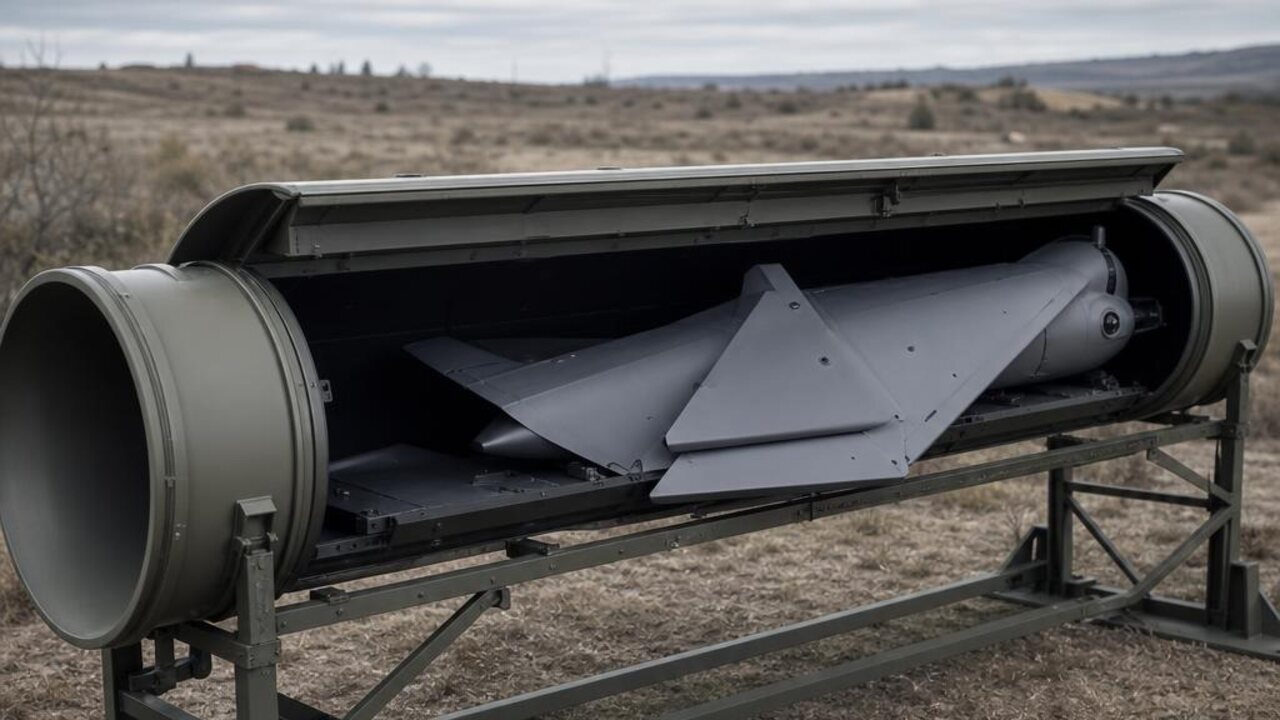
A weapon that waits
A loitering munition is an unmanned aircraft with an integrated warhead that can hold (loiter) over an area, search for a target, and then strike it directly. It occupies the space between a guided missile, which commits at launch, and an armed drone, which returns home: the loitering munition combines surveillance and strike in one expendable airframe, with a human decision in the loop until the final commitment.
How forces employ them
Doctrine has converged on a few core uses: engaging targets whose location is only approximately known (the munition searches the area its launcher could not see into); striking fleeting, time-sensitive targets that would be gone before conventional fires arrived; and giving small units organic precision reach that once required requesting support from higher echelons. The operator's ability to abort or redirect until the terminal phase distinguishes the class.
What recent conflicts demonstrated
Recent wars, including the 2026 conflict, showed loitering munitions employed at scale, and demonstrated the arithmetic that follows: precision effects at a fraction of guided-missile cost, deep magazines built quickly, and defensive burdens imposed on an opponent out of all proportion to each munition's price. The sober counterpoint is that the same economics arm adversaries too, which is why the class is inseparable from the counter-UAS discussion.
The cost-exchange logic that makes them attractive
The reason loitering munitions spread so fast is arithmetic. A munition priced modestly can force an opponent to expend a defensive interceptor priced many times higher, or to close an airfield, or to keep an expensive air-defence system alert around the clock. Even when every munition is intercepted, the attacker can win on cost by making the defence spend more to stop the attack than the attack cost to mount. That logic cuts both ways, which is the uncomfortable part: the same economics that let a buyer impose disproportionate cost on an adversary let an adversary impose it right back. Any honest case for acquiring loitering munitions has to sit alongside a plan to defend against them, because a weapon this affordable does not stay on one side of a conflict.
The defensive burden they are designed to impose
A loitering munition's military value is partly in what it forces the other side to do. Because it can appear from an unexpected axis, wait, and strike a target the launcher never saw, it pulls defenders into watching everywhere at once. Detecting a small, slow, low airframe against clutter is hard; deciding in time to defeat it is harder; and doing so without draining a scarce interceptor magazine is the real constraint. Fielding loitering munitions therefore only makes sense against a clear-eyed reading of how a competent enemy would try to detect and defeat yours, and vice versa. The weapon and its counter are the same conversation, which is why this class is inseparable from the counter-UAS discussion.
The buyer's considerations
Loitering munitions are controlled weapons, so classification and end-use certification lead any legitimate acquisition. Beyond compliance, buyers should weigh the fit between munition classes and their missions (endurance, warhead type, launch platform), training for operators who exercise the abort decision, integration with existing fires and ISR processes, and the supply relationship: these are consumable weapons, and magazine depth is part of the capability.
The bottom line for programme owners
For a programme owner, the loitering munition earns its place by giving small units organic precision reach and by imposing a disproportionate burden on an adversary, but only if the acquisition is disciplined from the first conversation. Classification and the end-use approval chain come before any capability discussion becomes specific, and localisation arrangements are scoped per programme, subject to export controls and end-use approvals. Beyond compliance, the mission advantage depends on matching munition classes to real tasks, training operators to own the abort decision, and integrating the weapon into existing fires and ISR processes so it strengthens rather than duplicates the force. Because these are consumable weapons, magazine depth is part of the capability, which makes an accountable, dependable supply relationship a core requirement rather than an afterthought.
