
12 August 2026
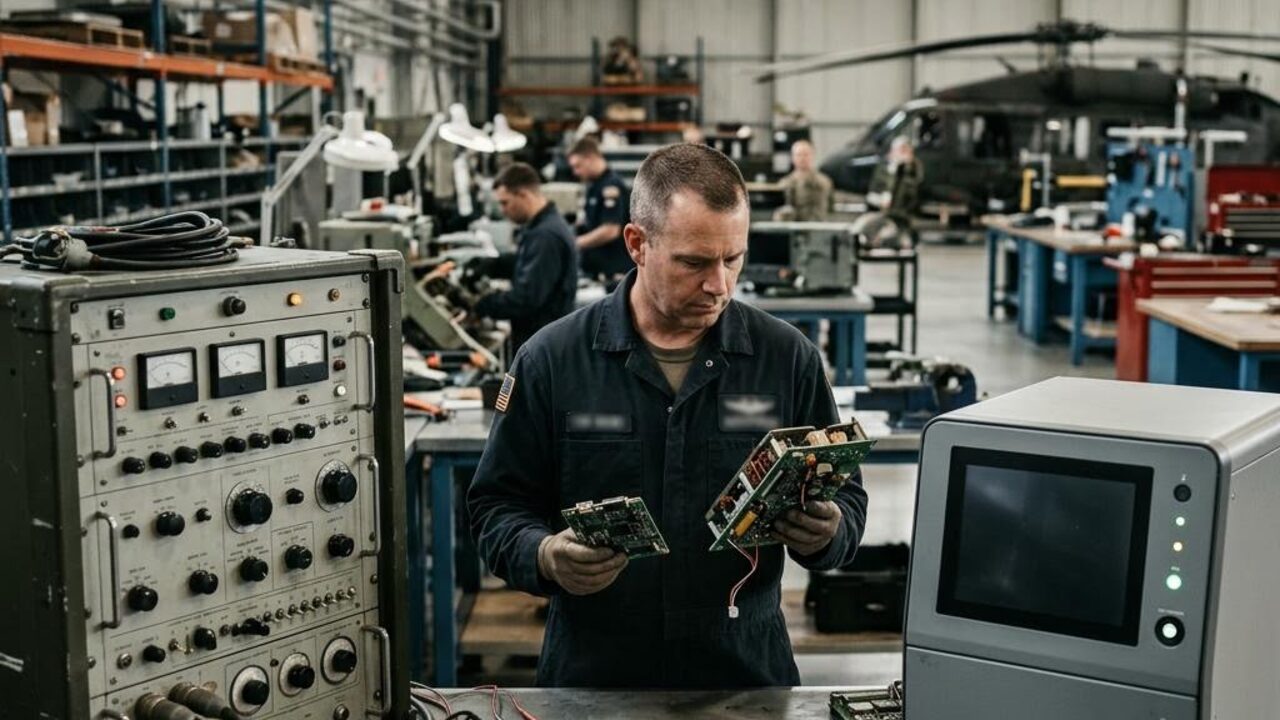
The mismatch that forces the problem
A defence platform is designed to serve for thirty or forty years. The semiconductors and electronic components inside it are designed to sell for three or four. That mismatch is the whole problem: long before the platform retires, the parts that make it work stop being manufactured, and the supply chain that once delivered them quietly disappears. An obsolescence plan exists because the choice is not whether components will vanish but whether the programme decides what to do about it in advance or scrambles when a board fails and there is nothing to replace it with.
DMSMS is a discipline, not an event
The military term for this is DMSMS: diminishing manufacturing sources and material shortages. The name matters because it frames the work correctly. This is not a single crisis to solve but a continuous condition to manage across the fleet's life. A working plan starts with a bill of materials that is actually monitored, so the programme knows which components sit in critical assemblies and which of those are heading toward end of production. Watching the supply market and mapping each part to the systems that depend on it turns obsolescence from a series of surprises into a forecast the programme can act on while it still has options.
Last-time-buy, and why it is a trap as often as a solution
When a manufacturer announces a part is going out of production, it usually offers a final purchase window: the last-time-buy. Stocking enough of a component to cover the platform's remaining life sounds like the obvious answer, and sometimes it is. But it is a bet on a forecast. Buy too few and the shortage returns years later at a worse moment; buy too many and capital sits in a store, ageing, at risk of the very obsolescence of storage media, documentation and test equipment that afflicts the parts themselves. A last-time-buy is a decision to be sized against a demand forecast and a storage-and-shelf-life reality, not a reflex triggered by the vendor's letter.
Re-host or rebuild: the decision that costs the most to get wrong
When stockpiling is not the answer, the plan faces its hardest call. Re-hosting keeps the design and finds a qualified equivalent or a form-fit-function replacement that drops into the existing assembly, the cheaper path when a credible substitute exists and the surrounding design is still sound. Rebuilding redesigns the affected subsystem around available components, the more expensive path, justified when the old architecture can no longer be sustained or when the redesign buys capability worth having. Get this wrong in the cheap direction and you re-host onto a part that is itself nearly obsolete, repeating the problem within a few years; get it wrong in the expensive direction and you rebuild what a simple substitution would have fixed. The plan's job is to make that judgement deliberately, against the platform's remaining life and the maturity of the replacement, rather than defaulting to whichever felt easier at the time.
Verification is what makes a substitute trustworthy
Whichever route the plan chooses, the substitute has to be proven, not assumed, because this is defence electronics and the cost of a part that behaves almost like the original is measured in mission failures. Non-destructive inspection and test are how a re-hosted component or a re-manufactured board earns the right to fly: confirming the substitute matches form, fit and function, and that a part sourced outside the original channel is genuine rather than counterfeit, a real risk in the grey markets that spring up around obsolete components. An obsolescence plan without a verification standard is just a purchasing policy, and purchasing policy is what lets a plausible fake into a critical system.
What this means for programme sustainment
The advantage in obsolescence goes to the programme that decides on its own timetable rather than the component market's. That starts with a monitored bill of materials, so vanishing parts are forecast while options still exist, and it treats DMSMS as a continuous management discipline instead of a run of emergencies. Size last-time-buys against a real demand forecast and the shelf-life of what you store, rather than reflexively hoarding on the vendor's letter. Make the re-host versus rebuild call deliberately, against remaining platform life and the maturity of the replacement, because that decision is the one that costs the most to get wrong in either direction. Above all, hold every substitute to a verification standard, so form-fit-function and authenticity are proven rather than assumed. Sourced through one accountable channel that carries inspection, re-engineering and sustained support, with localisation scoped per programme, subject to export controls and end-use approvals, obsolescence becomes a managed cost rather than a recurring crisis.
