
Ten seconds of drone footage can end a broadcast. Or worse.
Controlling the airspace over a packed venue means detecting the small, slow intruder, intercepting it precisely amid a crowd, layering the defeat options, and sensing without adding to the RF clutter.
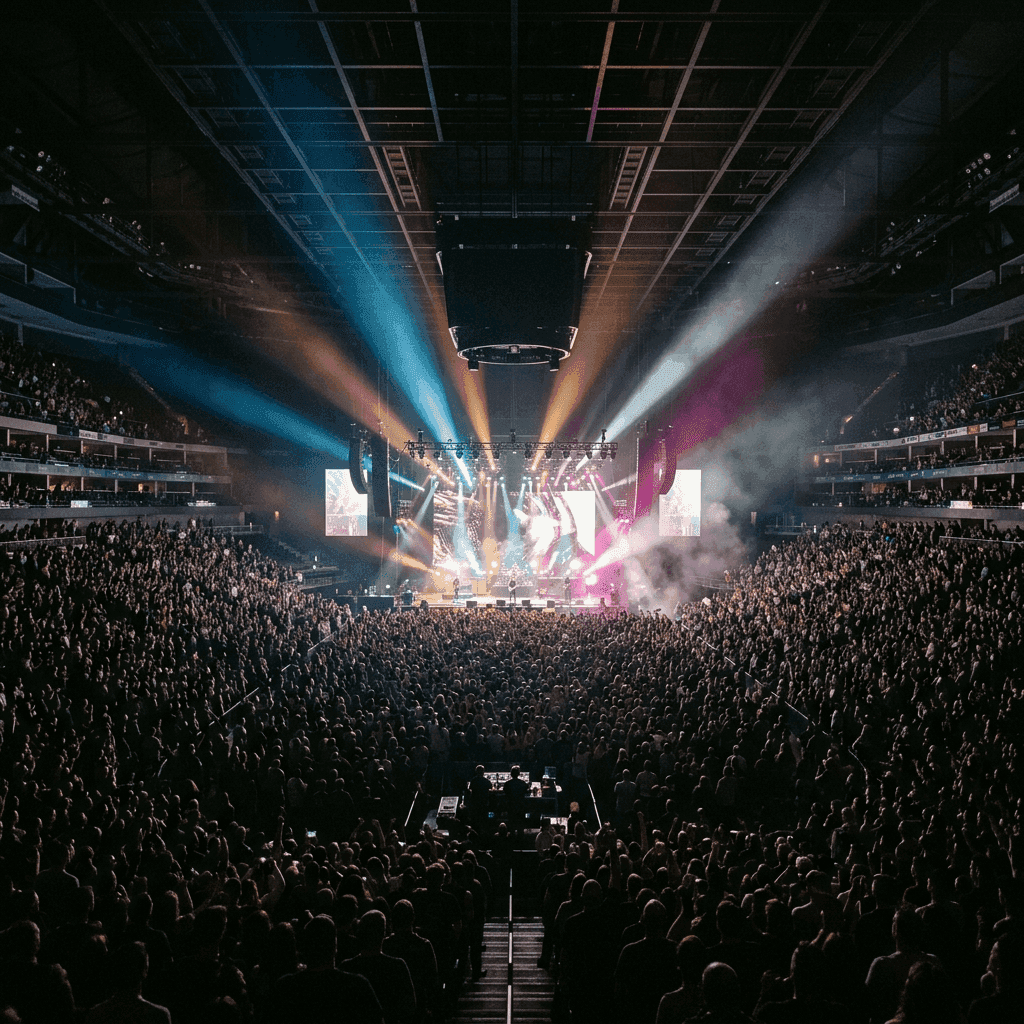
The one threat you cannot fence out
A stadium spends heavily on securing its perimeter: bag checks, barriers, cameras, gates. None of it addresses the one axis of approach that ignores the fence entirely. A small drone can be over the pitch in seconds, and the damage runs from the merely disruptive (a broadcast interrupted, an event stopped, a crowd unsettled) to something far worse if the intent is hostile.
The difficulty is that these targets are precisely the ones conventional air defence was never built to see. They are small, slow and low, lost against the clutter of a busy urban skyline, and they can be flown by anyone. Protecting a venue means treating the airspace above it as part of the venue, sensed, understood and controllable, rather than as someone else's problem beyond the wall.
There is a commercial edge to this as well as a safety one. A stadium's product is the uninterrupted event and the broadcast that carries it to millions. An intrusion that stops play, even briefly, is a failure the audience sees in real time, and the footage of it outlives the incident. Airspace control is not only a security investment; it is protection for the thing the venue actually sells.
See the small, slow intruder first
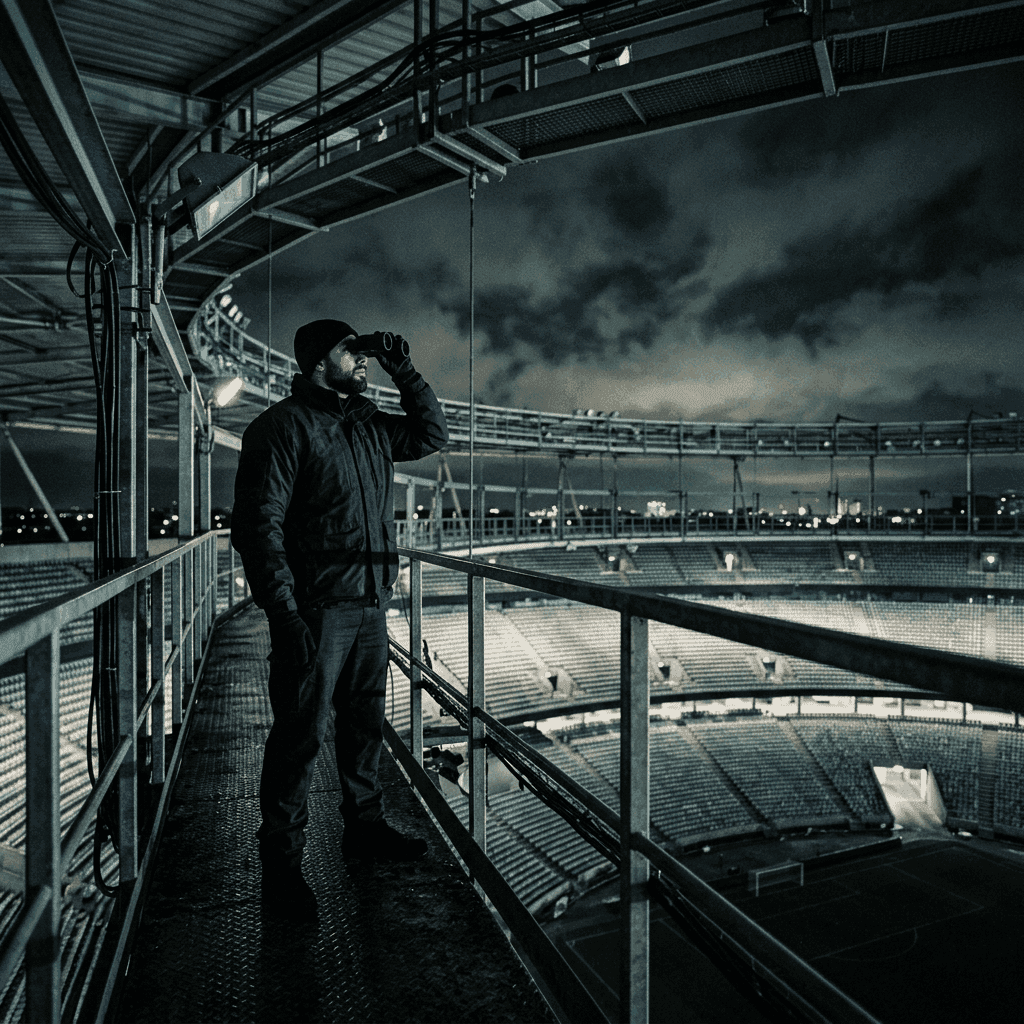
Detection is where venue airspace control begins, and it has to move with the people responsible for it. Dismounted drone-detection manpacks put counter-UAS awareness in the hands of the teams working the ground, protection details and roving security who operate beyond any fixed sensor mast, giving them early warning and the seconds they need to react to an approaching drone rather than discovering it overhead.
That dismounted layer is designed to integrate with the wider architecture when in range, so a detection at the perimeter is not a lonely alert but part of one picture. For a venue, the value is coverage that follows the operation as it moves through concourses, car parks and stands, closing the gap that fixed cameras leave the moment someone steps out of their arc.
Intercept without endangering the crowd
Detecting a hostile drone over a full stadium is only useful if you can do something about it without making things worse. That is the hard constraint at a venue: the defeat has to be precise, because everything below is people. An AI-assisted interceptor is built for exactly this: high-speed pursuit to close on the target, with AI-enabled tracking accelerating the lock while the operator keeps mission control and takes the engagement decision.
It is designed to neutralise the threat with minimal collateral risk, and it carries the safety behaviours a crowded environment demands: secure, anti-jam communications, fail-safe systems, and smart abort-and-return recovery if the engagement cannot be completed safely. It stays capable day and night and in RF- and GPS-denied conditions, the exact conditions a busy venue's spectrum creates.
Layer the defeat, don't bet on one shot
No single effector is the whole answer, and a venue should not bet a crowd's safety on one. A layered counter-UAS system brings detection and defeat together across radar, RF sensors and optical trackers with AI friend-or-foe classification, cueing a range of interceptor options from one command layer. Layering is what makes the response robust: if one option is unsuitable for the geometry over a packed stand, another is ready.
The layered approach is also priced for the real threat rather than a missile economy, which matters to a commercial venue that has to protect an airspace repeatedly, event after event, on a budget that has to make sense. Detection, tracking and defeat scale together from a single site upward.
Where the concern is not a lone intruder but several at once, a layered counter-drone swarm architecture sits above the individual effectors, fusing radar, RF and optical sensors with friend-foe discrimination and cueing multiple defeat options from one command layer. For a venue that expects to protect the same airspace on a fixed calendar, an architecture that scales from a single site toward wider coverage is worth more than any one clever gadget.
Sense without adding to the noise
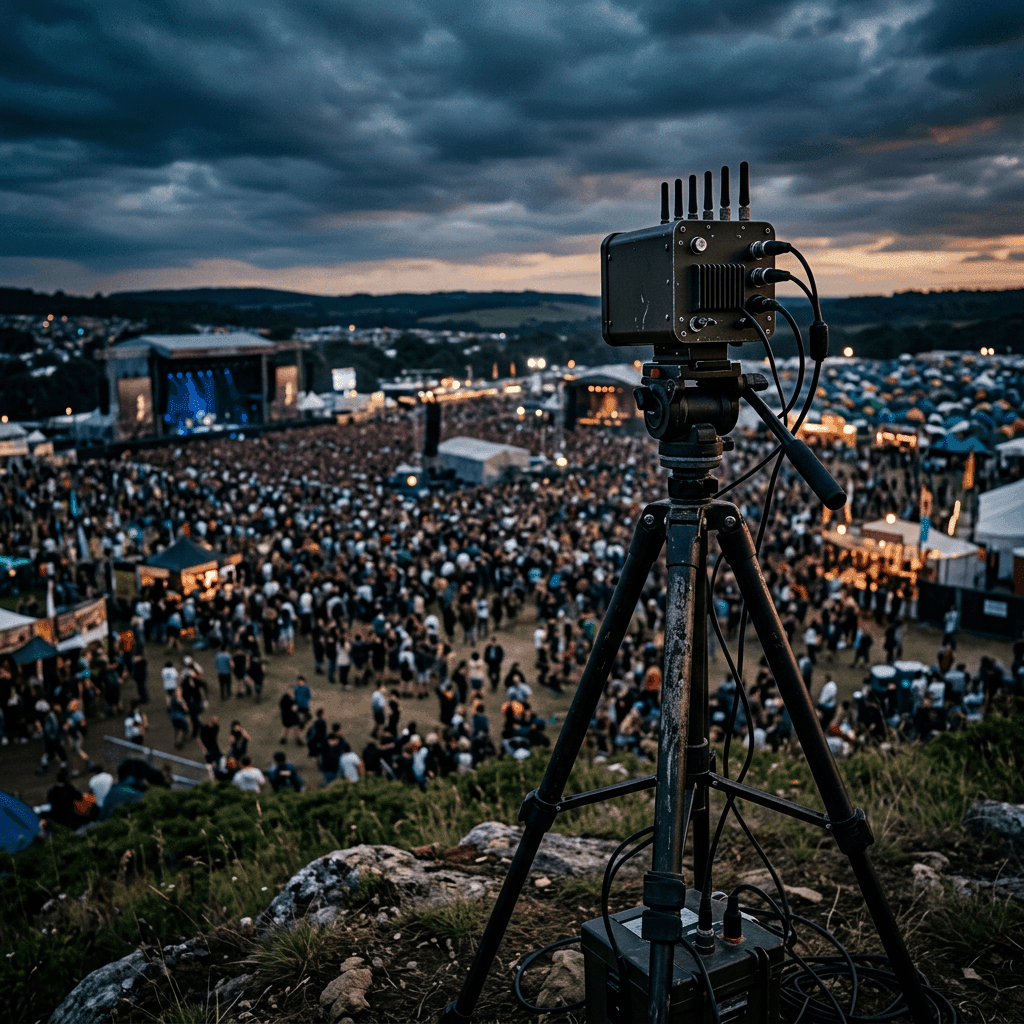
A stadium is one of the most RF-saturated places imaginable: tens of thousands of phones, broadcast trucks, wireless everything. Adding another emitter to that soup is both a spectrum headache and a signature. Emitter-free passive radar sidesteps the problem: it detects and tracks by exploiting illuminators already in the environment, with zero transmit power and no spectrum licence required, holding persistent coverage from a single receiver site.
Because it never emits, it neither congests the venue's spectrum nor advertises where the defence is watching from, and it is well suited to precisely the small, slow, low-RCS targets that defeat traditional radar. It holds persistent coverage over a wide area from one site, which suits a fixed venue that needs the same airspace watched every time the gates open.
Assembled through one accountable, non-aligned channel with the detection and interceptor layers, quiet sensing completes a picture the venue owns rather than rents. For an operator running a calendar of events, that single point of accountability matters as much as any specification: one team answers for whether the airspace was controlled on the night, not a committee of suppliers pointing at each other after the fact. Ten seconds of drone footage should never be the story. Control the airspace and it won't be.


