
Afghanistan owned the force. Contractors kept it working.
SIGAR found that the Afghan National Defense and Security Forces depended on US military support, contractor maintenance and logistics they could not quickly replace. The withdrawal began before the government fell in August 2021, and the force’s paper inventory did not survive the loss of its sustaining system.
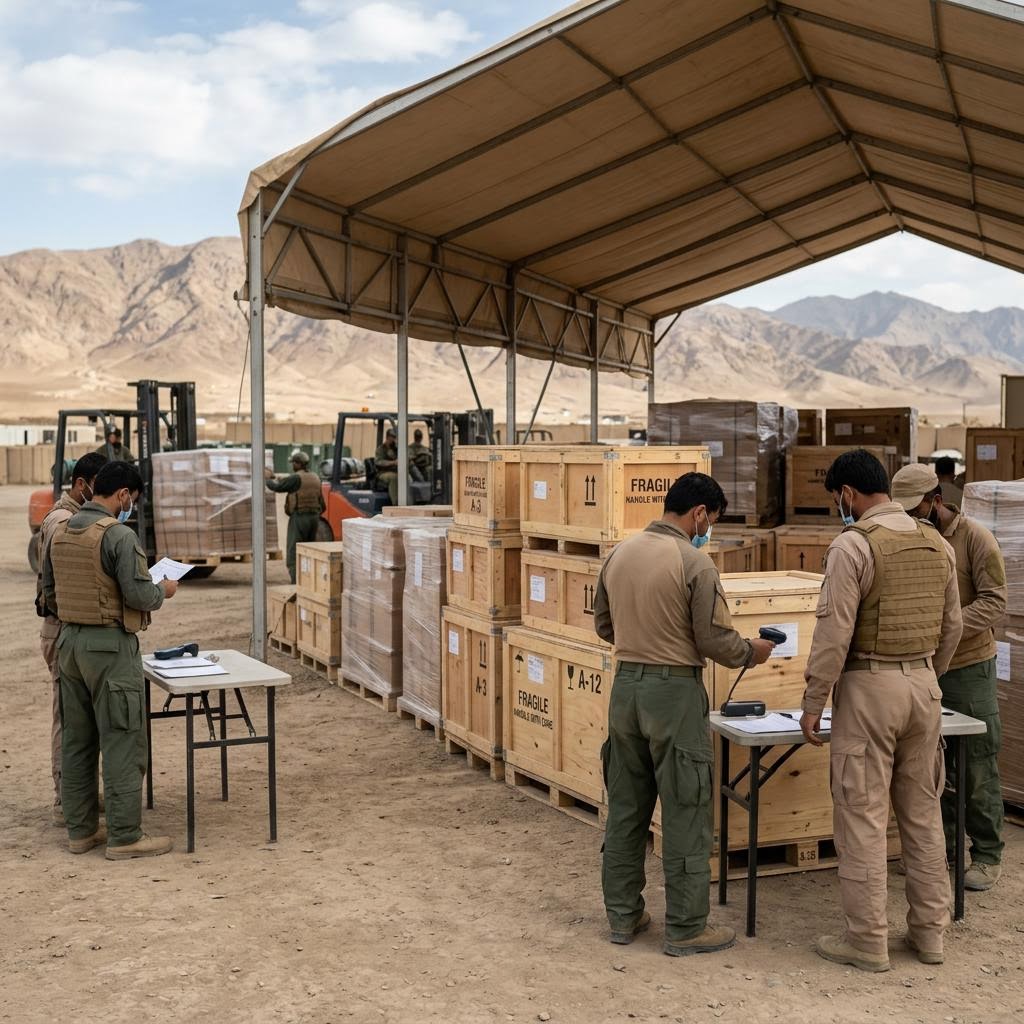
Afghanistan did not simply lose its foreign troops in 2021. It lost the contractors, air support and logistics arrangements that had made its own security forces function.
The Special Inspector General for Afghanistan Reconstruction (SIGAR) reached that conclusion in its May 2022 assessment of the collapse of the Afghan National Defense and Security Forces, or ANDSF. SIGAR identified the US decision to withdraw military forces and contractors, first through the February 2020 US-Taliban agreement and then through President Joe Biden’s April 2021 withdrawal announcement, as the single most important near-term factor in the collapse. The Afghan government fell in August 2021, when President Ashraf Ghani fled and the Taliban took Kabul.
That sequence matters. The collapse was not a clean test of whether Afghan soldiers could use the weapons they had been issued. It was a test of whether the force could operate after the external system around those weapons had been removed. SIGAR found that it could not do so at the required speed.
The dependence was especially clear in aviation. SIGAR said the Afghan Air Force was not projected to be self-sufficient until at least 2030. The US decision to withdraw on-site contract maintenance in May 2021 reduced the availability of operational aircraft and removed maintenance instruction at important regional airfields. Aircraft remained in the inventory, but fewer were available for operations and Afghan personnel lost access to the people who had been teaching them to keep the fleet running.
Logistics created a second break in the chain. The ANDSF held stockpiles of US-provided weapons and supplies, but SIGAR found that it lacked the logistics capacity to move them quickly enough to meet operational demands. Units reported shortages of ammunition, food, water and other equipment. A force can possess supplies and still be unable to fight if the transport and distribution system cannot put them where they are needed.
SIGAR’s account is more precise than the familiar claim that contractors caused the collapse. Its finding was that the withdrawal decision set events in motion and destroyed morale in a force that had long depended on US military presence. The report also identified the loss of US airstrikes, weak leadership, political failures, Taliban pressure and the absence of a coherent national security plan as contributing factors. Contractor withdrawal was central to the dependency, not a complete explanation for every surrender or abandoned position.
The political signal arrived before the technical failure. The US-Taliban agreement excluded the Afghan government from the negotiations and made the American departure appear inevitable. SIGAR said Afghan troops and officials interpreted the agreement as abandonment. Once the expected foreign protection was no longer credible, the force faced not only fewer aircraft and slower resupply but also a deteriorating belief that its government could provide a future worth fighting for.
AI-generated representative image.