
Afghanistan had aircraft. Contractors made them fly.
The Afghan Air Force owned aircraft but relied heavily on foreign contractors for maintenance and supply. In January 2021, US advisers warned that the fleet was unlikely to remain combat-effective beyond a few months after those maintainers withdrew.
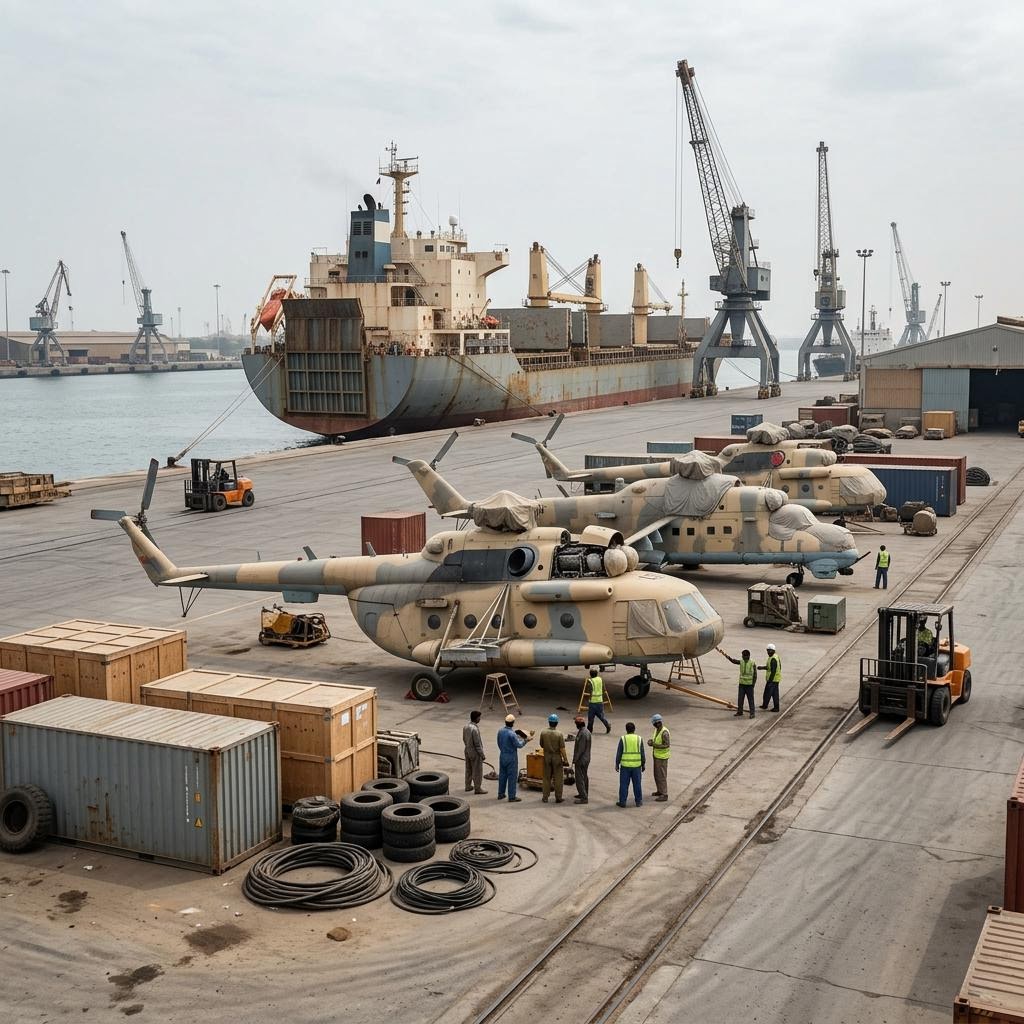
An air force can own aircraft and still lose its air force when the maintenance system leaves.
That was the warning in Jonathan Schroden’s October 2021 analysis for the Combating Terrorism Center at West Point. The Afghan Air Force, or AAF, depended heavily on contractors to maintain its equipment. With the exception of its Mi-17 helicopter fleet, the AAF was almost completely dependent on contract maintenance. In January 2021, the US military organisation advising the AAF assessed that none of its aircraft was likely to remain combat-effective beyond a few months after contracted maintainers withdrew.
The word that matters is “available”. An aircraft in an inventory is not necessarily an aircraft that can fly a mission. It needs inspections, repairs, spare parts, technical records, fuel, trained crews and a system able to move each of those things to the right airfield. The AAF had aircraft and Afghan personnel, but its maintenance chain remained tied to outside contractors and foreign logistics.
The warning was made before the final withdrawal. It was not a report written after the fleet had already failed. That timing shows that the dependency was known while the transition was still under way. The question was not whether Afghan pilots could sit in aircraft. It was whether the institution around them could keep aircraft serviceable after the people who maintained the fleet had gone.
The CTC account places aviation inside a wider support structure. By early 2021, the United States had reduced its presence to roughly 2,500 troops and 11 bases. US personnel still advised the ANDSF in strategy, institutional oversight, aviation, special operations and supporting functions such as command and control and logistics. They also helped bring airstrikes to Afghan ground units quickly through US targeting and coordination systems. Those systems were not Afghan-owned merely because Afghan crews used the aircraft.
Logistics made the aircraft problem harder. The Afghan security forces were increasingly reliant on the AAF to conduct weekly logistics flights to regional locations after ground convoys became unreliable. If the air force itself lacked maintenance depth, it was being asked to carry part of the wider force’s supply burden while its own support chain was being withdrawn. A platform can therefore become both a capability and a dependency for the organisation around it.
The same pattern appeared in ground equipment. During 2020, Afghan personnel conducted 19 percent of Afghan army vehicle repairs, compared with a stated goal of 70 to 80 percent. For the police, the figure was seven percent against a goal of 25 to 45 percent. Those figures do not measure aircraft readiness, but they show that contractor dependence was not confined to one type of helicopter or one repair depot.
AI-generated representative image.