
Armenia had a defence guarantee. Nagorno-Karabakh did not.
During the six-week 2020 war, Azerbaijan fought to recover territory internationally recognised as Azerbaijani. Armenia belonged to the Russia-led CSTO, but the alliance’s collective-defence commitments did not officially extend to Nagorno-Karabakh.
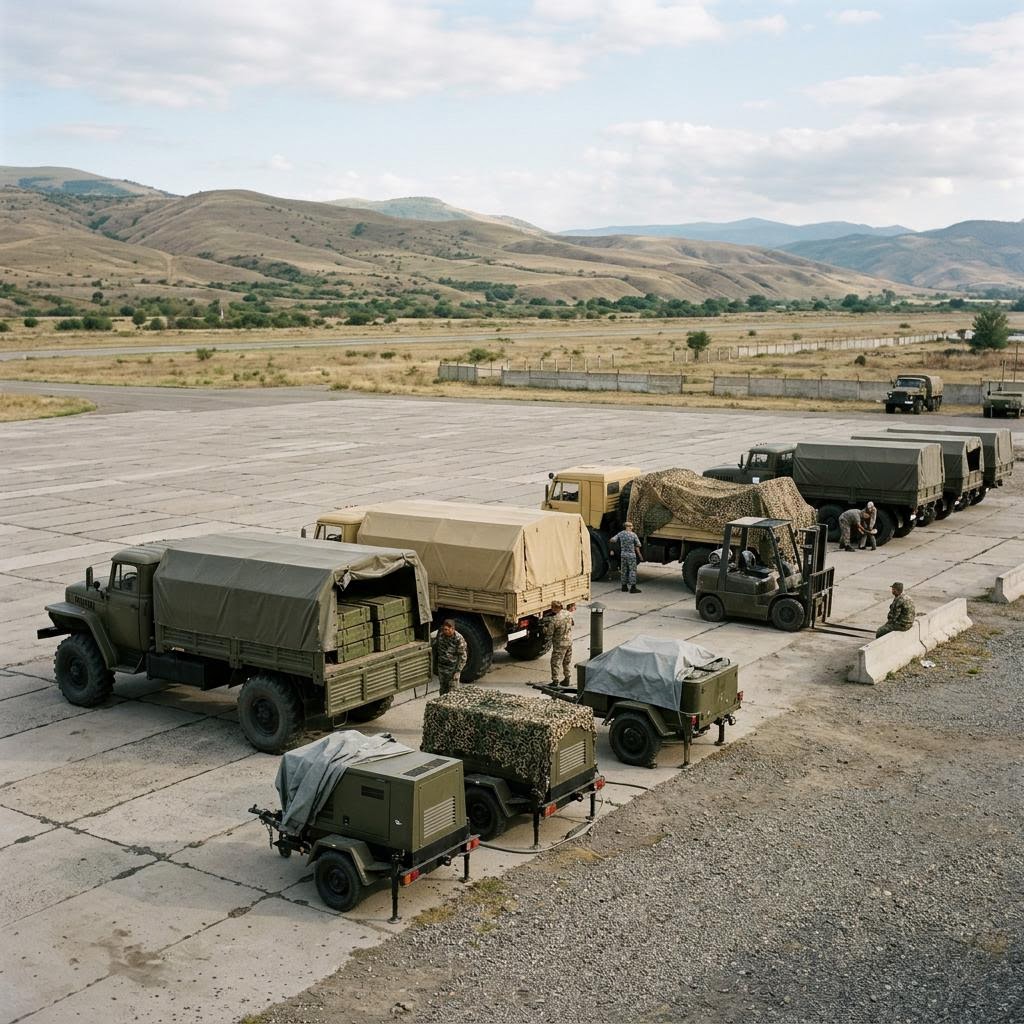
Armenia belonged to the CSTO; Nagorno-Karabakh was internationally recognised as Azerbaijani territory. That distinction kept the 2020 war from becoming a formal CSTO combat intervention. Russia brokered the ceasefire and deployed peacekeepers, but the alliance’s collective-defence promise did not extend as Yerevan hoped.
Maps are not background to security guarantees. They are often the clause that decides whether the guarantee exists.
On paper, presence, membership or a formal agreement is taken as proof that help will arrive in the required form. In practice, definitions, exemptions, territorial limits, notice procedures and the political interpretation of treaty language can decide whether the capability arrives, works and remains available. That is the control point hiding behind the headline fact: Armenia had a defence guarantee.
For Armenia, maps often decide where an alliance ends. That exposure sits behind the claim that 'Armenia had a defence guarantee'.
The most dangerous failures are often deniable. A component is unavailable, an approval takes longer than expected or another customer becomes urgent. Each explanation can be reasonable. Together they can honour the agreement in form while declining the specific action the threatened state expected. For Armenia, the warning is captured by what followed: Nagorno-Karabakh did not.
The procurement team should model an interruption lasting six months, not six days. Assume that the mechanism above is unavailable and that friendly phone calls change nothing. Which missions stop first? Which units receive priority? What can be repaired, substituted or borrowed? The exercise will expose dependencies that a normal tender score hides. The exercise has a concrete starting point in this case: Armenia had a defence guarantee.
Do not ask whether the supplier is friendly. Ask questions that can be evidenced. What national capability covers the space outside the agreement? Which territory, actors and types of attack are actually covered? Is assistance automatic, consultative or subject to a fresh vote?
Now assume the primary route fails. Who decides whether an exemption applies? What notice or approval process delays action? Can commercial supply continue when government aid stops? Vague reassurance should be recorded as uncertainty, not treated as mitigation.
The buyer still has options: identify every exemption and grey zone before a crisis, retain national options outside the partner's mandate and separate commercial, governmental and alliance supply channels. These measures are rarely as exciting as the platform. They are often what make the platform usable.
This should affect the score, not only the footnotes. Delivery credibility, substitution time, national repair depth and freedom of use deserve explicit weight in the evaluation. Otherwise the technically impressive bid wins on paper while the operationally usable bid is marked down for carrying the cost of being dependable. The headline fact, 'Armenia had a defence guarantee', should carry that exposure in its score.
Legal precision is not cynicism about alliances. It is how military planners convert a political promise into forces, timings and responsibilities. That distinction matters here: Nagorno-Karabakh did not.
The final test for Armenia is simple: what exact military action follows when the crisis occurs at the least convenient edge of the agreement? If the honest answer begins with 'provided that somebody else agrees', that condition belongs on the first page of the procurement decision, not in an annex nobody reads. That is what 'Armenia had a defence guarantee' should force a buyer to test.
A legal distinction that looks narrow in a conference room can become the exact place where protection ends during a crisis. The small print becomes very large when the shooting starts. That exposure sits behind the claim that 'Armenia had a defence guarantee'.
AI-generated representative image.