
India built Tejas airframes. GE engines set the delivery clock.
HAL expected to hand over 16 to 24 Tejas aircraft in the Indian financial year beginning in April 2025, but GE engine deliveries had already slipped by nearly 12 months. The Indian Air Force had 31 fighter squadrons against a stated target of 42.
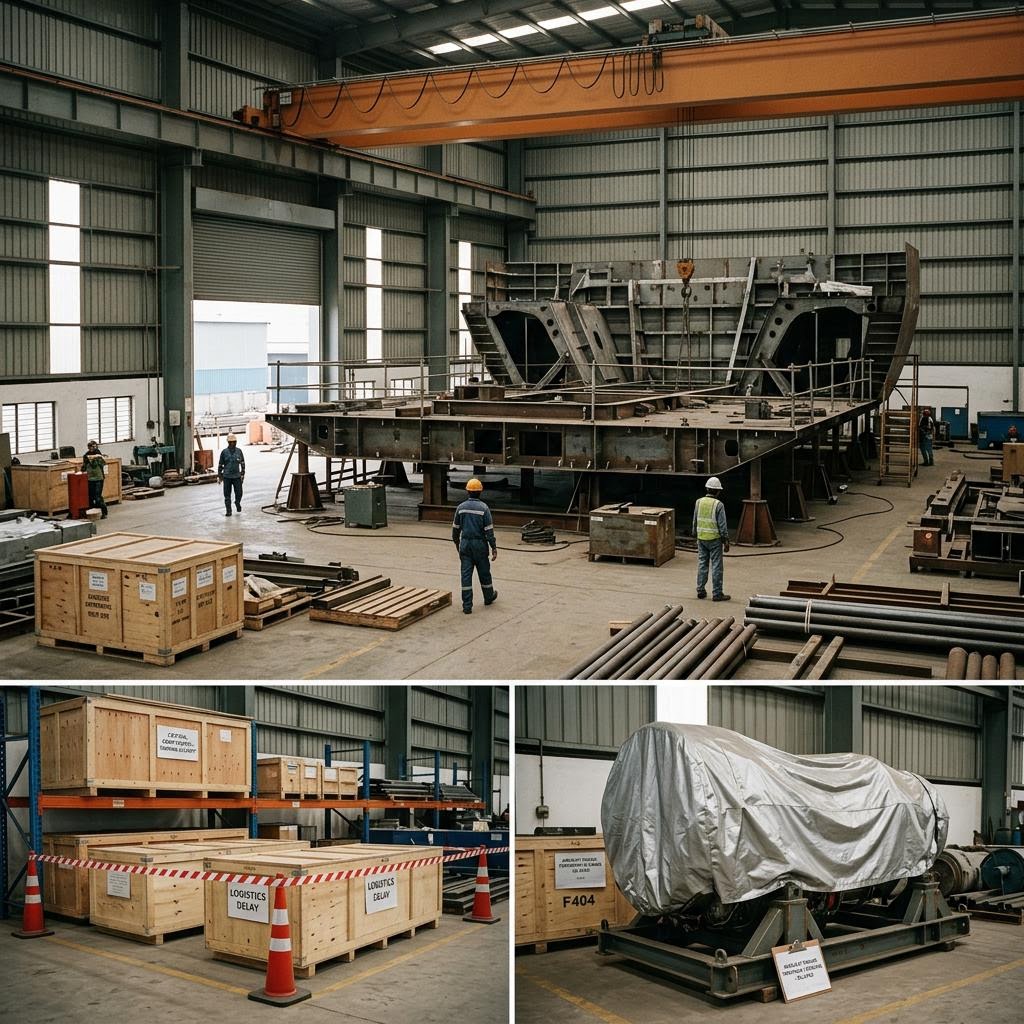
The airframe could be made in India. The delivery date still depended on an engine made by GE.
On 10 February 2025, Reuters reported that India expected stable deliveries of its Tejas light combat aircraft in the financial year beginning in April, after an engine-related delay of nearly 12 months. The aircraft is built by Hindustan Aeronautics Limited, or HAL, and uses a GE Aerospace engine. India’s Defence Production Secretary Sanjeev Kumar said HAL would have the capacity to hand over 16 to 24 aircraft if engine deliveries stabilised.
That was a forecast, not a record of completed deliveries. Reuters reported that engine deliveries had been due to begin in March 2024. Indian defence ministry sources attributed the subsequent disruption to supply-chain constraints faced by GE. More than 65 engines had already been delivered by the end of 2023, but the new deliveries needed for the next production run did not arrive on the expected schedule.
The distinction between the aircraft and its powerplant is central. Tejas is an Indian-designed and Indian-produced fighter, but the F404 engine is an American component. The customer therefore controlled much of the visible platform while relying on a foreign supplier for a part that cannot be treated as a late accessory. An aircraft without its certified engine is not a nearly finished fighter in any useful delivery sense.
The delay arrived as the Indian Air Force was trying to increase its fighter strength. Reuters put the force at 31 squadrons against a target of 42. That figure is a separate force-structure fact. The report does not say that the GE delay caused the entire gap, and it would be wrong to turn the two numbers into a single calculation. The shortfall made the timing more consequential, but it did not prove that any particular squadron lost an operation because of the engine supply.
Kumar said the production line had stabilised at both HAL and GE. He also said India was working with its American partner to streamline supply during 2025-26 and thereafter. His comments describe an expectation about the next financial year. They do not establish that the backlog had been cleared when he spoke.
The later corroborating record helps define the problem without erasing that qualification. The Hindu reported on 26 March 2025 that GE had announced delivery of the first of 99 F404-IN20 engines ordered for the Mk1A programme. It quoted GE’s Warren McDonald explaining that the 2021 order required the company to restart a production line that had been dormant for five years and re-engage its supply chain. That explanation is useful context for the delayed engine programme, but it does not turn a company explanation into proof that every delay had one cause.
Nor does the record establish how many Tejas aircraft were physically complete, how many were awaiting engines, or what alternative propulsion options were technically available. The reported capacity of 16 to 24 handovers was conditional on stable supply. It was not a confirmed delivery total. There is also no evidence here of a deployed squadron being grounded, a combat sortie being cancelled, or a failure in the aircraft’s design.
The case is therefore narrower than the familiar claim that indigenous production means independence. It does not. Complex weapons are assembled from systems made under different national authorities, contracts and production schedules. Local manufacture can shorten some supply lines while leaving a single imported component able to set the pace for the finished aircraft.
India did not lose control of Tejas because GE supplied an engine. It did, however, expose a limit in what domestic production could guarantee. The February report showed a programme whose promised output remained conditional on a foreign engine line. That is a delivery constraint, not proof of total programme failure, and not proof of a battlefield effect.
AI-generated representative image.