
America built a $100 million drone base. Niger told it to leave.
Niger’s junta ordered US forces out after the 2023 coup. The United States left Air Base 101 in Niamey on 7 July 2024 and completed its withdrawal from the $100 million Air Base 201 near Agadez on 5 August, ending access to a major intelligence site.
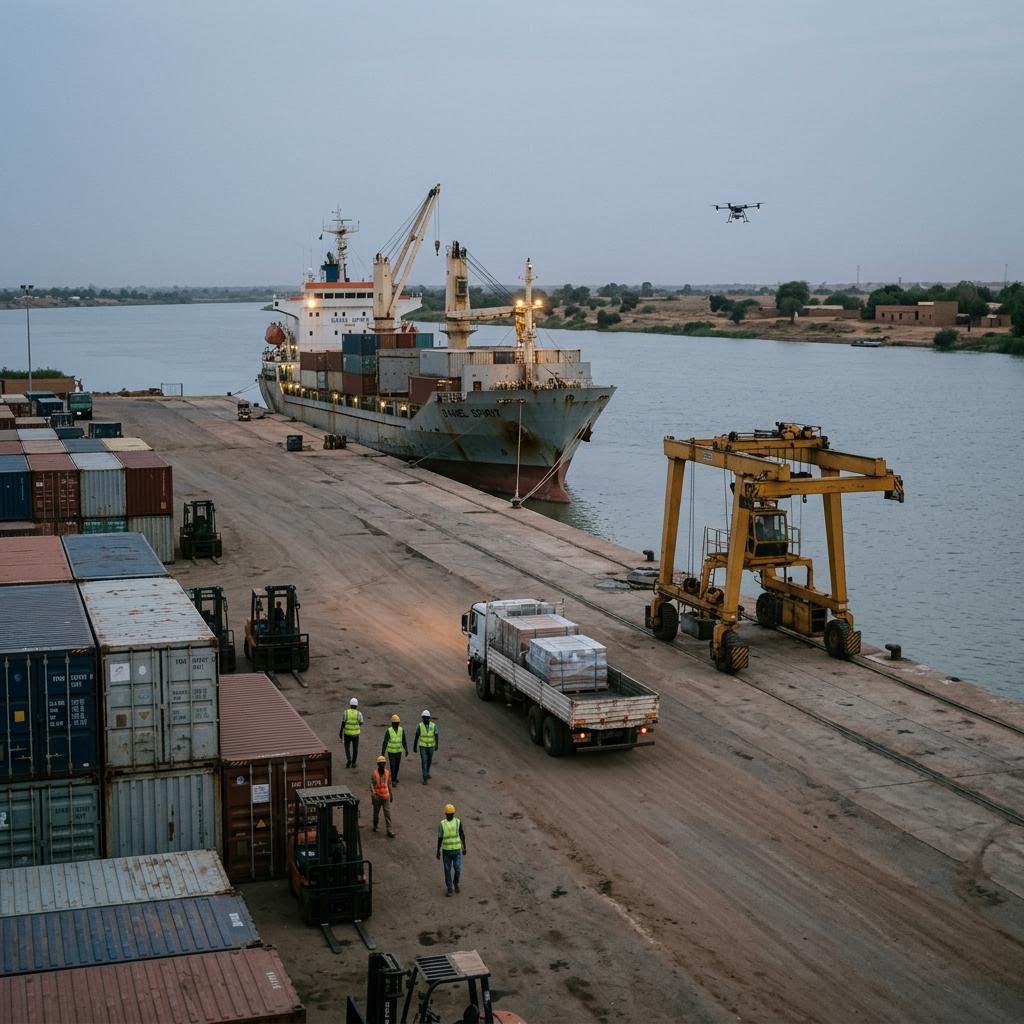
The runway at Air Base 201 did not become unusable. Niger made the American mission unwelcome.
The United States completed its withdrawal from Air Base 201 near Agadez on 5 August 2024, according to US Africa Command. Reuters had reported the first stage on 7 July, when US personnel left Air Base 101 near Niamey. The two dates should not be collapsed. The 7 July withdrawal was from the capital’s base; the later 5 August completion covered the major drone base at Agadez.
The political decision came from Niger’s ruling junta. After the 2023 coup, the junta ordered nearly 1,000 US military personnel to leave. Reuters reported that the order followed a breakdown in the relationship and that Niger gave the United States until 15 September to remove its troops. The withdrawal was completed earlier, under a joint process between the US Department of Defense and Niger’s Ministry of National Defense.
Air Base 201 mattered because of what it enabled. Reuters described the site as a $100 million drone base that had provided crucial intelligence about jihadist-linked groups. The base was not merely a parking area for aircraft. It was a fixed point for surveillance and counterterrorism activity in a region where groups linked to al Qaeda and Islamic State operated.
Yet the evidence does not support the larger claim that the withdrawal ended US counterterrorism operations across West Africa. The United States had other regional relationships, and the retrieved reports do not provide a percentage of intelligence coverage supplied by Air Base 201. Nor do they say whether particular missions moved to another country, were shortened or were abandoned.
The chronology shows how host-state permission works. Niger hosted the installation and controlled the political conditions for its continued use. The United States supplied the people, aircraft and intelligence capability. Once the host government withdrew its consent, the investment in the base could not guarantee continued access. A $100 million facility could remain standing while its principal foreign user packed up.
The withdrawal also had two layers. Air Base 101 left first, on 7 July, after what Niger’s defence ministry and the US Department of Defense described as effective cooperation and communication. The language of the joint statement described the evacuation process, not a restoration of the wider political relationship. Air Base 201 followed in August. Completion of a safe withdrawal therefore did not mean that the original security partnership had been repaired.
The regional setting made the decision more than an administrative move. Niger was one of the countries through which the United States had supported operations against Islamist insurgents in the Sahel. Reuters reported that Niger, Mali and Burkina Faso had torn up defence agreements with US, European and UN forces and that Russia had sent military trainers to Niger in April 2024. Those facts indicate a changing external alignment. They do not establish that Russian trainers replaced the intelligence, aircraft or command functions of Air Base 201.
The loss was therefore one of access and infrastructure, not a quantified battlefield result. The sources do not show how many sorties were flown from the base, how much intelligence it produced, or whether the Nigerien forces received equivalent information after the withdrawal. They do not show an immediate increase or decrease in attacks. The phrase “major node” is supported by the reporting; a percentage of regional coverage is not.
There was also no claim in the retrieved material that Niger had physically seized the base. The junta ordered US forces out, and the withdrawal agreement determined the conditions. This distinction matters. The case is about political control over foreign basing rights, not about a military assault on an installation.
AI-generated representative image.