
The Philippines signed for 16 Russian helicopters. Sanctions risk killed the deal.
The Philippines cancelled a November 2021 contract for 16 Russian Mi-17 transport helicopters after Russia’s invasion of Ukraine raised concern about Western sanctions. Manila then explored US Chinooks and sought the return of a down payment, while Russia disputed whether it had been formally notified.
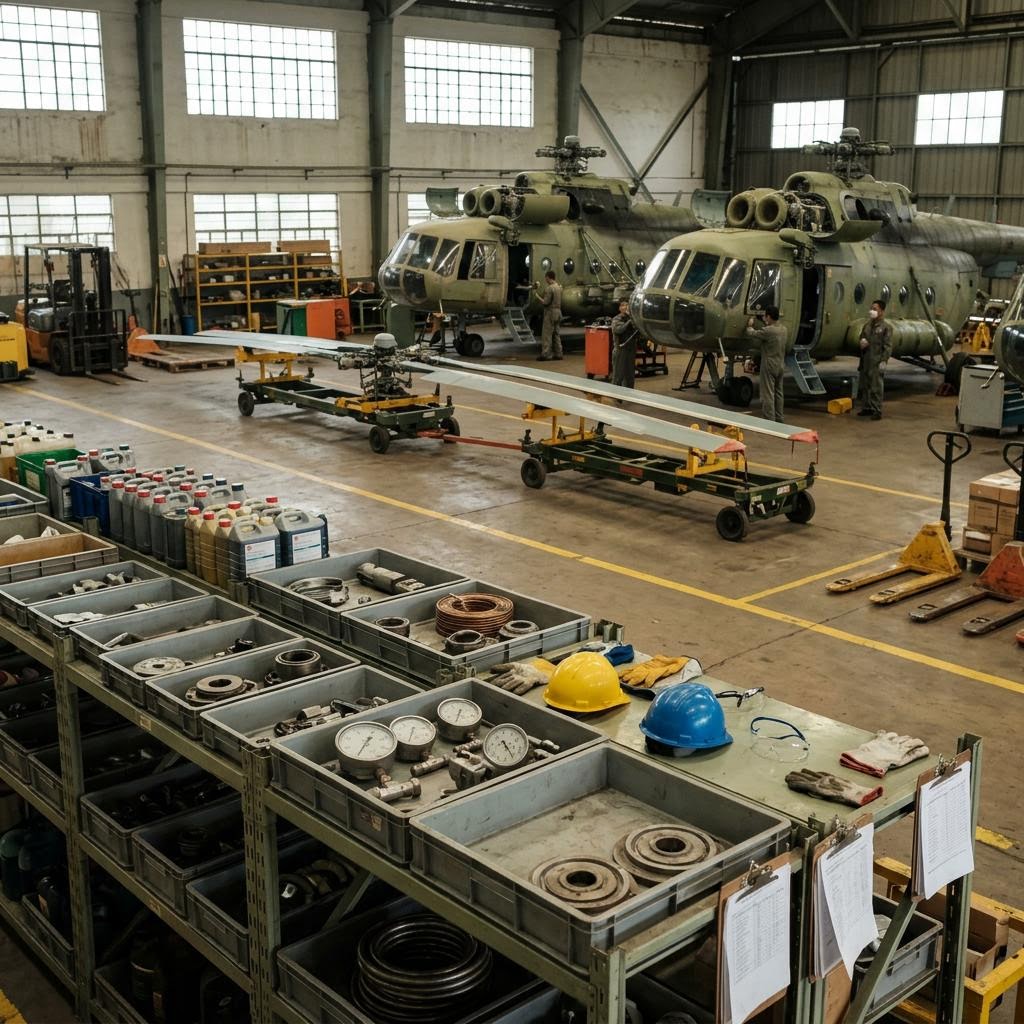
The Philippines cancelled a Russian helicopter contract before any US sanction was announced against Manila. The risk was enough.
The contract had been signed in November 2021 for 16 Mi-17 military transport helicopters. Reuters, carrying an Associated Press report, put its value at 12.7 billion Philippine pesos, or about $227 million. It said former defence secretary Delfin Lorenzana announced the cancellation on 26 July 2022, just before former president Rodrigo Duterte left office. The decision to buy the aircraft had been approved the previous month.
The timing mattered. Russia’s full-scale invasion of Ukraine began on 24 February 2022. The purchase had not started in a sanctions vacuum, and the Philippines had initially defended proceeding. By June, however, the political and financial exposure of buying Russian equipment had changed. Lorenzana told AP, in the wording reproduced by Reuters, “We could face sanctions.” That was a warning about possible consequences, not evidence that the United States had already penalised the Philippines.
The legal mechanism was therefore indirect. No source retrieved for this case records a US export refusal to Manila, a formal CAATSA determination or a completed secondary-sanctions penalty. The buyer judged that keeping the contract could expose it to sanctions or related financial difficulty and cancelled. A procurement decision can be controlled by the expected cost of permission failing, even when no official refusal has yet arrived.
The figures need care. Reuters reported 16 helicopters and a $227 million equivalent. Defense News later described the contract as $322.3 million while reporting the Philippine defence department’s confirmation that it was formalising termination. Reuters separately reported that Manila was trying to recover $38 million, and Defense News reported a $48.2 million down payment. The Philippine News Agency, as quoted by Al Jazeera, put the payment at about 1.9 billion pesos, or roughly $32 million. These reports may refer to different exchange rates, payment stages or contract accounting. They cannot be silently combined. The safe account is that a substantial down payment had been made and its recovery was uncertain.
There was also a disagreement about the contract’s status. In October 2022, the Russian ambassador to the Philippines said Manila had not officially notified Moscow and that production was continuing. Philippine President Ferdinand Marcos Jr said the deal had already been cancelled and that Manila hoped to recover at least part of its payment. Those positions describe a live dispute over notice and performance, not proof that the helicopters were delivered. The sources do not establish that any Mi-17 entered Philippine service under this contract.
The cancellation left a genuine requirement behind. Reuters reported that Manila was looking at US-made CH-47F Chinooks for heavy-lift work. Ambassador Jose Manuel Romualdez said the proposed US arrangement could cover maintenance, service and parts, and that the aircraft would replace existing equipment used for troop movement and disaster preparedness. That was a replacement discussion, not a completed Chinook purchase. Al Jazeera later reported Marcos’s statement that an alternative US supply had been secured, but it did not identify a signed contract or delivery schedule.
AI-generated representative image.