
Germany needed Swiss ammunition for Gepard. Switzerland refused re-export.
Switzerland rejected Germany’s requests to transfer Swiss-origin ammunition to Ukraine, including 35 mm rounds for Gepard anti-aircraft tanks. The immediate alternative supply was unclear, but the sources do not quantify stocks or an operational loss.
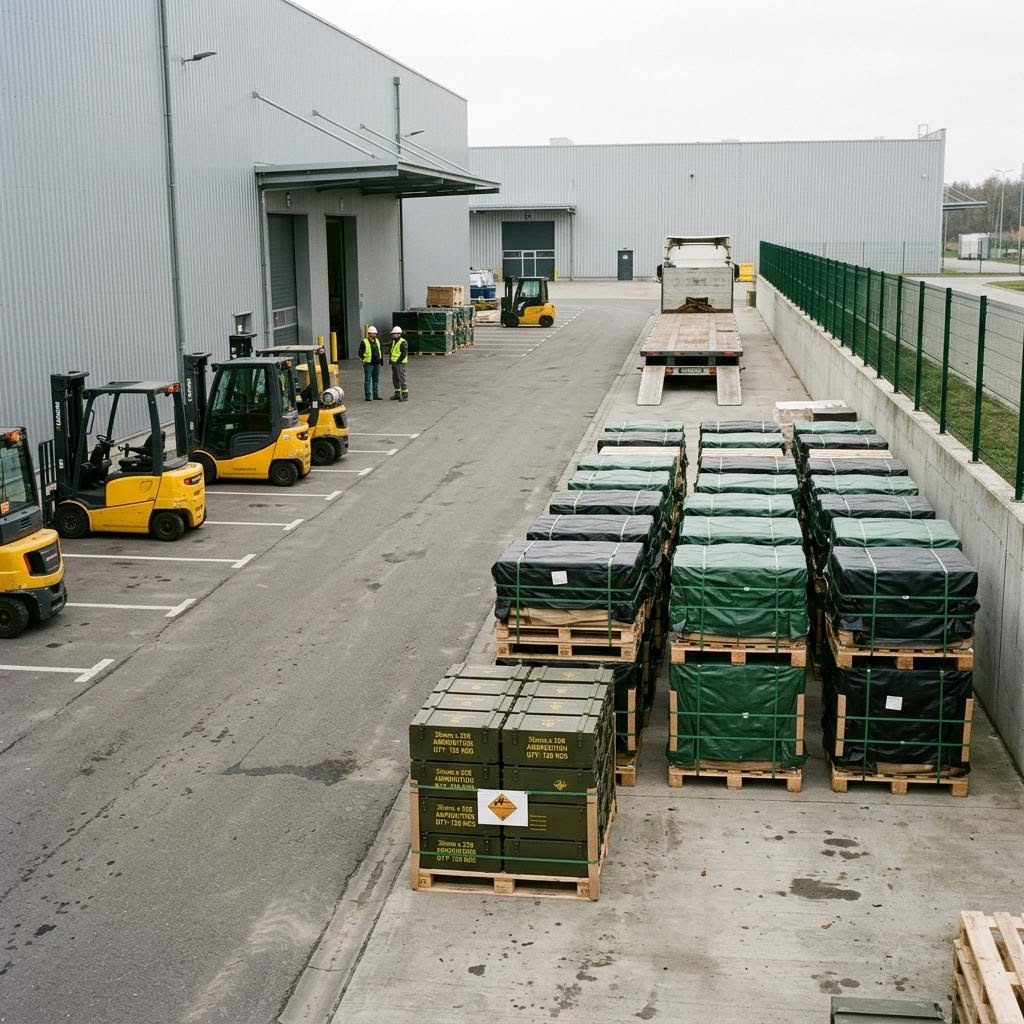
Germany had the Gepard anti-aircraft vehicles. Some of the ammunition still required a Swiss answer.
On 26 April 2022, Reuters reported that neutral Switzerland had vetoed the re-export of Swiss-made ammunition used in Gepard anti-aircraft tanks that Germany was sending to Ukraine. The Swiss State Secretariat for Economic Affairs, SECO, confirmed that Germany had asked to transfer ammunition it had previously received from Switzerland.
SECO said it had received two German requests. One concerned 35 mm ammunition for the Gepard. The other concerned 12.7 mm ammunition. Both requests were rejected. SECO said the decisions referred to Swiss neutrality and mandatory rejection criteria in Swiss war-material legislation.
The ammunition was therefore not treated as an ordinary German stock that could be redirected whenever Berlin chose. Switzerland generally required countries that bought Swiss war material to obtain permission before re-exporting it. The original sale had created a continuing point of control. Germany could donate the vehicles, but it could not assume that every Swiss-origin round in its possession could travel with them.
The decision came after Germany announced its first delivery of heavy weapons to Ukraine. Reuters described that delivery as a response to pressure at home and abroad to help Ukraine resist Russian attacks. The Gepard was part of a wider effort to send air-defence equipment, but this report concerns the ammunition requests, not a complete account of the vehicles’ supply.
The immediate effect was uncertain. Swiss broadcaster SRF said it was unclear which ammunition Germany was sending to Ukraine alongside the Gepards after the Swiss decision. That sentence is important because it prevents a stronger claim. The record shows that one route was blocked. It does not show that Germany had no other rounds, that Ukrainian crews stopped firing, or that a particular vehicle became unusable.
Later Swiss reporting put the rejected German request at 12,400 rounds of Swiss-made ammunition. That figure is useful only with its attribution and context. It does not establish that 12,400 rounds represented Germany’s entire stock, Ukraine’s requirement or the number of rounds withheld from an operational unit.
The legal and political context was Switzerland’s neutrality policy. Switzerland had adopted European Union sanctions against Russia but said neutrality prevented it from supplying arms for use in conflict zones. The policy was being debated domestically, and the government had also rejected other requests connected with support to Ukraine. Those facts explain the stated framework. They do not establish an undisclosed motive beyond the refusal and cited law.
The transfer condition survived a change in ownership. Germany had acquired the ammunition from Switzerland, yet Swiss permission remained relevant when Germany proposed sending it to a country at war. That is the procurement point in the case. Delivery to an ally did not erase the origin state’s re-export rule.
AI-generated representative image.