
Avdiivka ran out of ammunition. Ukraine withdrew before encirclement.
Ukrainian forces withdrew from Avdiivka on 17 February 2024 to avoid encirclement after months of fighting. US and Ukrainian officials linked the retreat to dwindling ammunition and a stalled aid package, while Russia described the withdrawal as chaotic.
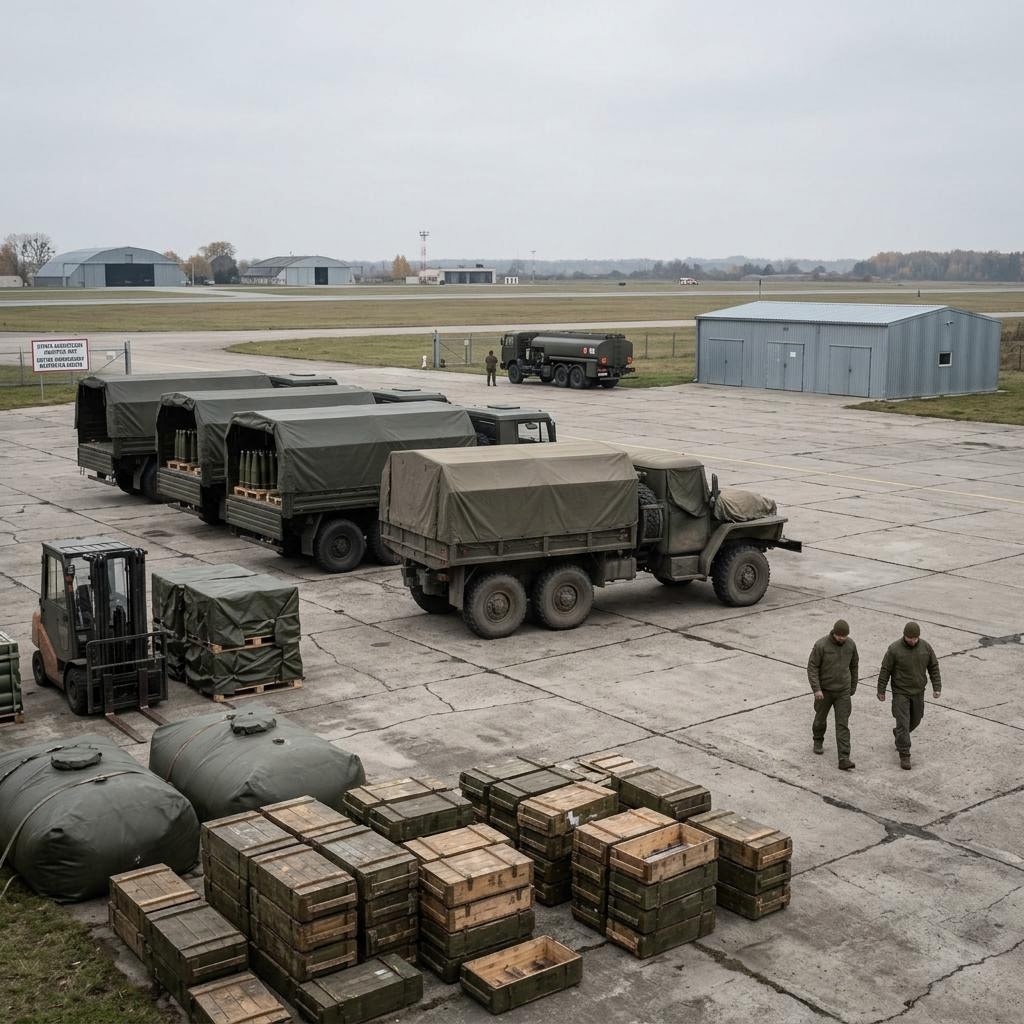
At Avdiivka, the political dispute over US aid coincided with a reported shortage of Ukrainian ammunition.
Ukraine announced the withdrawal of its forces from the eastern town on 17 February 2024. Reuters reported that the decision was intended to save troops from being fully surrounded after months of fierce fighting. The BBC reported that ammunition shortages had become part of the story as political opposition in the US delayed a new aid package.
The town had been under pressure for months. Russian forces attacked from several directions, and Ukrainian commanders said the withdrawal was necessary to avoid encirclement and preserve the lives and health of service personnel. Russia later presented the fall of Avdiivka as an important victory. Those statements describe competing accounts of the operation, not a single uncontested explanation.
The supply constraint was less disputed. US President Joe Biden warned that Avdiivka could fall because of ammunition shortages after months of Republican congressional opposition to a new package for Kyiv. The White House said the withdrawal had been forced by “dwindling supplies as a result of congressional inaction” and that Ukrainian soldiers had been forced to ration ammunition. That is the White House’s assessment and should remain attributed.
Reuters also reported Ukrainian President Volodymyr Zelenskiy calling on allies to fill a shortage of weapons at the Munich Security Conference. He said stalled US aid was imperative and suggested that the withdrawal was partly caused by a lack of weapons. The word “partly” matters. The reporting does not establish that the aid interruption alone determined the outcome.
The BBC supplied the military context. It reported that Ukraine was critically dependent on weapons from the United States and other Western allies, while Russian forces had greater artillery resources. It also reported a warning from White House National Security Council spokesman John Kirby that Ukrainian forces were running out of artillery ammunition as Russia sent repeated attacks against their positions.
This makes the case different from a simple cancellation. US support had not ceased forever, and Ukraine still had soldiers, weapons and command authority at Avdiivka. The problem was continuity. Congressional delay interrupted the expected replenishment of artillery ammunition and other assistance while the town was under attack. A stock can exist and still be too small for the demands placed on it.
The sources do not provide a complete inventory. They do not give the number of shells remaining at each Ukrainian position, the quantity that would have been available under the proposed package or the exact share of the defence attributable to US deliveries. They also do not show how many troops or weapons withdrew successfully, or what was left behind.
That missing detail is not a reason to discard the case. It is a reason to state its consequence carefully. The reporting connects a political funding dispute to an ammunition shortage at a named battle and records a withdrawal to avoid encirclement. It does not justify the stronger claim that Congress directly ordered the retreat or that every Ukrainian unit faced the same condition.
The timing also needs care. The six-month interruption referenced in the original case record describes a period of stalled US aid leading into the withdrawal. The event occurred on 17 February. The Reuters page was published as the withdrawal was reported, while the political dispute and the aid package continued afterwards. Those are not interchangeable dates.
The Ukrainian military’s account and Russia’s account diverged on what the withdrawal looked like. Ukraine said it had acted to preserve troops and later said the situation had stabilised somewhat. Russia described the retreat as rushed and chaotic, with some soldiers and weapons left behind. A responsible account can report both positions without adopting either as a complete operational verdict.
AI-generated representative image.