
Venezuela’s F-16s needed US spares. Caracas went shopping in Moscow and Beijing.
US restrictions did not erase the F-16 fleet, but they narrowed its support route as Venezuela sought Russian and Chinese alternatives.
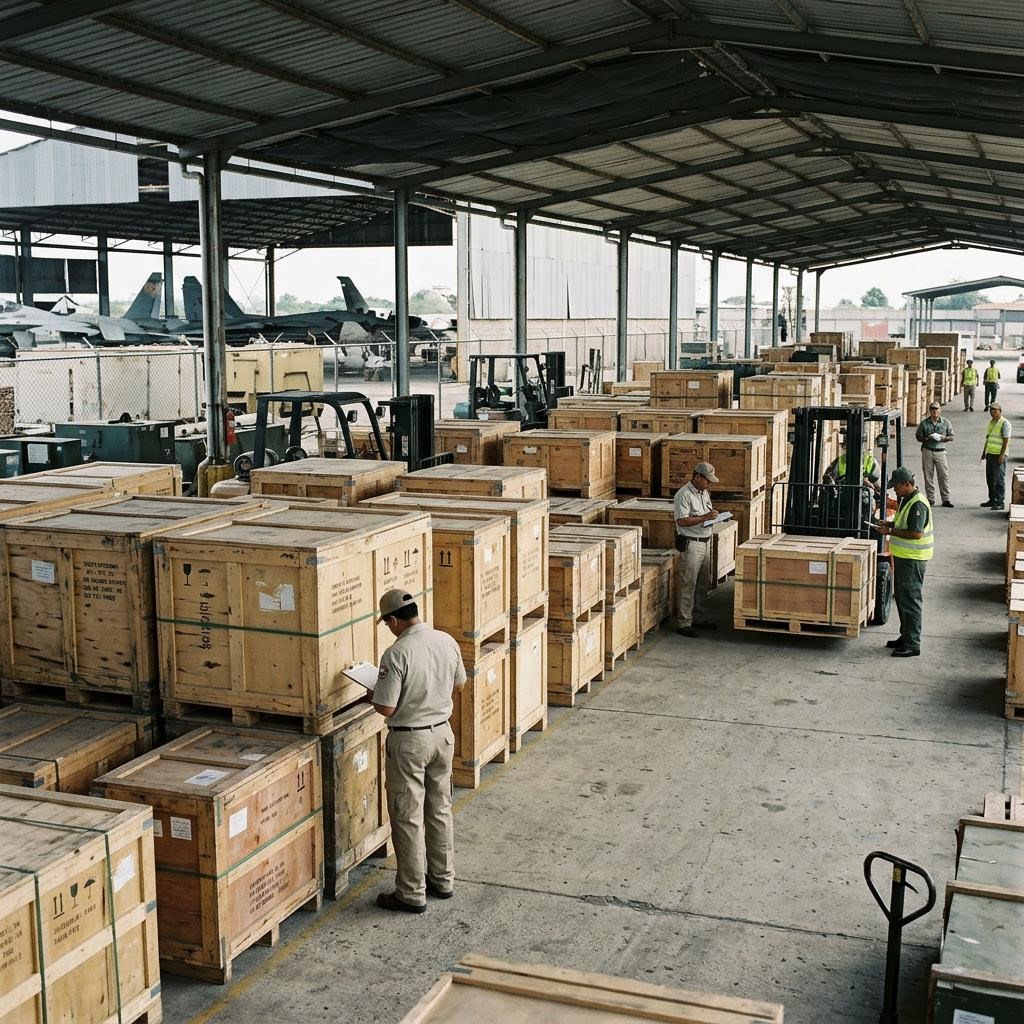
Venezuela did not need to lose an aircraft to lose a supplier. The spare-parts route ended first.
Poor relations between President Hugo Chávez and Washington led to a US arms embargo against Venezuela in 2006, Reuters reported. The embargo ended normal access to US weapons and support, but the article’s most concrete effect was on the equipment Venezuela already owned: without access to spare parts, a fleet of about 20 US-built F-16 fighters had fallen into disrepair.
That is a different story from a total grounding order. Reuters did not say that every F-16 was unusable, and it did not provide a readiness rate, a number of grounded aircraft or a parts list. It reported the condition as part of a wider account of Caracas turning to Russia and China for new equipment.
The timing mattered. At the time of the report, Russia had given Venezuela a $4 billion credit for defence equipment after a visit by Chávez to Moscow. Chávez said the credit would help buy defence equipment, but gave no details of the items it would finance. Reuters also reported that Russian Prime Minister Vladimir Putin had said in April that Venezuela was considering $5 billion in weapons orders. Those figures are different. One was a reported credit; the other was a possible order total.
The purchases that Reuters did identify were spread across several roles. Venezuela was awaiting Russian tanks and air-defence systems. It was buying twelve Chinese Y-8 transport planes. China had already sold Venezuela K-8 training jets and a radar network. The article said the radar system was intended to replace surveillance capacity lost under the US embargo. It did not establish that the new systems were equivalent to the US equipment or that the purchases restored a particular level of capability.
The military relationship was also political. Reuters described Venezuela and Russia as having deep ties in energy and defence. Washington viewed Chávez’s purchases of tanks, fighter jets and air-defence systems with suspicion. Chávez said he was modernising Venezuela’s ageing equipment. Those positions should remain attributed. The article does not prove that the embargo alone caused every Venezuelan purchase, nor does it establish Washington’s stated concern as a measured effect.
The F-16s made the support problem visible. An aircraft is a finished object only in a catalogue. In service, it requires parts, technical support and permission to obtain them. When those inputs become unavailable, the buyer may keep the platform and lose the ability to sustain it at the same level. Reuters gives evidence of deterioration, but not enough to quantify the loss.
AI-generated representative image.