
The attack costs hundreds. The defence shouldn't cost millions.
Counter-UAS for fixed sites built around the economics of the threat: layered detection and affordable kinetic defeat, priced for mass, not for a missile ledger.
The maths has already turned against you
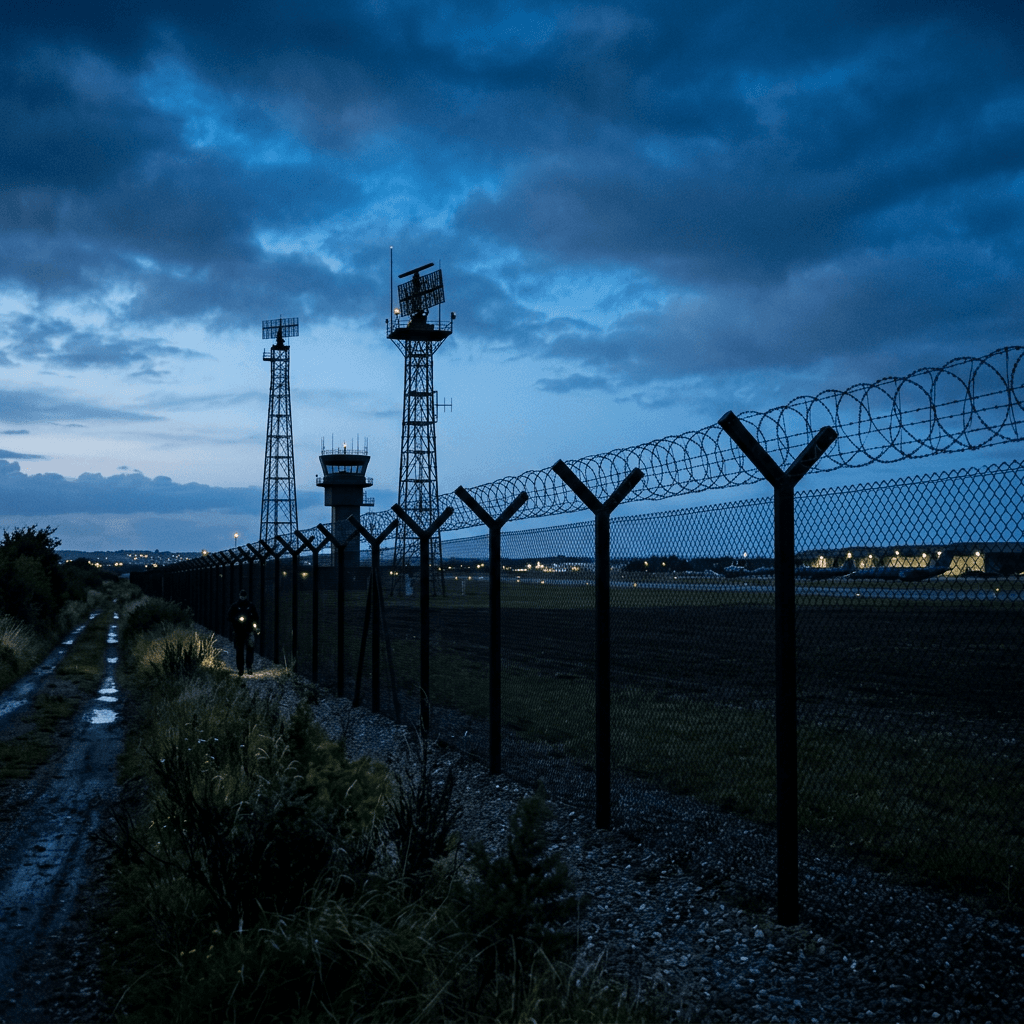
Recent conflicts have settled an argument that used to be theoretical. A drone assembled from commercial parts, costing a few hundred, can force the launch of an interceptor costing many times more, and a swarm of them can exhaust a magazine before the last one is even engaged. That is not a tactical inconvenience. It is an inverted cost equation, and it is aimed squarely at fixed sites: bases, depots, airfields and the fuel and aircraft parked on them.
The temptation is to answer a cheap threat with an expensive defence, because the expensive defence is what the traditional air-defence catalogue offers. But a base cannot win a war of attrition it is paying millions a shot to fight. The attacker only has to be willing to keep sending drones. Sooner or later the defender runs out of budget, not the attacker out of airframes.
Defending a base against the drone threat therefore is not primarily an engineering problem. It is an economics problem. The defence has to be layered, so that cheap threats are met by cheap effectors and only the genuinely dangerous ones draw on the costly ones. And it has to be built for mass, because mass is exactly what is coming.
Find it before it is a problem
Nothing can be defeated affordably until it is detected reliably, and small, slow, low-flying drones are hard to detect. The answer is layered sensing rather than a single radar. Counter-UAS and loitering-munition systems pair radar, RF sensors and optical trackers with AI friend-or-foe classification, tuned specifically for the small and slow targets that conventional air defence was never built to see.
Detection cannot depend on advertising the defence. Passive radar adds a layer that emits nothing at all, watching for drones by exploiting signals already in the environment and giving an adversary no transmitter to locate or strike. On a base, where the enemy's first move may be to map your defences, a sensor that reveals nothing about itself is worth more than a louder one.
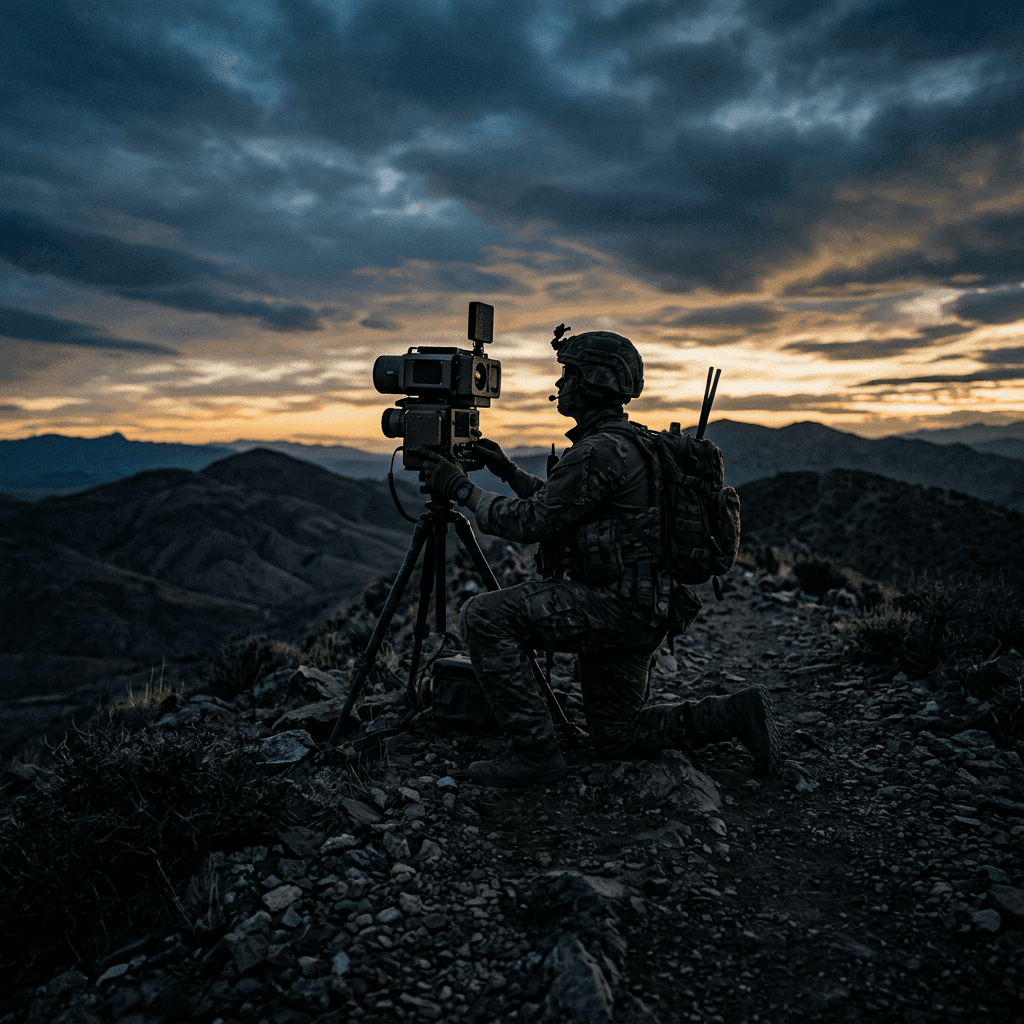
The perimeter is not the whole problem. Protection details, patrols and forward positions move beyond the fixed sensors, and that is where they become the undefended gap. Drone-detection manpacks carry counter-UAS awareness with the dismounted team, giving troops beyond the fence line the seconds of early warning they need, and folding back into the layered defence when they come into range.
Defeat it at the price of the threat
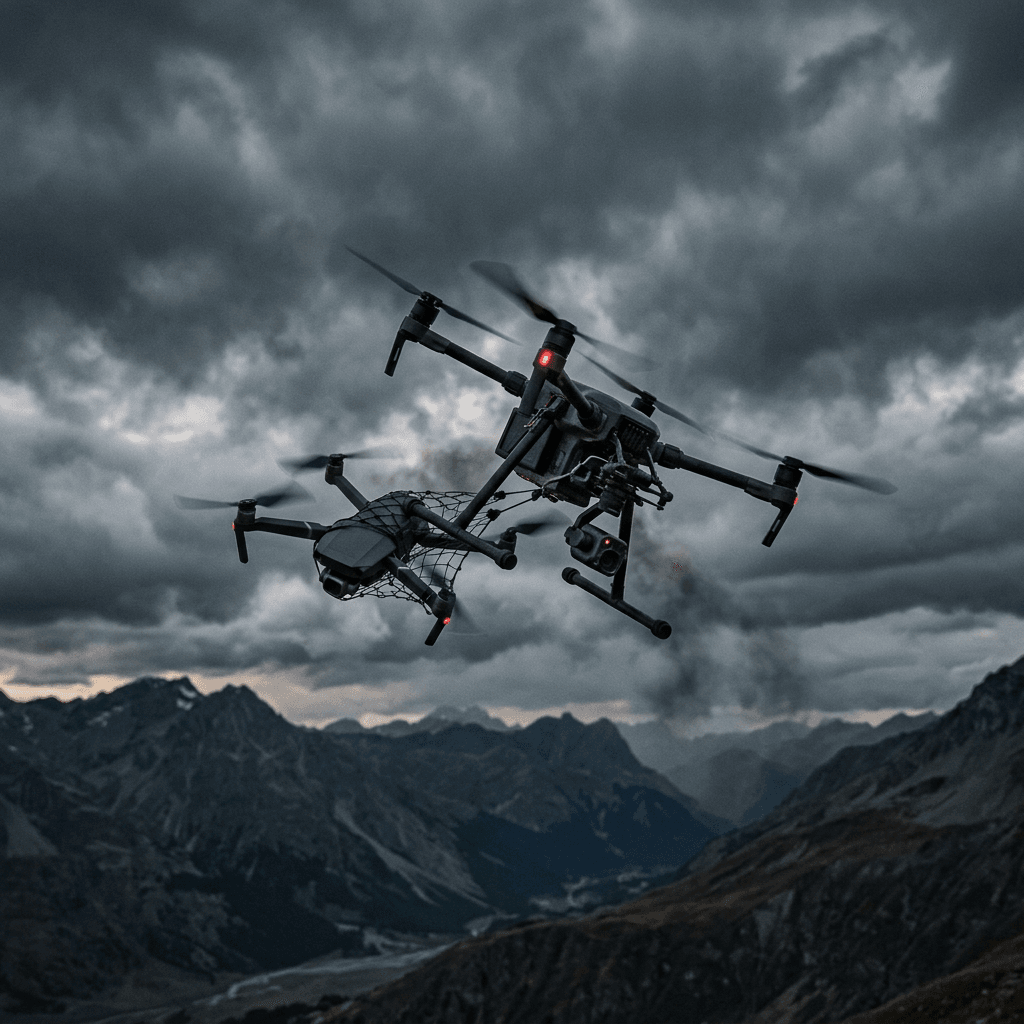
Once a threat is held on track, the question is how much it costs to defeat. The whole point of a layered architecture is that most incoming drones should be met by an effector priced in the same order of magnitude as the threat itself, reserving the expensive options for the rare cases that demand them.
Compact kinetic interceptors give an operator a hand-deployable, fast, guided defeat option for the short-range fight, integrating with existing command-and-control and ground sensors. It is the kind of effector a base can afford to use often, against the volume of low-end threats that a missile magazine was never meant to absorb.
Against the coordinated swarm, the answer scales without breaking the economics. Counter-swarm pod systems bring the compact, tactical and extended-range interceptors together with integrated EOIR and radar and an AI-enabled command layer, deployed from pods that set up where the threat is and then relocate. It detects, tracks, classifies and engages many drones at once: the packaged answer to mass attack, built for fixed-site and critical-infrastructure protection as readily as for mobile deployment.
Crews who can fight it
Even the best-priced architecture is only as good as the people operating it. A counter-drone system fielded without a trained crew defends nothing; it simply sits, expensive and idle, while the threat learns its blind spots. Sustaining the capability means sustaining the operators, and that pipeline has to stay in your own hands rather than depending on a foreign vendor's schedule.
Drone pilot training takes crews from simulator to live operation on the same platforms they will fly on task, building and sustaining a sovereign operating capability in-region. A repeatable pipeline keeps operators current as the threat evolves, and the drone threat evolves quickly, so a crew trained once and never again is a crew already falling behind.
Because the detection, the effectors and the training all come from a maker building the full chain, they are designed to work together rather than being integrated after purchase. The operator learns one architecture, not five products that were never meant to meet.
Priced for the fight you are actually in
The mistake to avoid is answering a mass, low-cost threat with a boutique, high-cost defence, and then being surprised when the ledger runs out before the attacker does. A base defence has to be built around the economics of the drone, not the economics of the missile it replaced.
Unstrat assembles this layered answer through one accountable, non-aligned channel: detection tuned to the real threat, a defeat layer priced to be used at volume, dismounted awareness for the teams beyond the fence, and the training to keep it all working. It arrives without a foreign disclosure obligation and without the risk that the capability is throttled or withdrawn when a crisis makes it matter most.
The attacker will keep the cost of the attack low. Your job is to keep the cost of the defence lower than they can outlast, and to make sure that when the swarm comes, the base is not paying millions to defeat something that cost hundreds.


