
Venezuela wanted Brazilian aircraft. US technology vetoed the sale.
Embraer’s proposed Super Tucano deal foundered because US-origin components required Washington’s approval.
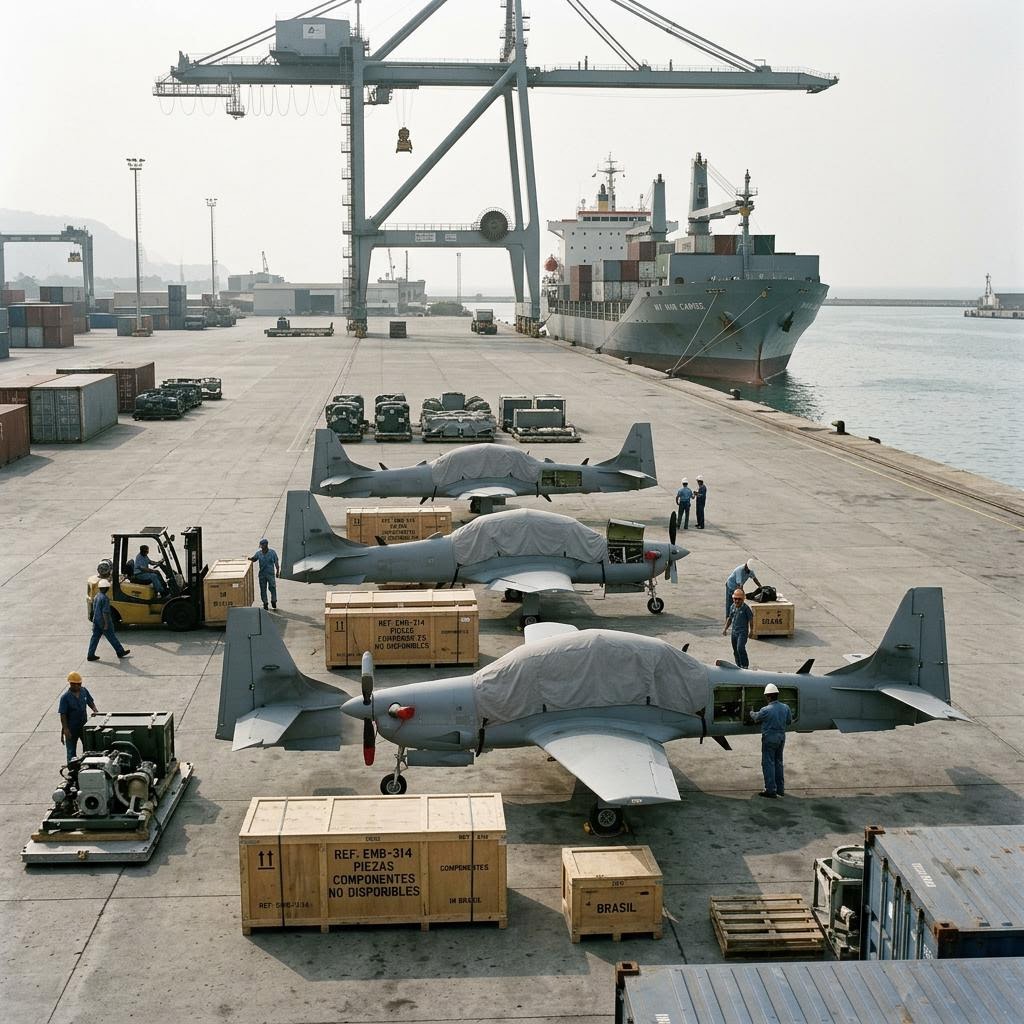
The aircraft were Brazilian. The veto point was American.
A 2012 Reuters retrospective reported that the United States blocked Embraer’s proposed sale of Super Tucano military aircraft to Venezuela in 2006 because the planes contained US technology. The report used the episode to explain why Brazilian officials remained wary that US-origin technology could constrain future exports.
The control was therefore embedded in the aircraft rather than located in the nationality of the prime contractor. Embraer was the proposed seller. Venezuela was the prospective customer. Washington’s leverage came from technology inside the Brazilian platform. Reuters did not identify the component, the number of aircraft, the price or the formal licensing decision.
That missing detail limits what can be said about the result. The record is of a blocked proposed sale, not a contract whose quantity, delay or eventual substitute is known.
The episode mattered in Brasília because Brazil was considering a separate fighter competition. Reuters reported that Brazilian officials were concerned about whether technology received from Boeing for a proposed F-18 bid could create similar restrictions in the future. One official said: “Nobody’s ever forgotten what happened with Venezuela.” The quotation describes the political memory of the episode, not a finding that every future Brazilian aircraft would be vetoed.
Reuters also described a separate 2009 incident in which Embraer said it was temporarily blocked from selling commercial jets to Venezuela because they contained US communications systems. That was not the Super Tucano case. It is relevant only as a second example of US-origin technology affecting an Embraer export to the same customer. The article does not establish that the two incidents had the same legal basis or outcome.
The 2006 case shows why a platform’s label can mislead. “Brazilian” describes the manufacturer and broad origin. It does not answer who controls every engine, communication system, sensor or other component. If one of those items is subject to another state’s export rules, the foreign state can acquire a decision over the transaction.
AI-generated representative image.