
12 May 2026
The penetration problem
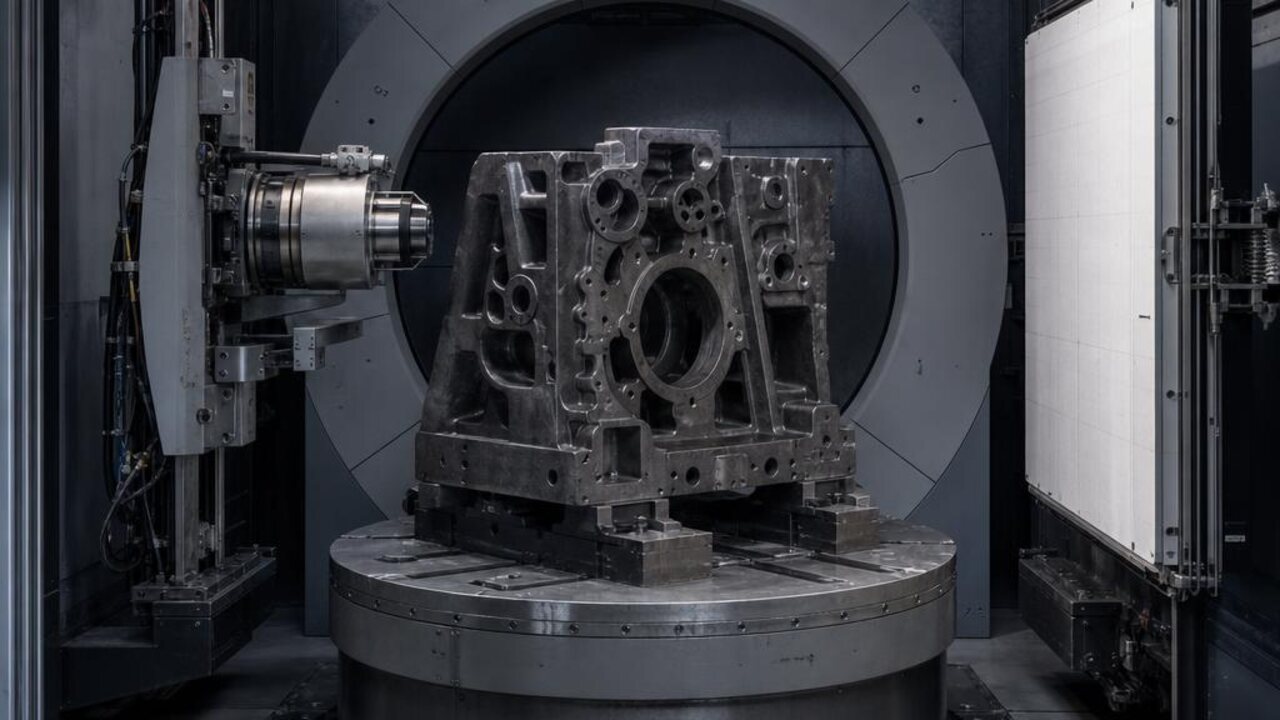
Conventional X-ray energies stop short in thick or dense metal: large castings, heavy weldments, solid munitions bodies. High-energy CT uses more penetrating radiation sources to image straight through material that defeats standard systems, reconstructing the full internal volume of parts that could previously only be sectioned destructively or accepted on faith.
What it reveals in castings
Castings fail through what forms inside them: porosity, shrinkage cavities, inclusions and cold shuts buried deep in thick sections. High-energy CT maps these defects in three dimensions (size, shape, location and clustering), which is what acceptance decisions and foundry process improvement actually need. A 2D projection shows that a defect exists; the volume shows whether it matters.
Why additive manufacturing depends on it
Metal additive parts concentrate the inspection challenge: complex internal geometry that no probe can reach, defect types (lack of fusion, trapped powder, internal porosity) that form anywhere in the build, and certification regimes still maturing. CT is effectively the reference inspection for critical AM parts, and for dense alloys in defence and aerospace work that means high-energy CT.
Scoping a system sensibly
Buyers should scope from the part envelope outward: maximum material path length and density set the energy requirement; feature-of-interest size sets resolution needs; throughput sets automation and reconstruction capacity; and facility planning (shielding, handling, power) is substantial and belongs in the project from day one. Facility and sustainment, not the source, are where these projects usually succeed or fail.
What buyers should take from this
For dense castings and critical additive parts in defence and aerospace work, high-energy CT reveals what nothing else can, the internal volume where acceptance decisions are truly made, so the advantage is in scoping the system to the mission rather than to a specification sheet. Work outward from the part envelope: material path length and density set the energy, feature size sets resolution, and throughput sets automation. Just as decisive, facility engineering (shielding, handling, power) and long-term sustainment are where these projects succeed or fail, so plan them from day one. Protect the investment by choosing a single accountable channel for the system, reconstruction computing, training and sustained calibration and service. Where delivery and support are in-region, localisation arrangements are scoped per programme, subject to export controls and end-use approvals.
