
5 May 2026
What SCADA is and why it is exposed
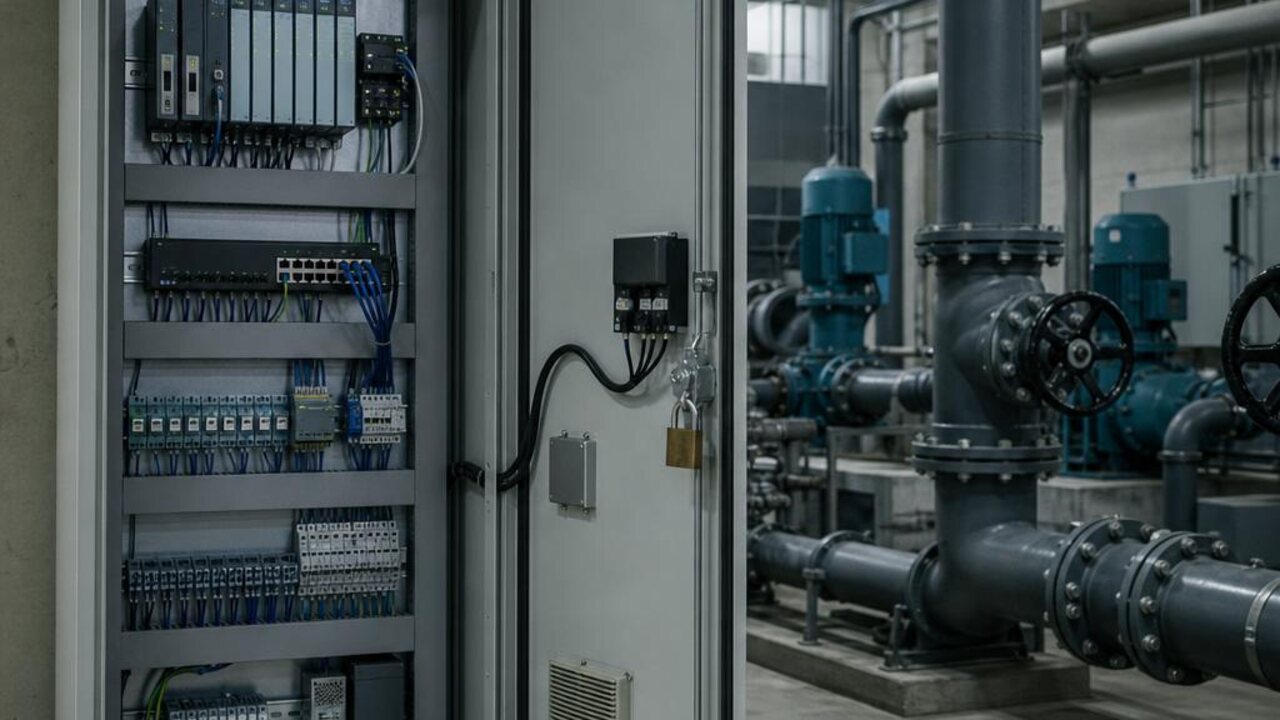
Supervisory control and data acquisition (SCADA) systems let a small control room supervise infrastructure spread across a country: substations, pumping stations, treatment plants. That reach is the vulnerability: SCADA grew up on trusted private networks, and decades of modernisation have connected it, often incrementally and invisibly, to corporate networks and the internet beyond.
The utility threat picture
Power and water utilities face the full spectrum: criminal ransomware that spills over from IT into operations, deliberate state-linked intrusion that pre-positions in control networks, and simple opportunism against internet-exposed equipment. Utilities in strategically contested regions must assume their infrastructure is being surveyed, whether or not an attack ever comes.
The defensive core
SCADA defence starts with knowing and narrowing the attack surface: a complete inventory of field and control assets, elimination of undocumented network paths, strict segmentation between corporate IT and control zones, hardened and audited remote access for vendors and staff, and passive monitoring tuned to the stable, predictable rhythms of utility operations, where anomalies stand out sharply once a baseline exists.
Operating through an incident
Utilities are judged on continuity, so the plan matters as much as the perimeter: rehearsed procedures for operating critical processes in manual or islanded modes, tested backups of control logic and configurations, and incident response that includes the engineers who run the plant. A utility that can operate through a compromise has removed most of the attacker's leverage.
Where utility operators should focus
Power and water operators protect the services a population cannot live without, so the practical priority is to shrink and defend the SCADA attack surface before reaching for anything exotic. That means a complete inventory of field and control assets, elimination of the undocumented connections that decades of modernisation leave behind, firm segmentation between corporate and control zones, and passive monitoring tuned to the predictable rhythm of utility operations. The decisive advantage, though, is the ability to keep supplying power and water through a compromise: rehearsed manual and islanded operation, tested backups of control logic, and response plans that include the engineers who run the plant. Operators who can run through an intrusion remove most of the attacker's leverage and hold their mission steady even when the network cannot be trusted.
