
Libya’s legal arms market ran through a sanctions committee
Resolution 1970 barred arms transfers in 2011 while allowing committee-approved exemptions. The regime changed as Libya’s conflict changed.
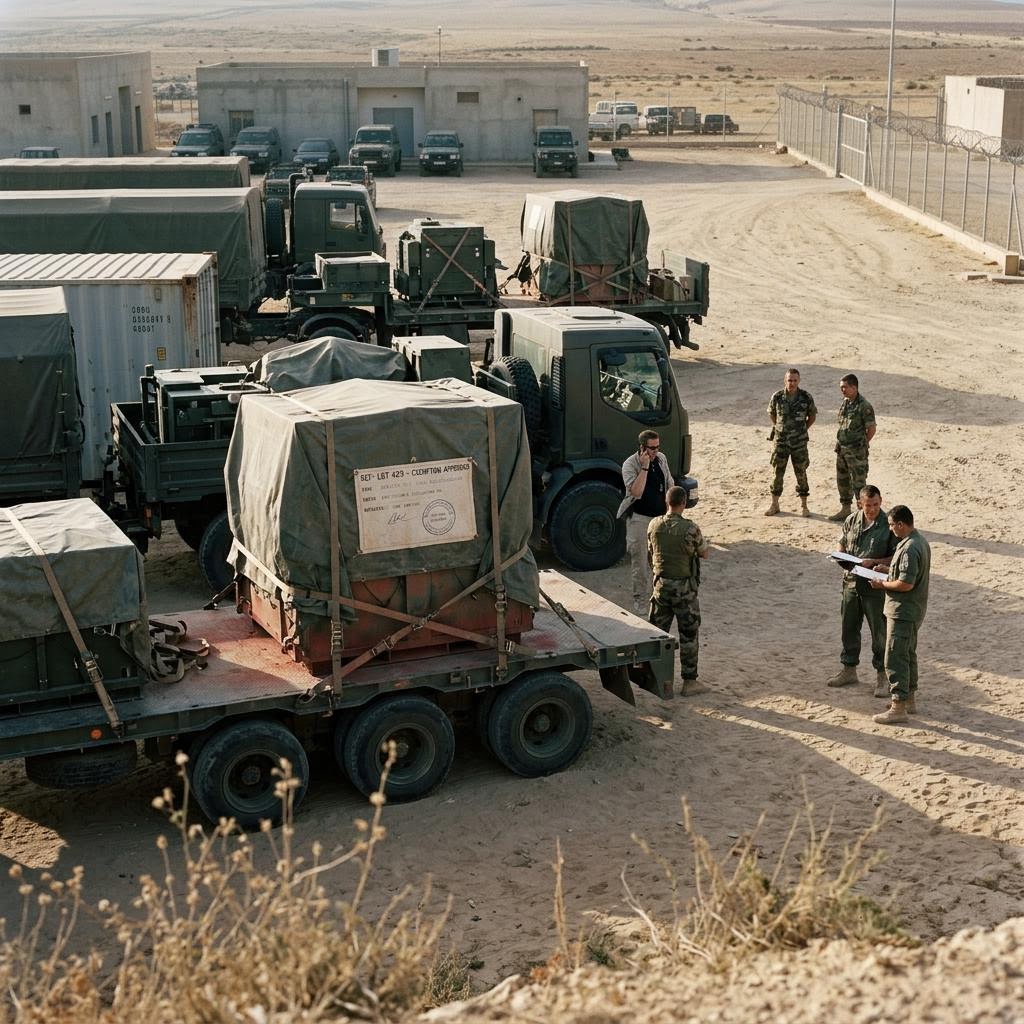
Libya’s arms market was closed by international law. It was not sealed without exceptions.
On 26 February 2011, the UN Security Council unanimously adopted Resolution 1970 and imposed an open-ended embargo on the supply of arms and military equipment to and from Libya. The decision followed the government’s repression of protests and the outbreak of violence. The embargo was mandatory, and a Sanctions Committee was established to monitor it.
The first rule was therefore simple. A supplier could not treat Libya as an ordinary customer. Arms and related equipment required a route through the international restrictions, not merely a willing seller and buyer. The European Union followed with its own restrictive measures on 2 March 2011, implementing the UN decision in its legal framework.
The exceptions were equally important. Resolution 2009, adopted on 16 September 2011, allowed transfers to Libya’s new National Transitional Council, the authority then recognised as Libya’s government, if the Sanctions Committee was notified in advance and did not issue a negative decision within five working days. The resolution also covered small arms, light weapons and related material temporarily exported for the sole use of UN personnel, media representatives, humanitarian workers and development personnel, again subject to advance notification and the absence of a negative decision.
That was not a normal procurement channel. It was a permission process attached to a political test. The question was not only what Libya wanted to acquire. It was which Libyan authority could receive it, whether the transfer fitted an authorised purpose, and whether the committee accepted the notification.
The system changed again in March 2013. Resolution 2095 removed the notification requirement for non-lethal military equipment intended for humanitarian protective use and for non-lethal equipment, technical assistance, financial assistance and training provided to the Libyan government. The distinction mattered. It opened some forms of support without reopening the market for lethal arms generally.
In August 2014, as violence flared again, Resolution 2174 tightened the process. SIPRI records that supplies of arms and related materiel to Libya then required advance approval by the Sanctions Committee. The earlier arrangement had allowed a transfer to proceed if no negative decision arrived within five working days. The later rule put the burden in the other direction. Silence was no longer enough.
AI-generated representative image.