
Pakistan ordered Turkish attack helicopters. A US engine licence stopped them.
Pakistan cancelled its planned purchase of 30 Turkish T129 attack helicopters after the United States refused an export licence for their LHTEC T800-4A engines, according to Janes. Pakistan then pursued China’s Z-10ME, while Turkey disputed or had not formally received the cancellation at the time of the report.
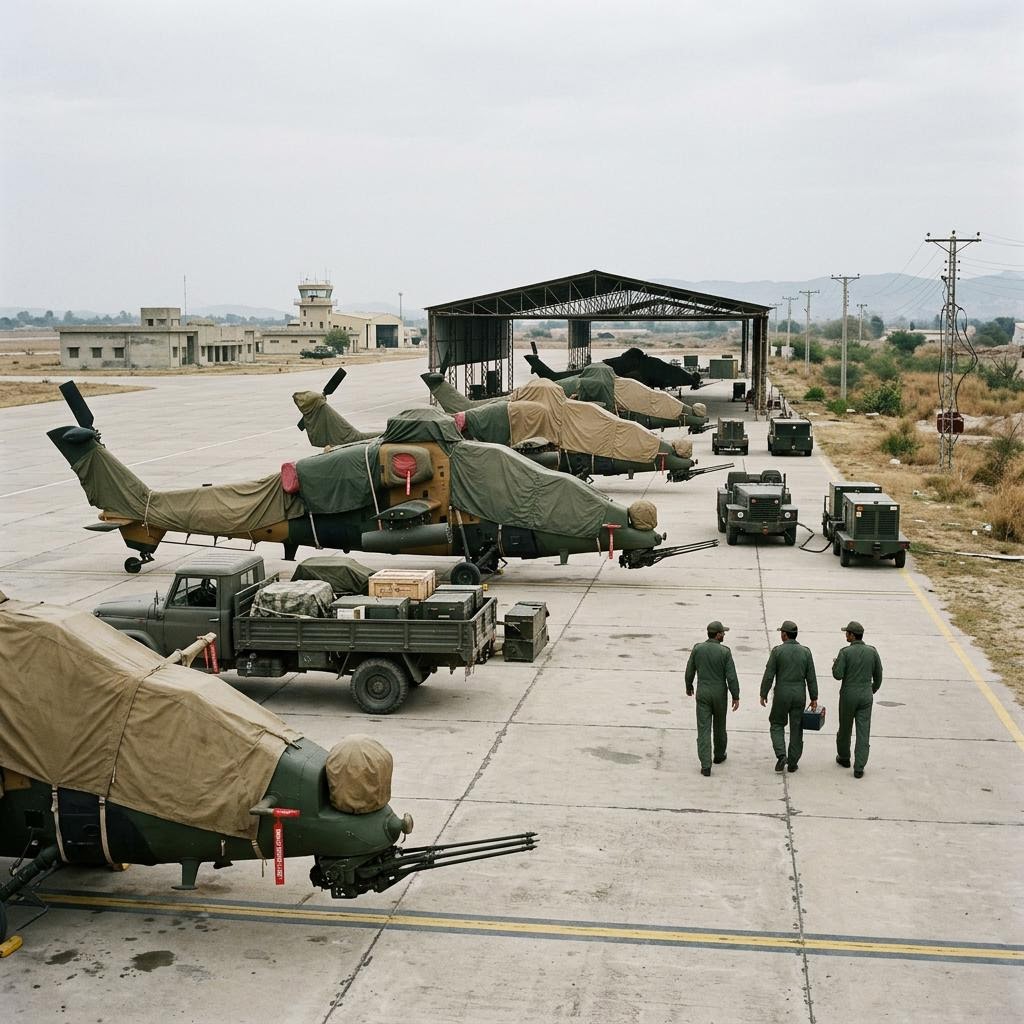
Pakistan’s T129 was a Turkish helicopter with an American permission point inside it.
On 5 January 2022, Pakistan Army spokesman Major General Babar Iftikhar said the country had moved on from its Turkish attack-helicopter deal and was negotiating with China for Z-10ME helicopters. Janes reported that Pakistan had cancelled the planned procurement of 30 T129s. The project had been signed in 2018 under a deal valued at $1.5 billion.
The T129’s airframe was not the obstacle identified in the reporting. The helicopter, produced by Turkish Aerospace under licence from Leonardo, used US-built LHTEC T800-4A turboshaft engines. The United States refused to grant Turkey an export licence for those engines for the Pakistan sale. Janes said that refusal “appears to be what has led” to the cancellation. That qualification belongs in the story. The source identifies the mechanism and the reported outcome, but does not reproduce a US licensing decision or establish every reason Pakistan abandoned the project.
The dependency was easy to miss in the aircraft’s national label. Turkey was the seller and Pakistan the customer, but the propulsion system carried another country’s export-control interest. Without permission to export the engine, Turkey could not deliver the complete helicopter under the proposed arrangement. A platform can therefore be nationally branded and legally multinational at the point of sale.
The same mechanism had not blocked every T129 export. Janes reported that the United States had recently granted Turkey an export licence for six T129 helicopters for the Philippines. That comparison narrows the conclusion. The evidence does not show a universal US ban on the T129 or every Turkish defence export. It shows that the required permission was not obtained for the Pakistan project.
The project had already become a timetable problem before the final announcement. Contemporary reporting said Turkey was trying to secure Washington’s permission and that Pakistan had extended the deadline for delivery of the 30 helicopters. The available sources do not state the original delivery date, the number of extensions, or the exact point at which delay became cancellation. They do establish that the aircraft could not be delivered on the proposed terms while the engine licence remained unavailable.
Iftikhar’s statement was unusually concise. When asked whether the Turkish contract remained intact, he said: “As far as the Turkish deal is concerned, we have moved on.” He also said negotiations were under way with China. The quotation confirms Pakistan’s position on 5 January. It does not prove that a Chinese purchase had been completed or that the Z-10ME was an operational replacement.
Turkey’s position was less settled in the Janes account. Turkish Aerospace had not issued an official statement, and Turkish defence sources told Janes that Pakistan had not yet informed Ankara of its cancellation. That is not a contradiction to conceal. Pakistan could announce that it had moved on while the contractual and diplomatic steps with Turkey remained incomplete.
AI-generated representative image.