
Peru paid $20.3 million for helicopter repairs. Three aircraft still waited.
A $20.3 million overhaul contract required three Peruvian Mi-171 helicopters to be operational by October 2024. After two extensions, Peru rejected a further 151-day request in January 2025 and imposed an approximately $1.9 million penalty on Milenium Veladi Corporation.
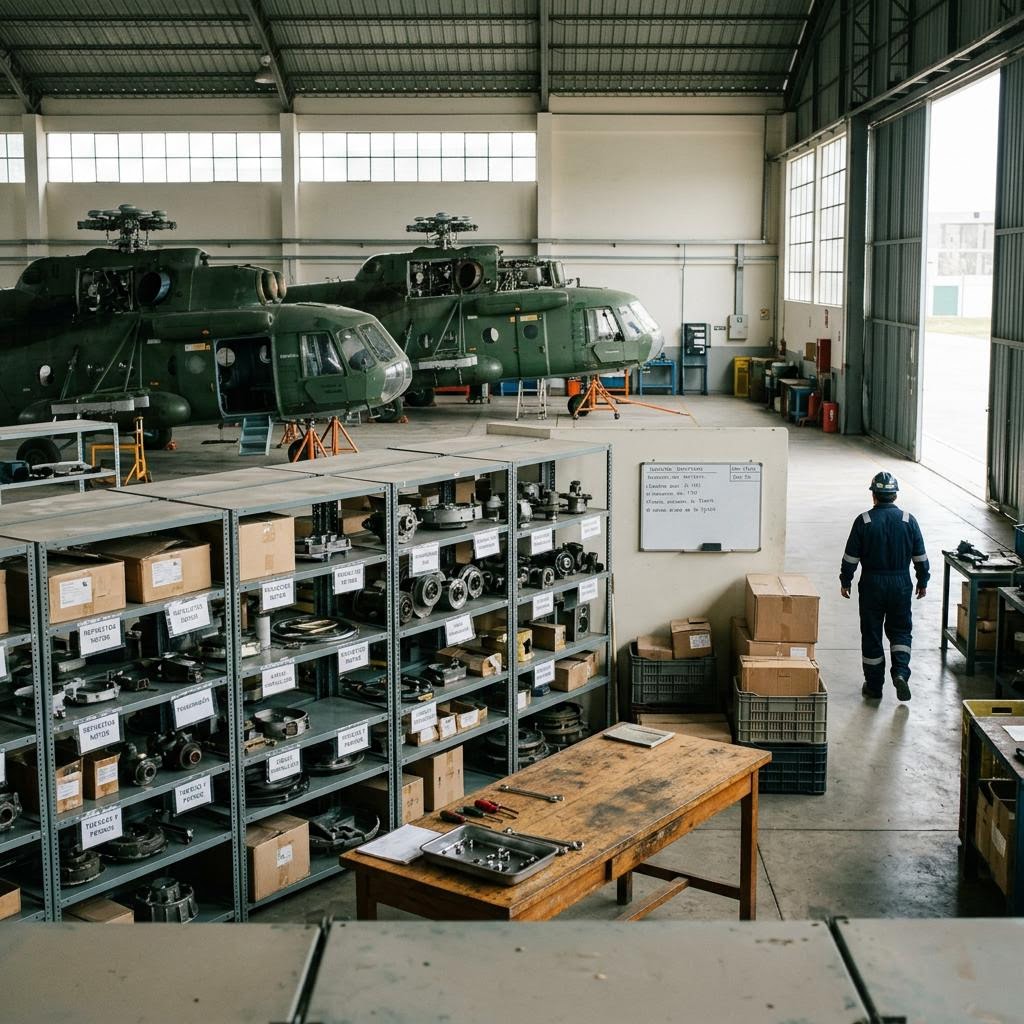
Peru paid most of a helicopter overhaul contract. The engines were still not assembled.
The Peruvian Army rejected another extension for the repair of three Mi-171 helicopters and imposed a financial penalty on Milenium Veladi Corporation, according to Zona Militar on 25 April 2025. The company is the Panamanian representative of Russia’s National Aeronautical Services Company, or NASC, and was responsible for the work under a $20.3 million agreement.
The contract required the three aircraft to be operational by October 2024. That deadline passed. Two extensions followed, with the latest expiring on 30 December 2024. The contractor then sought another 151 days to complete the overhaul. The Army rejected the request in January 2025 and began administrative steps to apply penalties.
The reported penalty was approximately $1.9 million for late delivery of the contracted service. It was a response to missed performance, not evidence that the helicopters had returned to service. The source does not report a completed repair, a replacement contractor or a new date for flight operations.
The aircraft were not new acquisitions. They were part of Peru’s existing Mi-171 fleet, and the contract concerned overhaul and repair. That distinction changes the nature of the dependency. Peru already owned the helicopters, but their continued use depended on a repair chain that reached a foreign company and, according to the report, Russia.
The contract was made through a direct award rather than an open tender. Zona Militar said the Army justified that route by the urgent need for operational helicopters to respond to emergencies in Peru. Urgency can shorten the path to a contractor. It can also leave less room to test whether the proposed schedule is realistic, especially when the work depends on components, transport and manufacturing capacity outside the customer’s control.
The report linked the delay to the condition of the aircraft and the work that was supposed to make them available. It said the Army’s Aeronautical Maintenance Centre, CEMAE, followed the technical process and rejected the 151-day request as improper. The administrative response then moved toward enforcing the contractual penalty.
The financial detail came from a report by *La República* cited by Zona Militar. According to that account, Peru’s audit authorities found that about 70% of the contract value, more than $14 million, had already been disbursed even though assembly of the engines and principal components had not begun. This is a reported audit finding, not an independently reviewed contract ledger in the retrieved source. It should remain attributed.
The report also said Milenium Veladi had moved the engines, rotor blades and other key systems from the three helicopters to Russia, leaving only empty structures at CEMAE. If accurate, that arrangement made the repair schedule dependent on work and transport beyond Peru’s immediate control. It also meant that the customer could be left with aircraft bodies but without the components that make them usable.
The contractor’s explanation was that the war between Russia and Ukraine caused the continuing delays. That is the company’s stated justification as reported by Zona Militar. The article also reports that people close to the Army believed the risk should have been considered when the contract was negotiated. Those positions conflict. The source does not independently establish whether the war made performance impossible, whether the contract allocated that risk, or whether the contractor should have disclosed the problem earlier.
The sanction does not resolve that dispute. It shows that Peru treated the missed deadline as a contractual failure serious enough to reject another extension and pursue a penalty. It does not establish bad faith, negligence or a final court finding. Nor does a penalty itself return an aircraft to the flight line.
AI-generated representative image.