
Britain took Zimbabwe out of its open-licence system in 2000
The UK removed Zimbabwe from all open individual licences for military-list and dual-use goods on 12 May 2000.
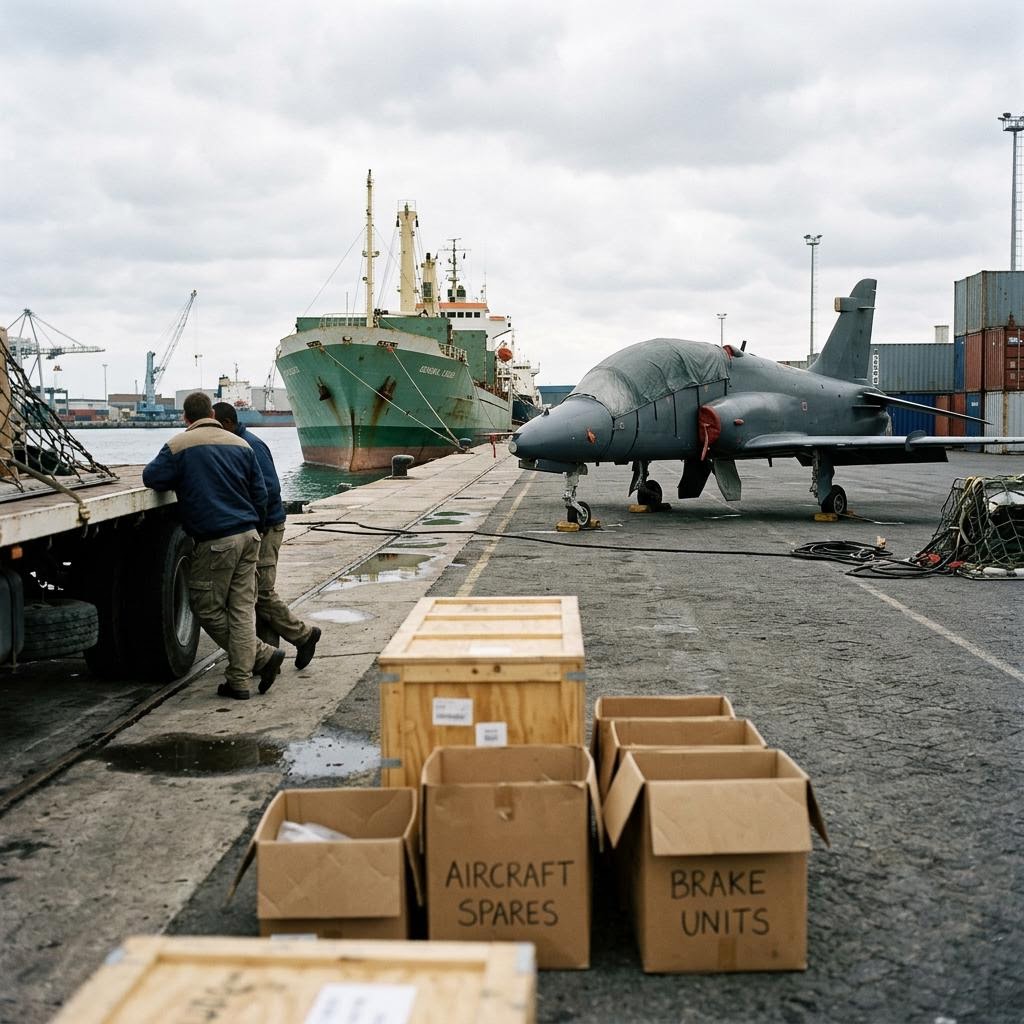
An aircraft can remain on the inventory and disappear from the useful fleet. Zimbabwe’s Hawk case is about that gap, but the available record is more precise about the blocked support channel than about the number of aircraft still able to fly.
The Zimbabwe Air Force received 13 Hawk-60 trainer aircraft from the United Kingdom between 1980 and 1992, according to a SIPRI background paper on arms transfers to Zimbabwe. The same paper describes the BAE Hawk 60 as light attack aircraft in its discussion of equipment previously acquired from European suppliers. That history matters because a later export restriction could affect an aircraft already delivered. It did not need to cancel a new purchase to change the owner’s options.
The first British measure came before the EU measure. A 2002 House of Commons evidence record says Zimbabwe was removed from a UK open licence for components for military training aircraft in February 2000, after the Prime Minister’s statement on countries involved in the conflict in the Democratic Republic of the Congo. It records a further decision announced by Foreign Secretary Robin Cook on 12 May 2000: Zimbabwe was removed from all extant Open Individual Export Licences for goods and technology on the Military List and for dual-use equipment. No such licences were issued for Zimbabwe between that date and the end of 2000. The same answer says the arms embargo imposed in May 2000 remained in place.
Those dates should not be collapsed into one event. The 12 May announcement concerns the UK licensing decision. The EU arms embargo began on 18 February 2002, according to SIPRI’s individual Zimbabwe entry. The EU Common Position adopted that day prohibited the supply or sale of arms and related material, including spare parts, by Member State nationals or from Member State territory. It also prohibited technical training or assistance related to providing, manufacturing, maintaining or using those items. The position allowed limited exceptions for non-lethal equipment intended solely for humanitarian or protective use, and for certain United Nations or European crisis-management activity.
For an operator, the second prohibition can be as important as the first. A fleet does not stay useful through airframes alone. It needs parts, maintenance knowledge and permission to move the relevant goods through the export system. The legal text therefore reached beyond a new weapons sale. It covered the support activities that keep an existing military aircraft in service.
SIPRI’s later analysis makes the connection to the Hawks, but with an important qualification. It says the embargoes could be argued to have forced Zimbabwe to phase out equipment acquired from EU suppliers, including the BAE Hawk 60, for which Zimbabwe either did not seek or was unable to acquire spare parts or maintenance. That is an informed assessment, not a published serviceability audit. The wording leaves two possibilities open. Zimbabwe may not have sought the support, or it may have been unable to obtain it. The source does not settle which explanation applies.
The same paper also prevents a larger claim. It reports anecdotal evidence that arms dealers in the EU and United States were willing to breach embargoes, and says China continued to supply arms and military equipment to Zimbabwe. The restrictions therefore narrowed an important route without creating a sealed country-wide wall around military procurement. A British-origin aircraft could face a serious support problem while Zimbabwe still obtained equipment from other suppliers.
AI-generated representative image.